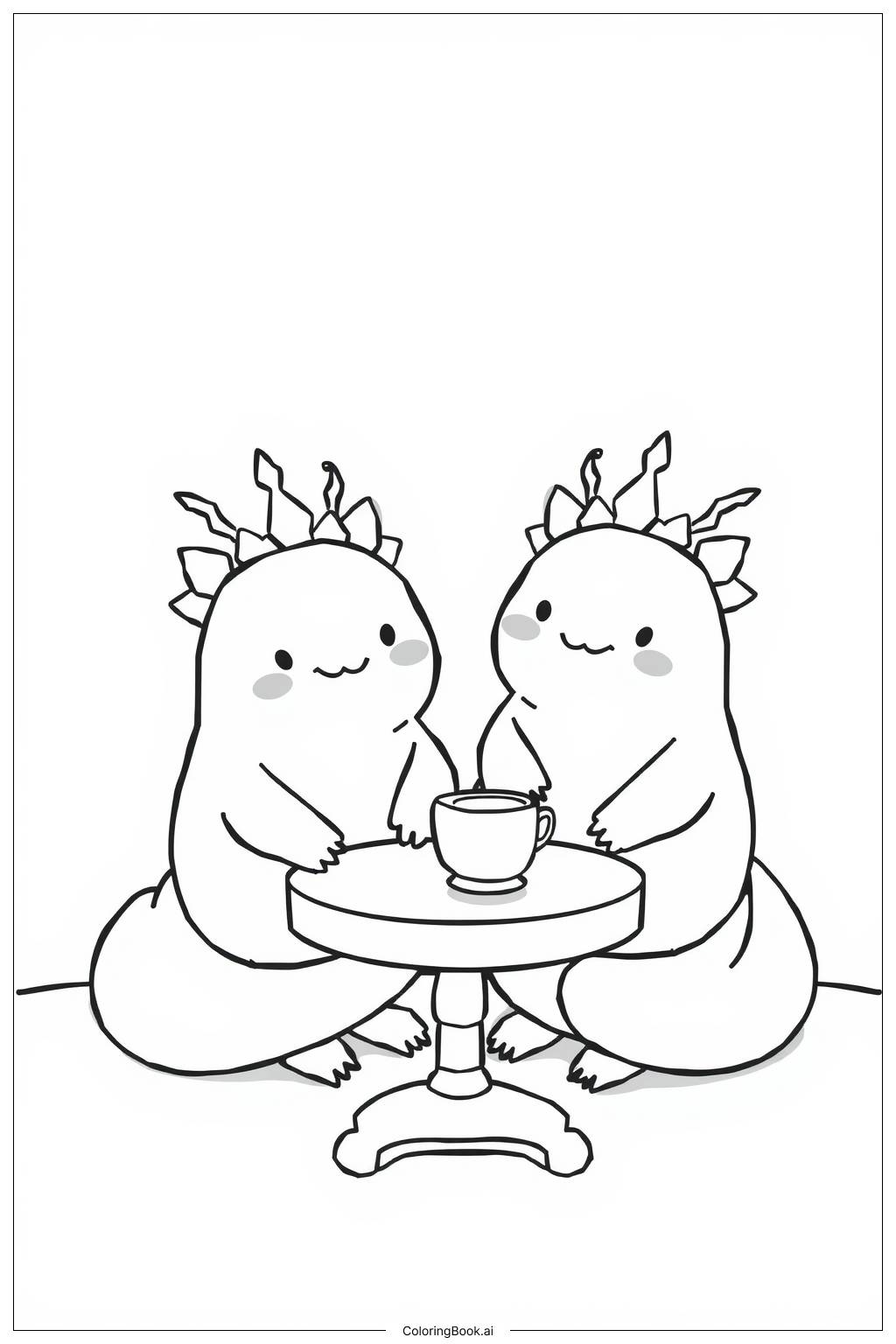
Coloring tips: How to color Axolotl Tea Party Squishmallow coloring page well?
Start with the axolotl's body using soft pink or light lavender — these colors match the real axolotl's natural look and the Squishmallow pastel style. Use a slightly darker shade of the same color for the feathery gills to make them stand out. Color the teacups and teapot in cheerful colors like mint green, baby blue, or soft yellow. Add small floral patterns to the teaware for extra detail. Use warm tan or cream tones for the cupcakes and cookies, then add colorful frosting on top. The bow on the axolotl can be bright pink or purple. Fill the background decorations — flowers and stars — with a mix of pastel shades to keep the scene light and dreamy. Use white or pale yellow for the eyes and add a tiny colored dot for the pupils to bring the face to life. Try blending two close shades together on the body for a smooth, soft gradient effect that matches the Squishmallow plush toy look.
Coloring challenges: Which parts are difficult to color and need attention for Axolotl Tea Party Squishmallow coloring page?
• Feathery Gill Details: The axolotl's gills are made up of many thin, branching lines that spread outward from its head. Staying inside each small section requires a fine-tipped coloring tool. Using a colored pencil or thin marker will help you fill each branch neatly without smudging into the surrounding areas. Take your time and work from the base of each gill outward.
• Squishmallow Facial Expression: The large, round eyes and soft smile are small but very important. Getting the shading right around the eyes — such as adding a light reflection spot and smooth eyelid curve — takes a careful hand. A light touch with colored pencils works best here to avoid overfilling these tiny shapes.
• Tea Party Props: The teacups, teapot, cupcakes, and cookies are small objects packed closely together on the table. Each item has its own outline and decorative details like dots, stripes, or swirl patterns. Coloring each one in a different color scheme helps them stand out from each other. Use a sharp pencil tip to handle the tiny decorations without crossing into neighboring lines.
• Body Shading and Gradient: To capture the soft, pillowy look of a Squishmallow, the body benefits from gentle shading along the edges. Blending a slightly darker tone along the sides while keeping the center light creates a rounded, three-dimensional feel. This technique takes practice, especially for younger colorists, but even a flat base color looks great.
• Background Decorations: Stars and flowers scattered in the background need to be colored carefully so they do not visually overpower the main character. Choosing lighter or more muted tones for these elements keeps the focus on the axolotl at the center of the scene.
Benefits of coloring books: Advantages of drawing Axolotl Tea Party Squishmallow coloring page
Coloring this Axolotl Tea Party Squishmallow page offers a wonderful mix of fun and learning for kids and creative individuals alike. The soft, rounded shapes of the Squishmallow design are gentle and welcoming, making this page a great starting point for younger children who are just beginning to explore coloring. Carefully filling in the feathery gills, tiny teacups, and decorated treats helps build fine motor skills and hand-eye coordination. Choosing colors for the axolotl's body, the teaware, and the background encourages creative thinking and color awareness. Kids can experiment with pastel palettes, try blending shades, or even invent their own unique color combinations. The tea party setting sparks imagination — colorists can picture a whole story happening around the little table. Completing a detailed page like this also builds patience, focus, and a sense of accomplishment. For older kids and teens, the small decorative details provide a satisfying challenge that sharpens concentration. The cozy, playful theme makes the experience feel relaxing and joyful. Whether colored quickly for fun or carefully for display, this page is a delightful creative activity that leaves kids feeling proud of what they made.