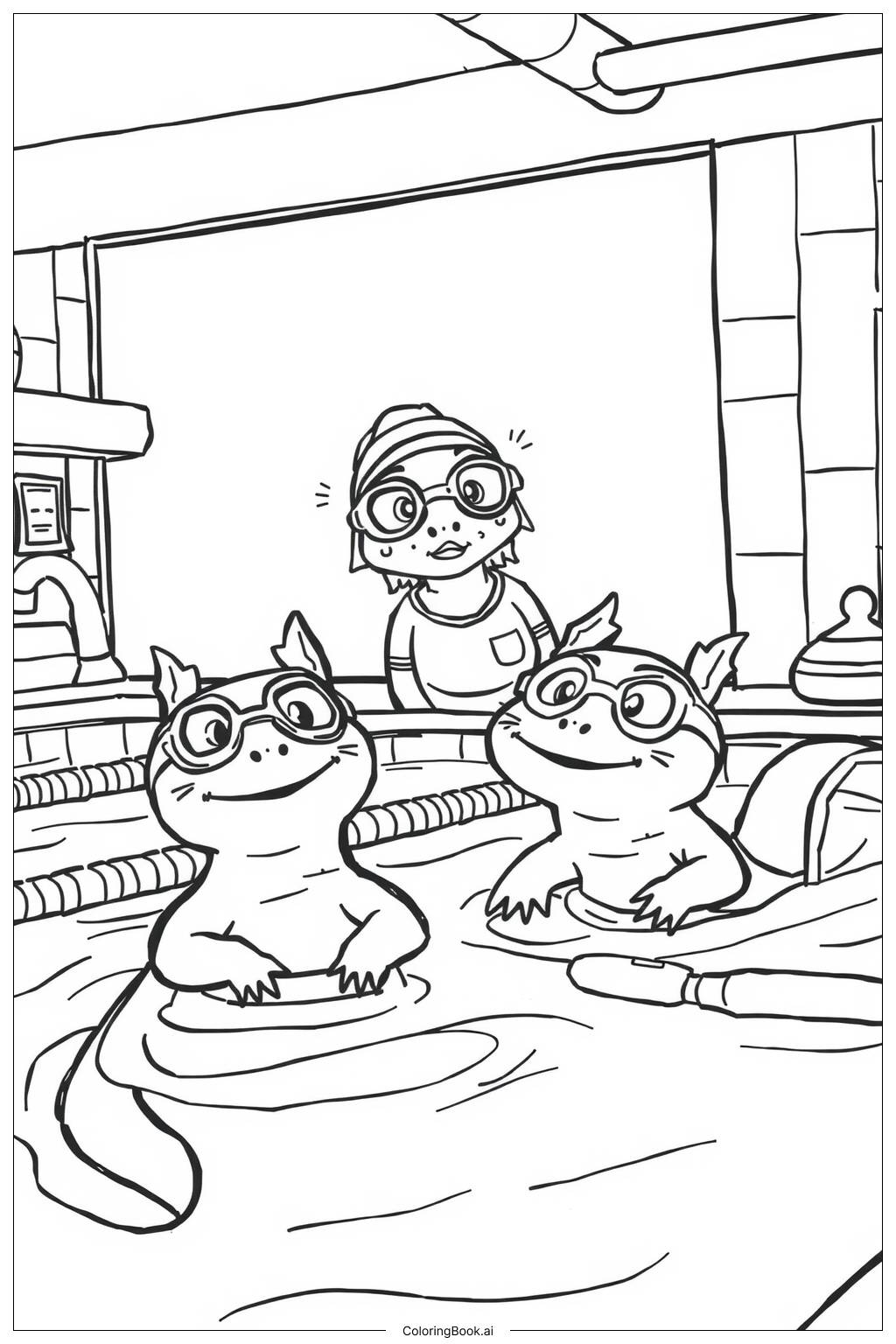
Coloring tips: How to color Axolotl Swimming Lessons coloring page well?
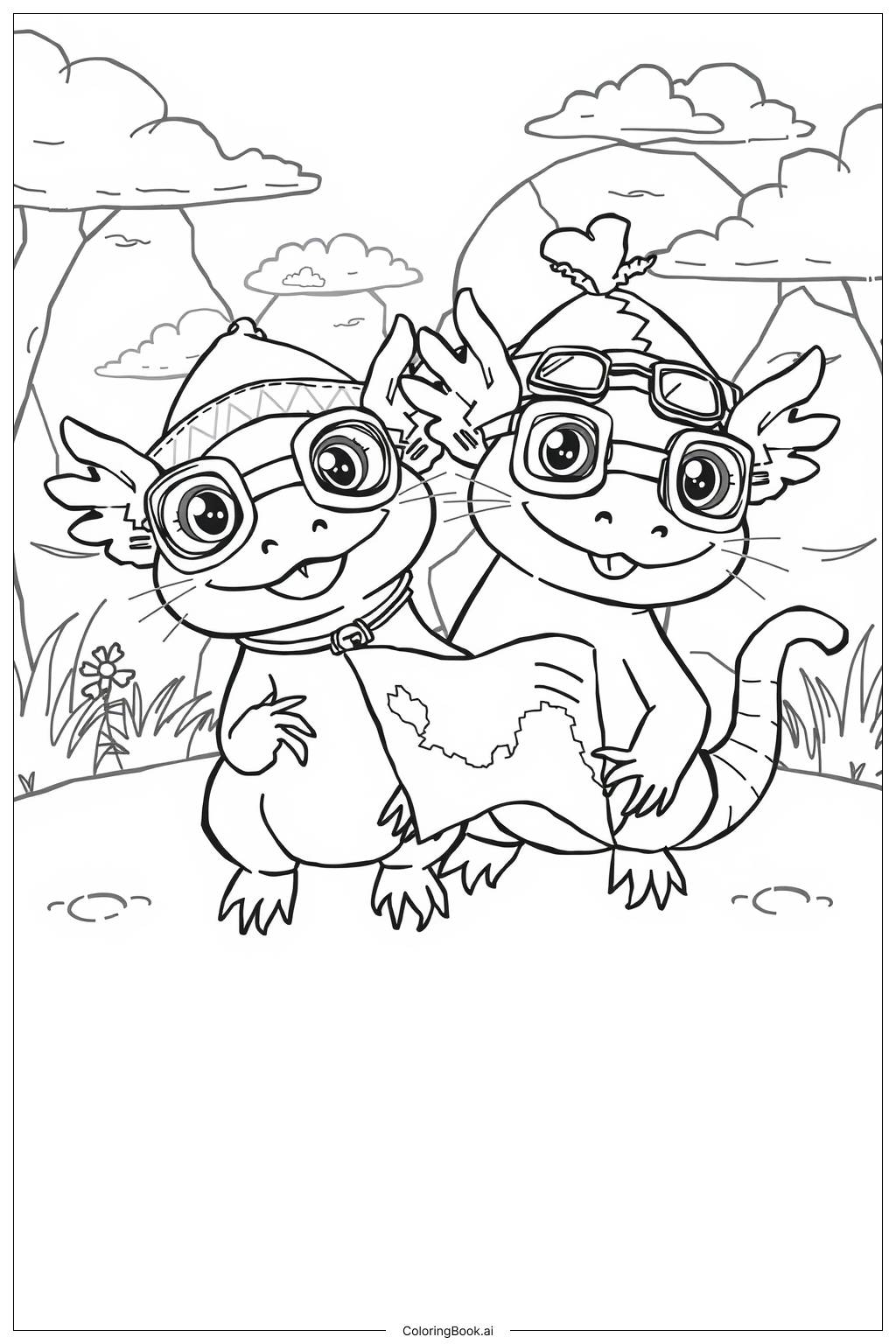
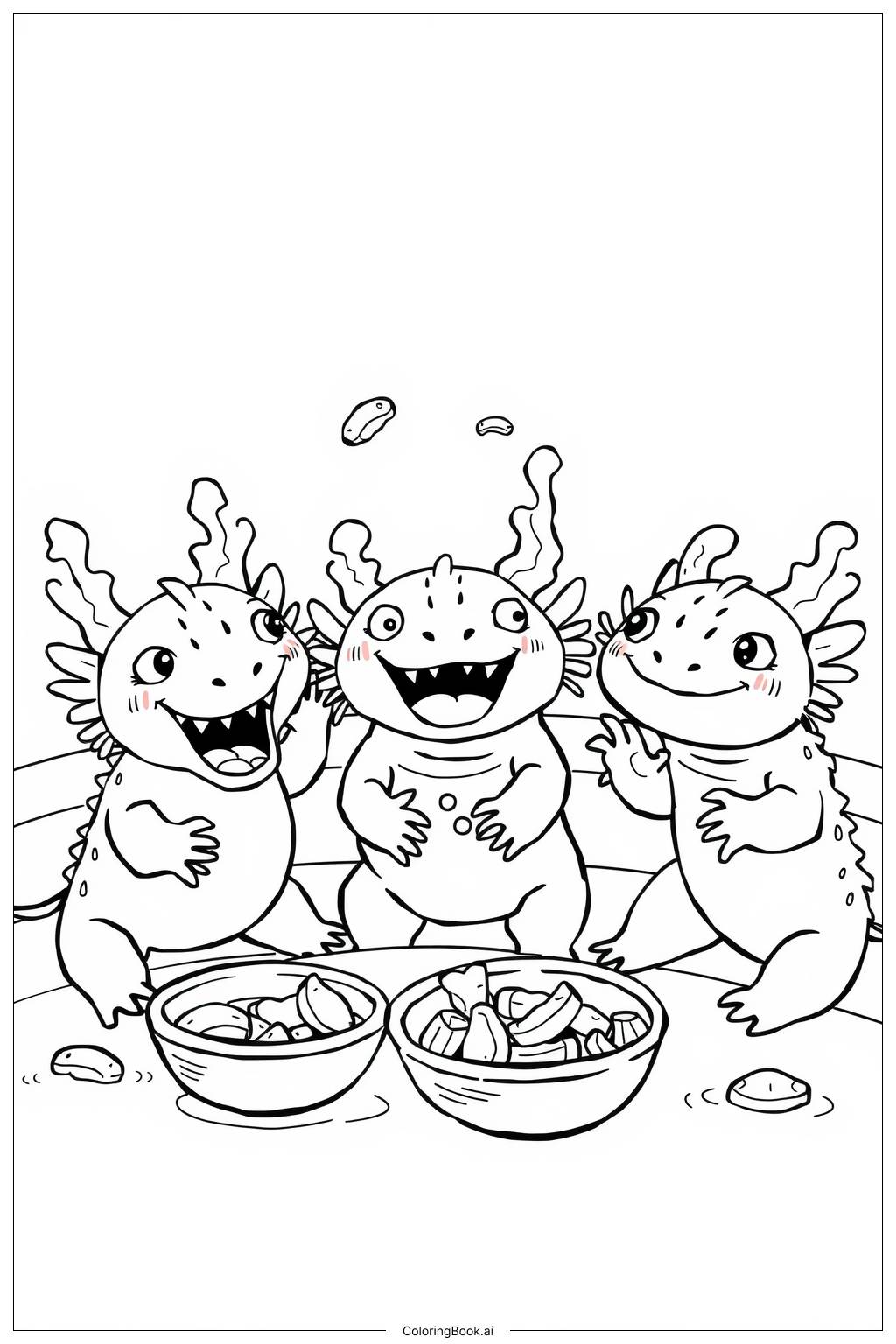
Use soft pastel colors for the axolotls, such as light pink, pale purple, or cream, to highlight their smooth skin and delicate gills. The water can be shaded with multiple blue tones—lighter near the surface and deeper shades below—to create a sense of depth. Add green hues to the aquatic plants and bright yellows or oranges to the small fish to add vibrant accents. For the goggles on the instructor axolotl, try shiny silver or blue to make them stand out. Encourage shading around the bubbles and ripples to give a realistic watery effect. Keep the colors cheerful to match the playful swimming lesson theme.
Coloring challenges: Which parts are difficult to color and need attention for Axolotl Swimming Lessons coloring page?
• Small Details: The tiny gills on each axolotl require careful coloring to avoid going outside the lines and to maintain their delicate look.
• Water Effects: Capturing the transparent and shimmering feel of water with colored pencils or crayons can be tricky and needs gradual blending.
• Overlapping Figures: Different axolotls overlap in parts, making it important to use distinct shades or outlines for each one to keep them separate visually.
• Bubbles and Ripples: These require subtle shading and light touches to look realistic without overpowering the main subjects.
• Plant Textures: The leaves and stems of underwater plants have fine lines that call for steady hand control and patience.
Benefits of coloring books: Advantages of drawing Axolotl Swimming Lessons coloring page
Coloring this picture helps children improve fine motor skills as they carefully stay within small spaces like the axolotls’ gills and bubbles. It encourages creativity by experimenting with different color combinations for water, creatures, and plants. The fun subject of swimming axolotls also promotes learning about aquatic animals and their environment. Focusing on layering colors to show water’s depth develops attention to detail and patience. Overall, it’s a relaxing activity that combines education with playful art, making it enjoyable for kids aged 4 to 16.