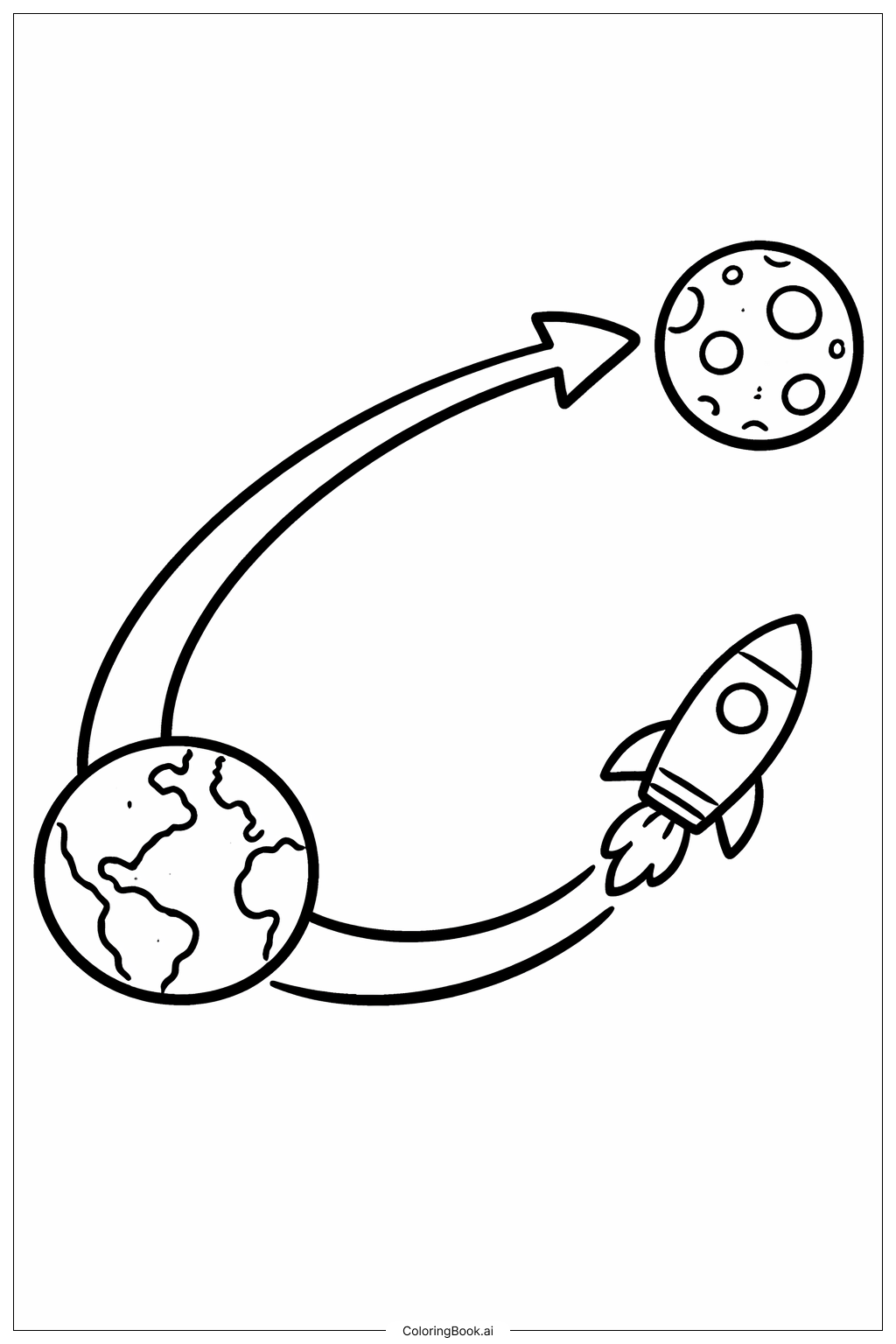
Coloring tips: How to color Artemis II Simple Trajectory coloring page well?
You can use blue and green colors for Earth to show the oceans and land. The Moon can be colored in light grey with darker grey spots for craters. The rocket can be bright colors like red, orange, or yellow to show energy and movement. The path arrows can stay black or be colored with a bright color like blue to stand out. Try using different shades for Earth and the Moon to give a three-dimensional feel. Keep the rocket flames in bright colors such as red or orange to show heat and speed.
Coloring challenges: Which parts are difficult to color and need attention for Artemis II Simple Trajectory coloring page?
1. Coloring the Earth requires careful attention to detail because of the land shapes and ocean areas.
2. The Moon’s craters may be tricky to color with depth due to their rounded shapes and spots.
3. The rocket has small parts like the flame and fins that need careful coloring within lines.
4. Coloring the arrow paths smoothly to keep their flow clear can be a challenge.
5. Making the rocket look lively and dynamic using bright and blended colors might be difficult for younger children.
Benefits of coloring books: Advantages of drawing Artemis II Simple Trajectory coloring page
Coloring this rocket journey helps children learn about space travel and the Artemis II mission. It encourages creativity by choosing colors for Earth, Moon, and the rocket. This activity improves motor skills because it requires careful coloring inside small areas like the rocket flames and Moon craters. It also teaches about shapes and movement with the arrows showing the rocket’s path. Overall, it is a fun way to explore space and understand simple concepts about Earth's place in the solar system.