Coloring tips: How to color Alvin And The Chipmunks Doing Homework coloring page well?
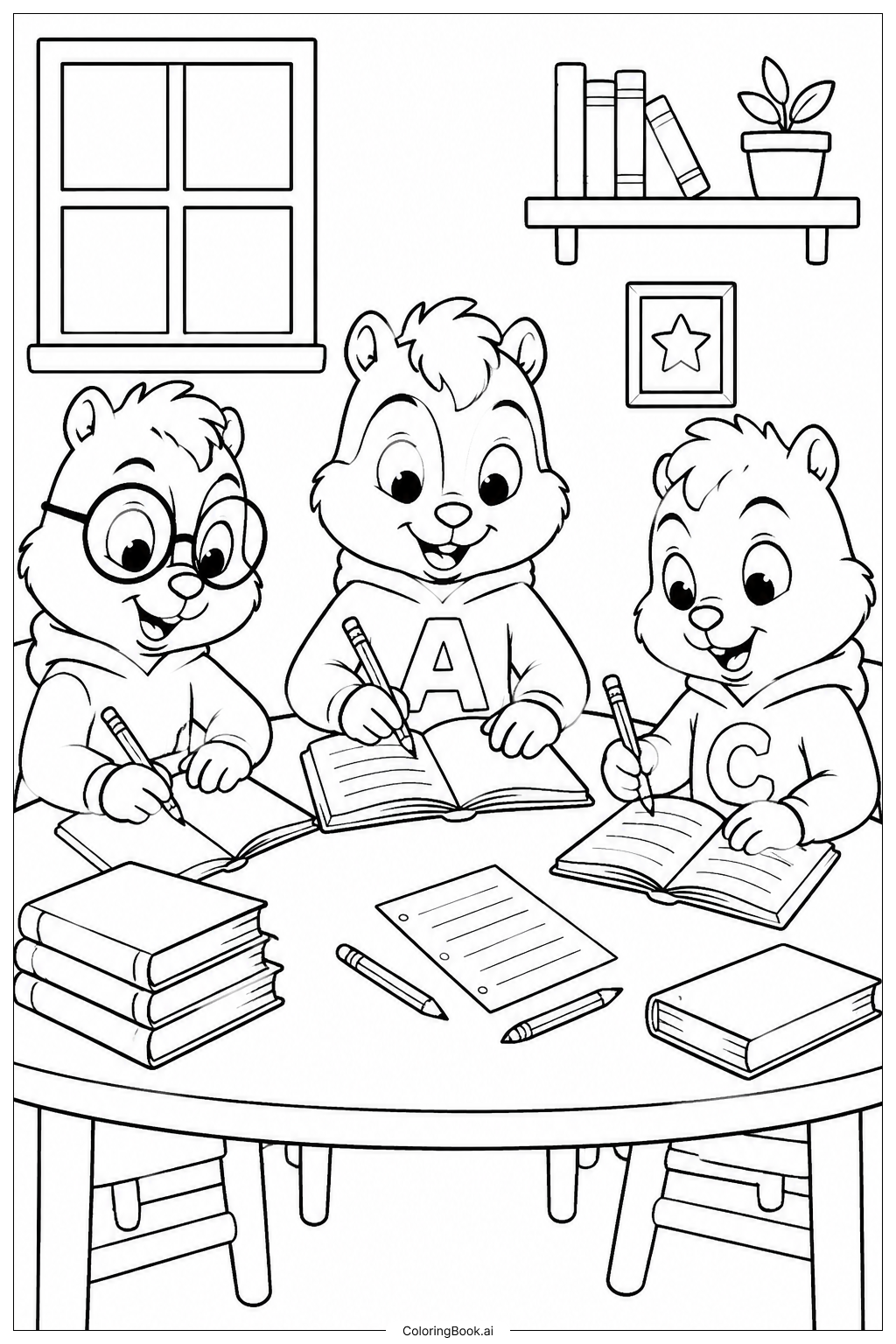
Start with the chipmunks themselves: use warm brown and tan shades for their fur, adding lighter highlights on their bellies and faces. Alvin's signature red can accent his clothing or accessories, while Simon's blue and Theodore's green maintain their classic color schemes. For their glasses and pencils, try realistic grays, blacks, and yellows with orange or pink erasers. Color the textbooks in various bright hues like red, blue, green, and yellow to make them pop. The papers can remain white or cream, while notebooks might feature different cover colors. Use warm wood tones for the table and shelves, and add subtle background colors like soft blues or greens to create depth. Consider shading under objects to add dimension and make the scene feel more three-dimensional and alive.
Coloring challenges: Which parts are difficult to color and need attention for Alvin And The Chipmunks Doing Homework coloring page?
• Fine Facial Features: The chipmunks have small, detailed faces with expressive eyes, noses, and mouths that require precision coloring. Their glasses, particularly Simon's frames, need steady hands to stay within the lines. Children may find it challenging to color the tiny spaces around the eyes and maintain the character's recognizable expressions without smudging or crossing boundaries.
• Overlapping Objects and Layering: The homework scene includes multiple overlapping elements like books stacked on papers, pencils lying across notebooks, and chipmunk paws holding various items. Distinguishing where one object ends and another begins requires careful observation. Young colorists must decide which items appear in front and plan their color choices to create visual separation between layers.
• Small Text and Book Details: The textbooks and papers may contain lines representing text, small icons, or page details that are difficult to color neatly. These tiny spaces can frustrate younger children who lack fine motor control. Deciding whether to color these areas or leave them blank requires planning and patience.
• Fur Texture and Shading: Creating realistic-looking fur texture on the chipmunks involves using multiple shades and directional strokes. Achieving a fluffy, three-dimensional appearance rather than flat color requires blending techniques that may be advanced for beginners. The transition between light and dark areas on rounded surfaces like heads and bodies demands understanding of light sources and shading principles.
Benefits of coloring books: Advantages of drawing Alvin And The Chipmunks Doing Homework coloring page
Coloring this Alvin and the Chipmunks homework scene offers wonderful developmental benefits for children. It reinforces positive attitudes toward learning and homework by associating these activities with beloved characters, making academic effort seem fun and rewarding. The detailed elements enhance fine motor skills and hand-eye coordination as children navigate small spaces and intricate lines. The overlapping objects teach spatial awareness and problem-solving as young artists determine coloring sequences and color choices to create depth. Working with familiar characters builds confidence and emotional connection, encouraging children to complete the project. The scene's complexity accommodates various skill levels, allowing beginners to use simple flat colors while advanced colorists experiment with shading, blending, and texture techniques. This coloring page also provides a calm, focused activity that improves concentration and patience, mirroring the homework scenario depicted and subtly teaching the value of dedicated effort and persistence.