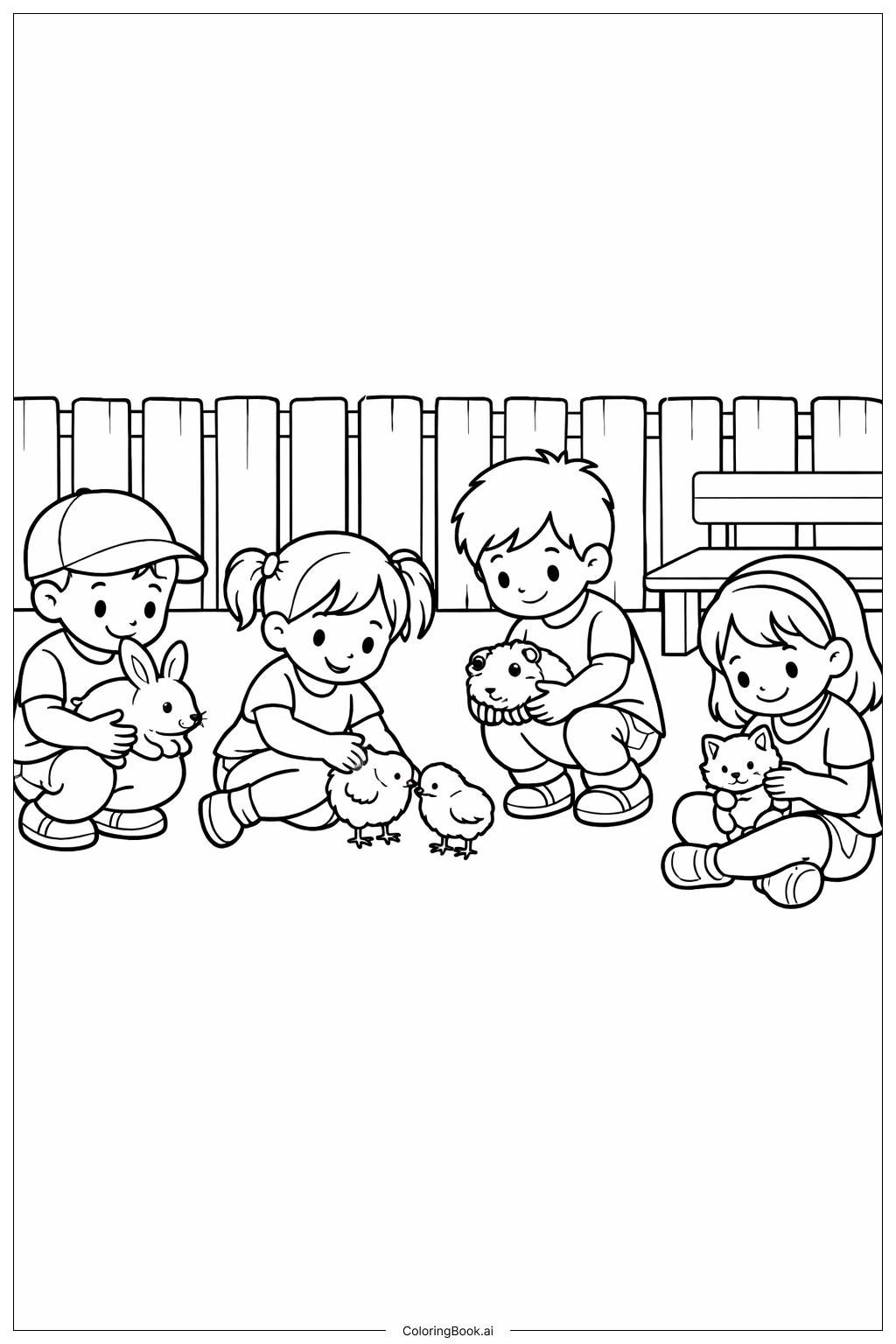
Coloring tips: How to color Zoo Petting Corner coloring page well?
Use bright colors for the children’s clothes like red, blue, yellow, and green to make them lively. Color the animals in realistic shades: brown or white for the rabbit, yellow for the chicks, light brown for the guinea pig, and gray or orange for the kitten. The wooden fence can be light brown or tan, and the bench can have a darker brown shade. Use a soft green or light blue for the ground or background to keep the mood cheerful and calm. Avoid using too many dark colors to keep the picture friendly and inviting.
Coloring challenges: Which parts are difficult to color and need attention for Zoo Petting Corner coloring page?
1. Small details on the animals, like eyes and fur patterns, need careful coloring to show their features. 2. Different textures: children’s clothes, animal fur, and wooden fence require different coloring techniques to make them look distinct. 3. Fine lines on the chicks’ feathers and the kitten’s face need steady hand and precision. 4. Balancing colors so the animals and children both stand out without one overpowering the other. 5. The background and bench have simpler shapes but should still be colored neatly to complete the picture.
Benefits of coloring books: Advantages of drawing Zoo Petting Corner coloring page
Coloring this image helps children develop fine motor skills by focusing on small details like the animals’ eyes and feathers. It also encourages creativity as they choose colors for clothes and animals. The picture teaches children about different animals and the fun of petting zoos. Coloring multiple textures helps improve hand-eye coordination. Finally, it promotes patience and concentration as kids work to fill all parts of the scene carefully.