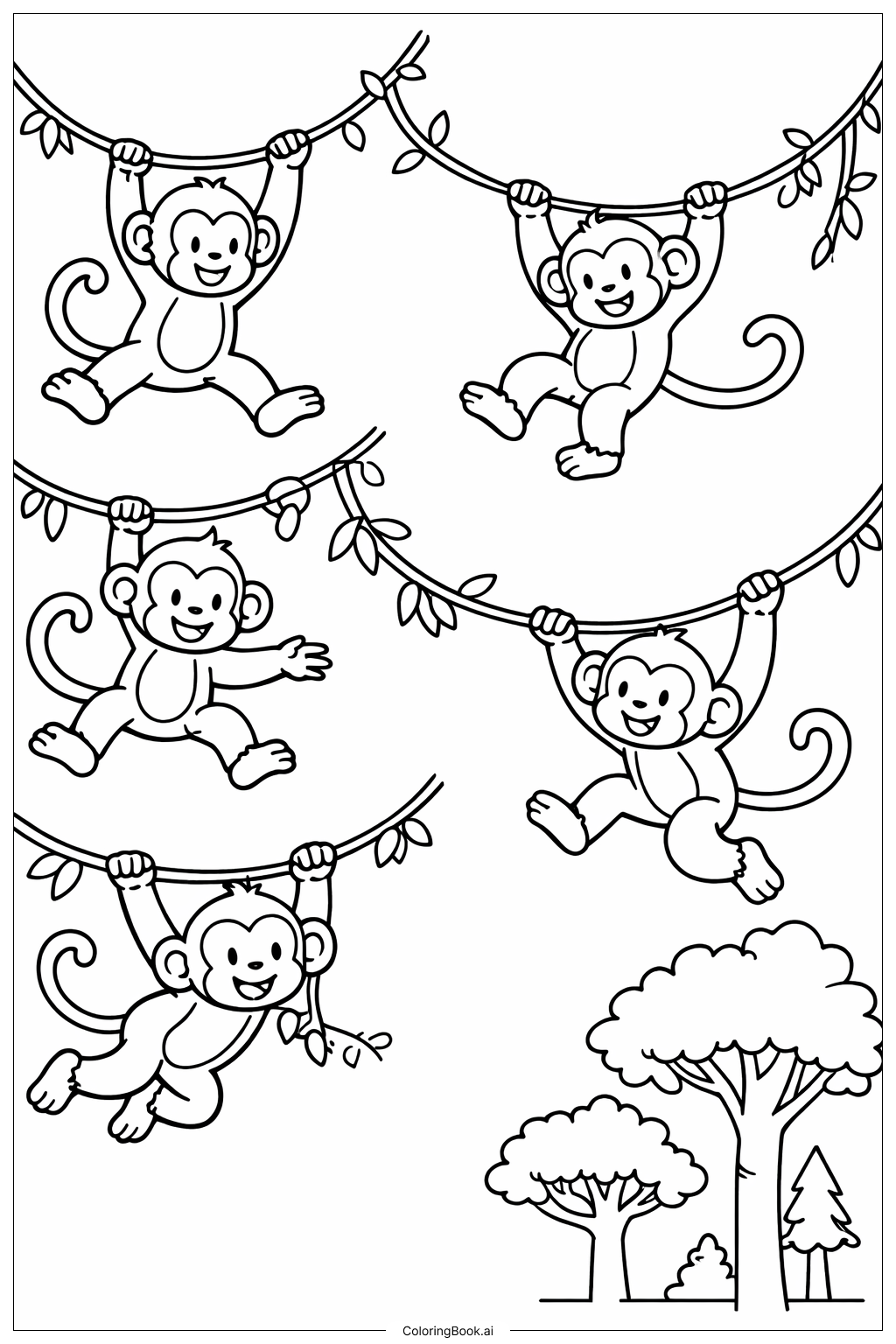
Coloring tips: How to color Zoo Swinging Monkeys coloring page well?
Use bright and cheerful colors for the monkeys, such as browns, tans, or even playful colors like orange or yellow. Color their faces and bellies in a lighter shade to make them stand out. For the vines and leaves, use varying shades of green to show depth and life. The trees can be colored in dark brown trunks and green tops. You can add some shading to show light and shadow, making the scene more realistic. Feel free to use your imagination and add colorful flowers or a blue sky background for extra fun. Try using crayons or colored pencils for smooth coloring inside the lines.
Coloring challenges: Which parts are difficult to color and need attention for Zoo Swinging Monkeys coloring page?
1. The small leaves on the vines require careful coloring to avoid coloring outside the lines. 2. The monkeys’ faces and hands are detailed with small areas that need precise coloring. 3. Swinging poses mean some monkey parts overlap, making it tricky to color separate sections clearly. 4. The vines curve and cross in many places, which can cause confusion when choosing colors to keep them distinct. 5. The different trees at the bottom have complex outlines, especially the leaves, requiring patience to color neatly.
Benefits of coloring books: Advantages of drawing Zoo Swinging Monkeys coloring page
Coloring this picture helps improve hand-eye coordination and fine motor skills because it has many small parts needing careful attention. The different shapes and poses of the monkeys encourage creativity while deciding which colors to use. It also teaches children about nature and animals, like monkeys and trees, making learning fun. Coloring the swinging monkeys can be relaxing and joyful, helping to reduce stress and increase focus. This activity boosts confidence as the child finishes a lively and happy zoo scene.