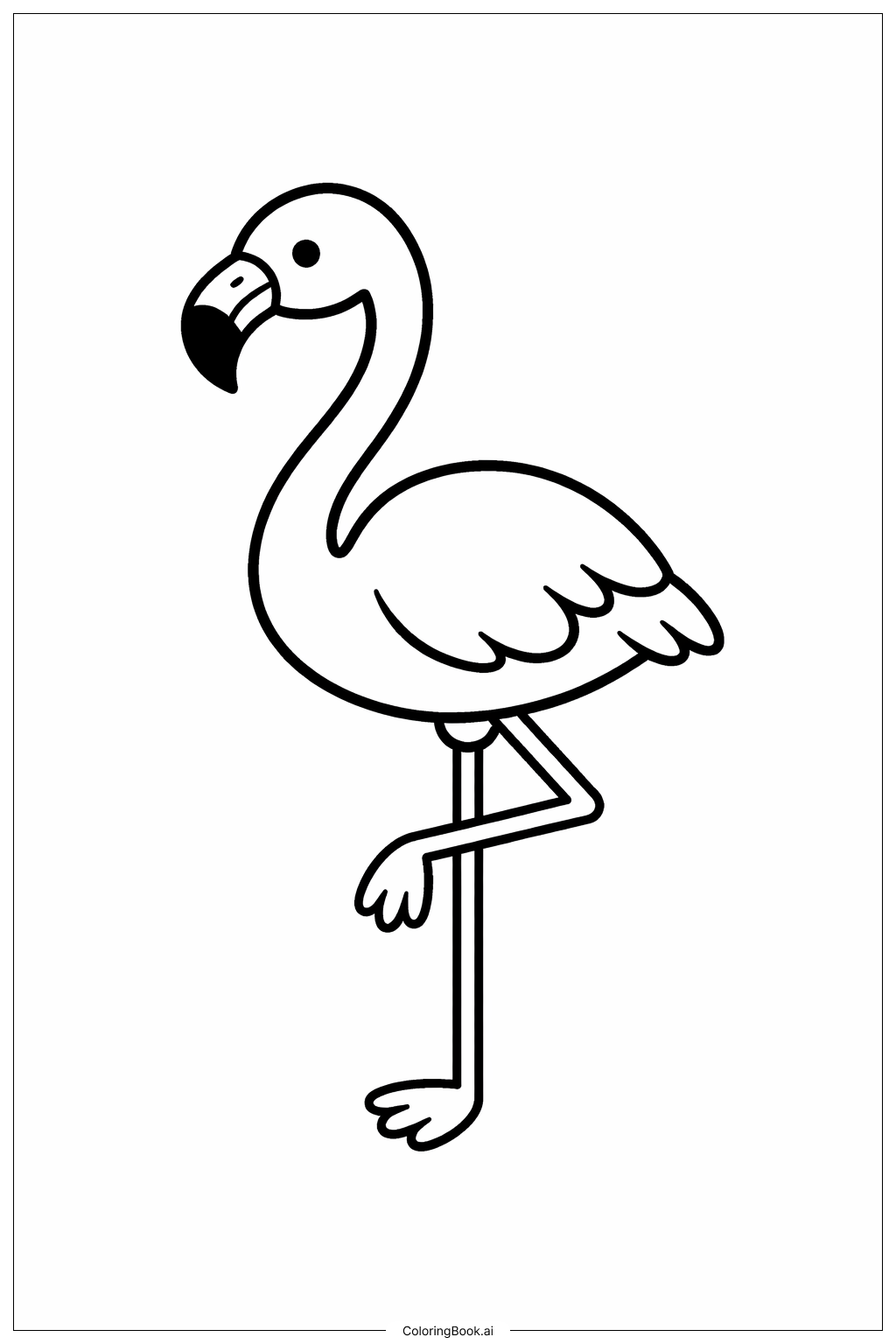
Coloring tips: How to color Zoo Flamingo Stand coloring page well?
Start with the flamingo's body using shades of pink. Use light pink for the main feathers and deeper pink or coral for the wing tips and areas with more shadow. The beak can be colored in two parts — pale yellow or white near the base and dark black or deep gray at the curved tip. Use a soft peach or cream for the inner neck area. Color the long legs in a medium pink with a touch of gray near the joints. For the background, try light blue for water, soft green for plants, and warm tan or gray for rocks. Using a slightly darker shade of the same color to add shading will make the flamingo look rounder and more lifelike. Take your time with the feathers — layering colors gently gives a fluffy, realistic look.
Coloring challenges: Which parts are difficult to color and need attention for Zoo Flamingo Stand coloring page?
• Layered Feather Details: The flamingo's body is covered in overlapping feathers with many fine lines and layers. Coloring each feather individually without going outside the lines takes a steady hand and patience. Young colorists may find it helpful to work from the outer edges inward, filling one feather at a time.
• Curved Neck and Body Shading: The flamingo's long, S-shaped neck has a rounded form that calls for gradual shading to look natural. Creating a smooth transition from light pink to deeper coral or rose without harsh lines can be tricky, especially for beginners who are still learning blending techniques.
• Small Beak Details: The hooked beak is a small but important feature. It has two distinct color zones — a lighter area near the face and a dark tip. Working carefully in such a small space without smudging or overlapping colors requires fine control of the coloring tool, making it a challenge for younger children.
• Thin Leg Proportions: The flamingo's legs are long and very slender. Staying within the narrow outlines while applying color evenly is difficult, especially with thicker crayons or markers. Using a fine-tipped tool or a sharpened colored pencil works best here.
• Background Balance: The background elements like water, rocks, and plants need to complement the flamingo without overshadowing it. Choosing colors that are softer or less saturated than the flamingo helps keep focus on the bird, but finding that right balance can be a creative challenge for colorists of all ages.
Benefits of coloring books: Advantages of drawing Zoo Flamingo Stand coloring page
Coloring this flamingo page offers a range of wonderful benefits for children and young learners. First, it builds fine motor skills. Carefully coloring within the flamingo's delicate feathers and thin legs strengthens hand muscles and improves pencil control — skills that support handwriting and everyday tasks.
Second, it encourages color creativity. Deciding which shades of pink, coral, or rose to use sparks imaginative thinking. Children learn that there is no single right answer, which builds confidence in their own choices.
Third, it teaches focus and patience. The detailed feather patterns and small beak require slow, careful work. Practicing this kind of concentration helps children develop attention spans that benefit them in school and daily life.
Fourth, it connects children to nature and animals. Learning about flamingos while coloring — like why they stand on one leg or how they get their pink color — turns a fun activity into a mini nature lesson.
Finally, completing the page gives a real sense of pride and accomplishment. Seeing a finished, colorful flamingo is rewarding and motivating, encouraging children to keep creating. It is a calming, screen-free activity that supports emotional well-being and a love of art.