Coloring tips: How to color World Map with Hot Air Balloons coloring page well?
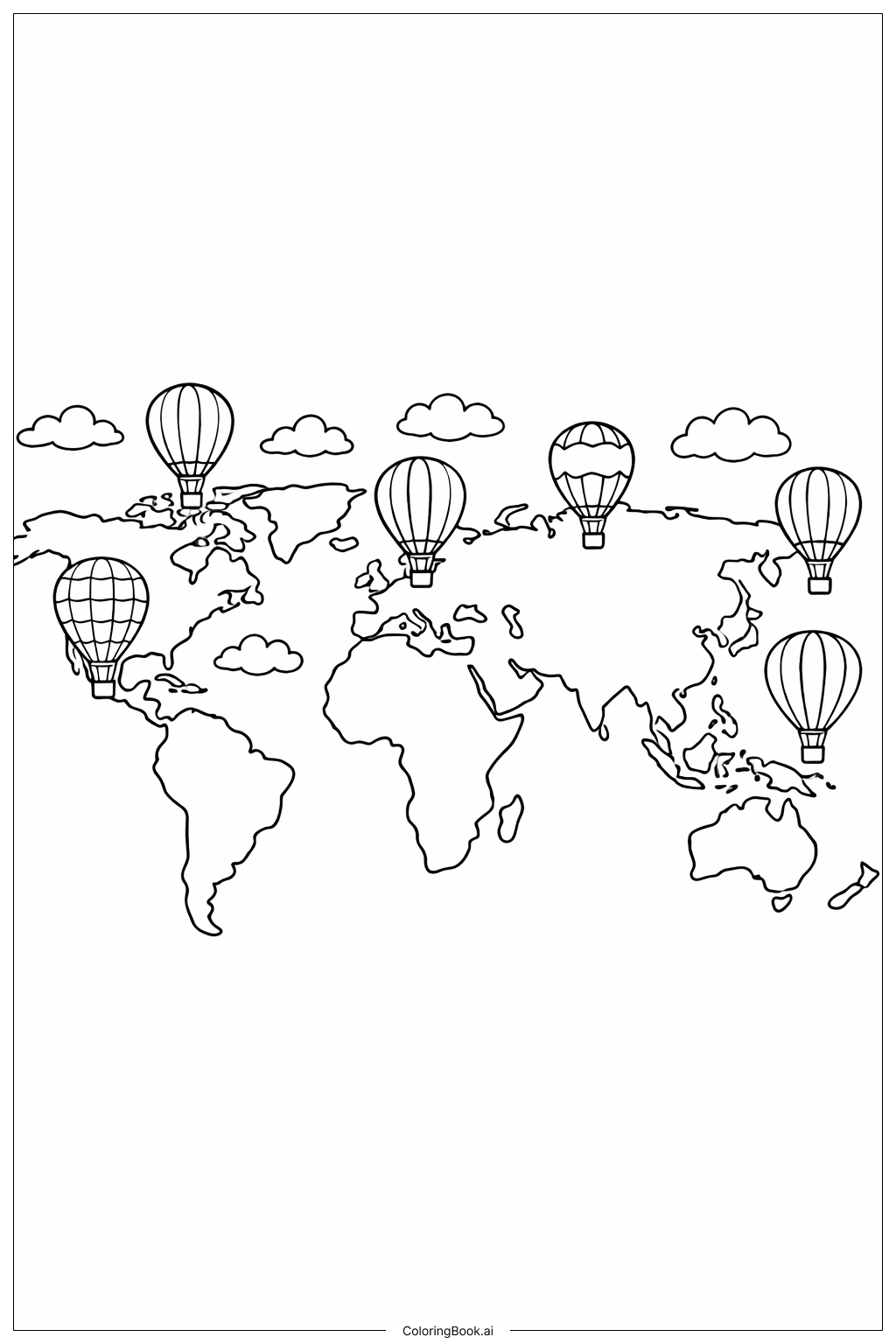
Start by coloring the continents in distinct, earthy tones. Use greens and yellows for land areas, and soft blues for the oceans and seas. Try lighter shades near coastlines and deeper blues toward the center of the oceans to create depth. For the hot air balloons, go bold and bright. Each balloon can have its own color theme — try red and orange stripes on one, purple and gold on another, and rainbow bands on a third. Use contrasting colors for the baskets hanging below each balloon. Color compass roses in warm golds or reds to make them stand out. Add light shading around the edges of continents to give them a slight three-dimensional feel. Keep the background sky area soft — pale blue or a gentle gradient from light yellow to sky blue works beautifully. Feel free to add your own patterns inside the balloon panels for extra fun.
Coloring challenges: Which parts are difficult to color and need attention for World Map with Hot Air Balloons coloring page?
• Map Border Precision: The outlines of the continents have many small curves and jagged coastlines. Staying inside these thin, detailed borders requires a fine-tipped colored pencil or marker. Rushing through these areas can result in colors bleeding outside the lines and making the map look messy. Take your time and work slowly along the edges.
• Ocean Gradients: Coloring large ocean areas evenly is harder than it looks. Achieving a smooth, consistent blue across wide spaces without streaks or patches takes patience and the right tools. Using colored pencils in light, layered strokes or light washes of watercolor can help create a cleaner result.
• Hot Air Balloon Patterns: Each balloon is divided into multiple panels with stripes, diamonds, or other geometric shapes. Keeping each tiny section neatly colored with a different color, without going over the dividing lines, demands careful control. Thin markers or sharp pencils are the best choice for these small sections.
• Color Coordination Across the Whole Page: Because the map and balloons share the same page, choosing colors that look good together matters. If the balloon colors are too similar to the continent colors, the balloons may visually blend into the map and lose their impact. Planning your full color palette before starting helps avoid this problem.
• Small Decorative Details: Elements like compass roses, dotted flight paths, and tiny landmark icons are very small. Coloring them without accidentally covering nearby areas requires a very fine tool and a steady hand, which can be especially challenging for younger colorists.
Benefits of coloring books: Advantages of drawing World Map with Hot Air Balloons coloring page
Coloring this World Map with Hot Air Balloons page offers a wonderful mix of fun and learning. As kids fill in the continents, they naturally start to notice the shapes and positions of different parts of the world. This builds early geography awareness in a relaxed and enjoyable way. The variety of elements on the page — from sweeping ocean areas to tiny balloon panels — means colorists get to practice many different techniques, from broad strokes to fine detail work. This variety keeps the activity engaging from start to finish. Working through a complex, detail-rich image also builds focus and patience. Choosing color combinations for the balloons encourages creative thinking and helps develop a sense of color harmony. For younger children, tracing carefully along the continent borders strengthens hand control and fine motor skills. For older kids and adults, the challenge of balancing colors across a large, busy composition sharpens planning and decision-making skills. Overall, this page turns a simple coloring session into an inspiring mini adventure around the world.