Coloring tips: How to color World Map with Animal Footprints coloring page well?
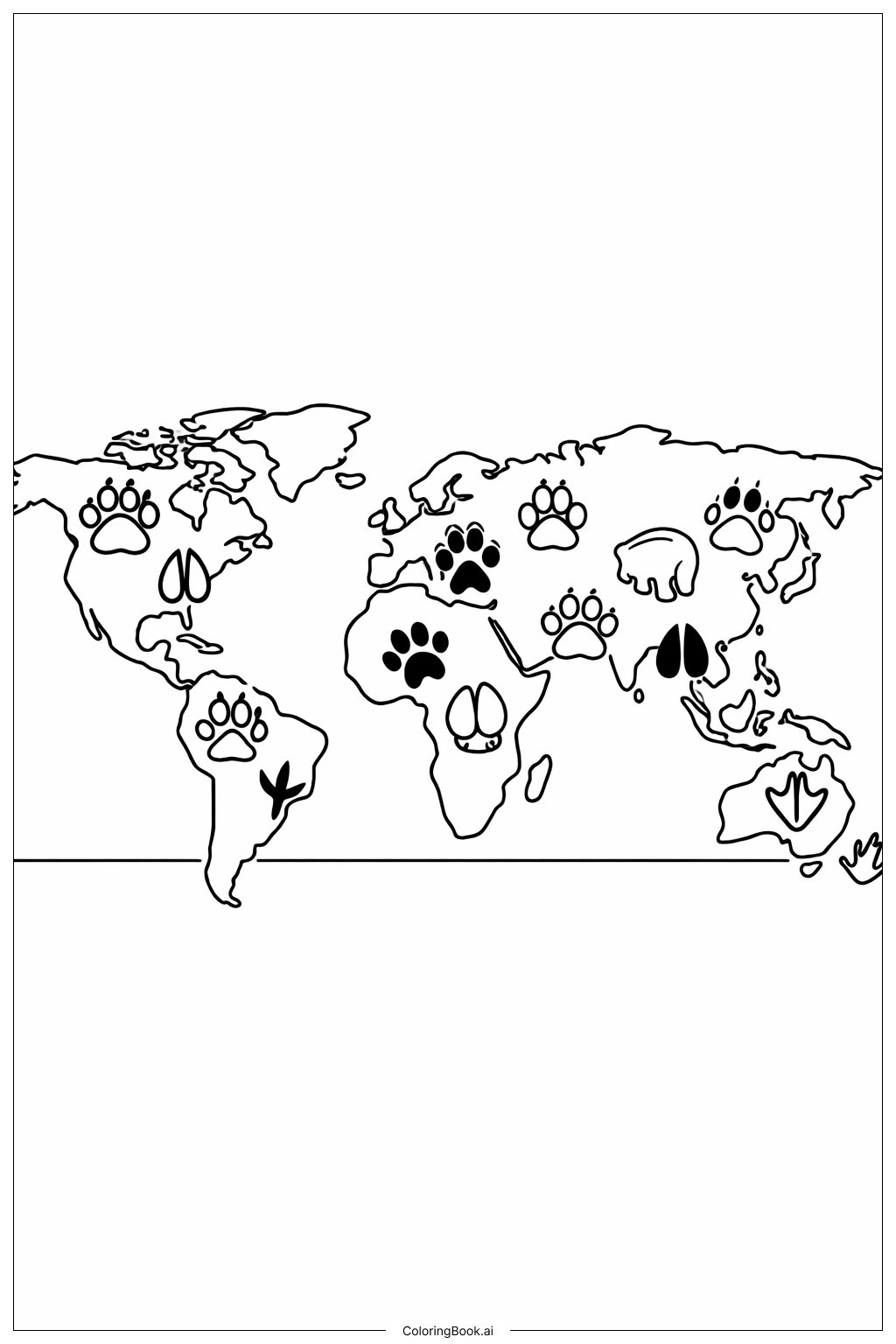
To bring this World Map with Animal Footprints to life, start by choosing bright, natural colors for the continents and oceans. You can color the land areas in shades of green, brown, and yellow to show forests, deserts, and grasslands. Use blues for the water but feel free to add some light waves or shades for depth. When coloring the animal footprints, pick distinct colors that stand out against the land, like red, orange, or dark brown. You can even color each footprint differently to match the animal it belongs to. Remember to stay inside the lines, and feel free to add details like trees or mountains around the footprints to make it more realistic. This creates a vivid and fun world map full of animals to discover.
Coloring challenges: Which parts are difficult to color and need attention for World Map with Animal Footprints coloring page?
• Small Details: Some animal footprints have small, intricate shapes and spaces within them that require careful coloring with a sharp pencil or thin marker. • Overlapping Lines: The edges of some continents and footprints overlap slightly, making it a challenge to avoid mixing colors and keep areas distinct. • Large Areas: Wide spaces like oceans need even and smooth coloring to look good, which can be difficult for younger children to fill in without streaks. • Symmetry and Proportion: Keeping the footprints proportional while coloring inside the outlines may take patience and a steady hand. • Maintaining Focus: Because the map has many different regions and footprints, it might be tempting to rush, but spending time on each area helps produce a nicer final result.
Benefits of coloring books: Advantages of drawing World Map with Animal Footprints coloring page
Coloring this World Map with Animal Footprints promotes both creativity and learning. It helps children improve their fine motor skills by practicing careful coloring inside varied shapes. The map builds awareness of geography and animal diversity around the globe, sparking curiosity about different continents and wildlife. It also develops concentration and patience as kids work on detailed parts of the footprints and large spaces like oceans. Coloring encourages a connection with nature and animals while introducing basic map-reading concepts, making it an educational activity that is fun and rewarding.