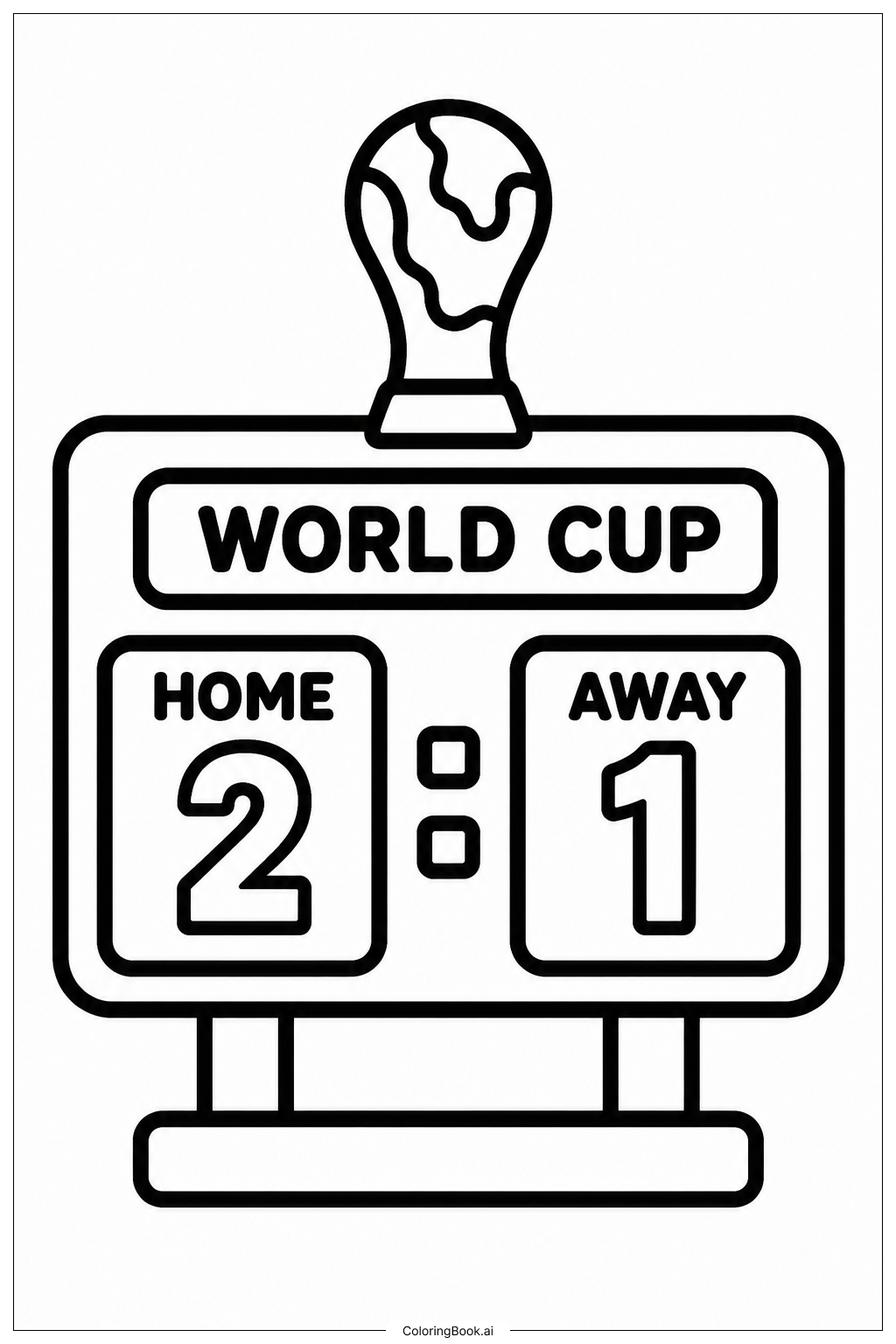
Coloring tips: How to color World Cup Scoreboard coloring page well?
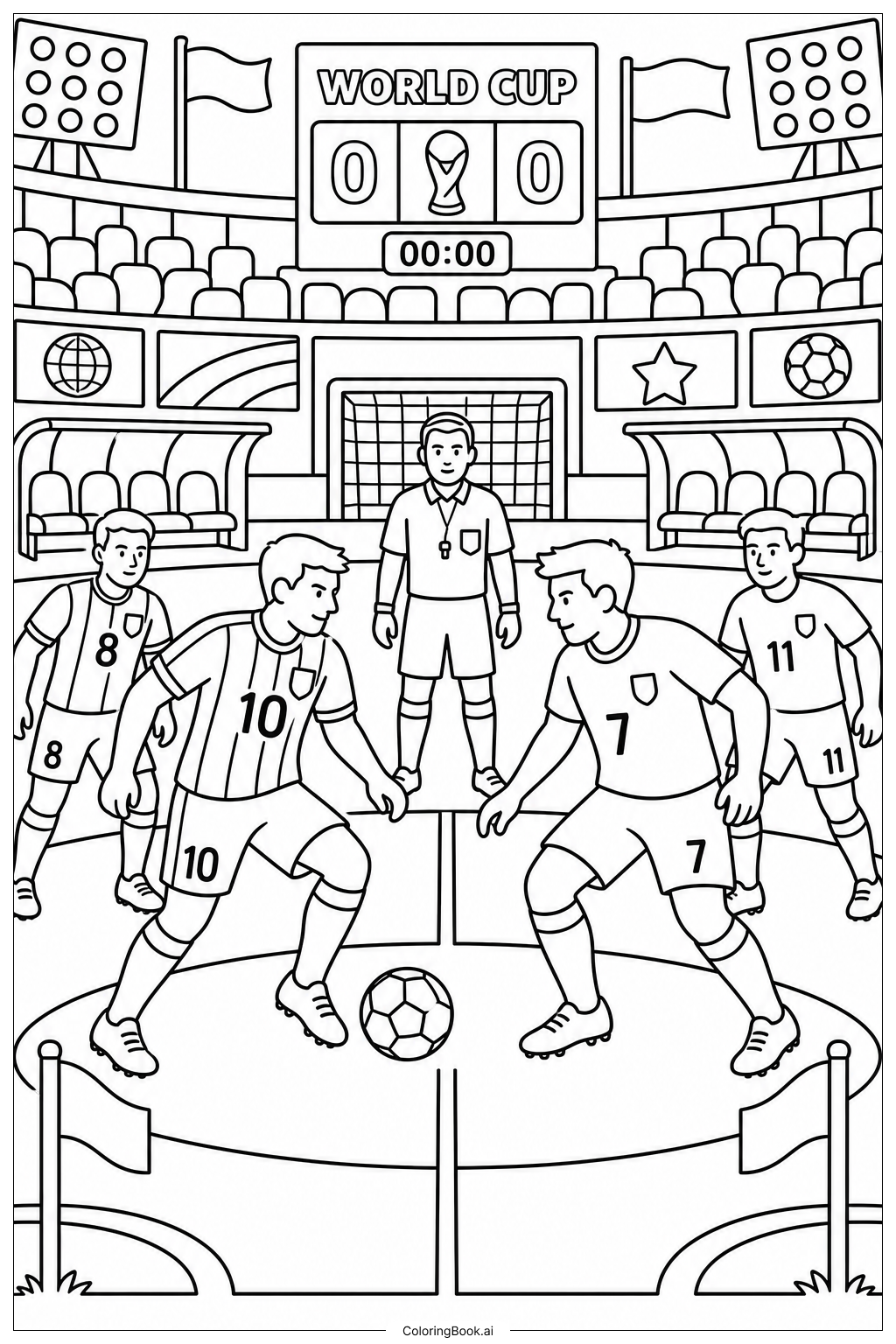
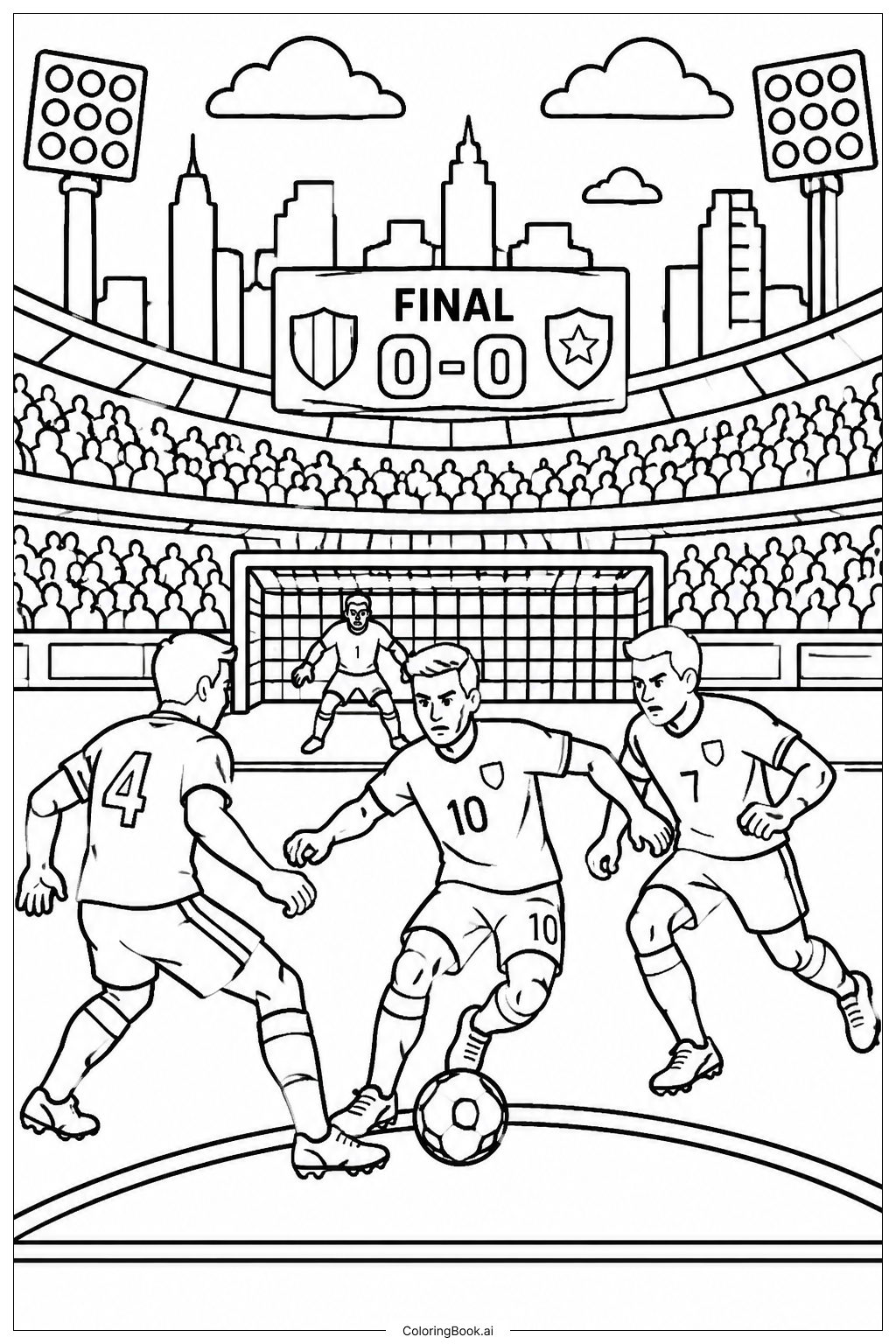
Start with the scoreboard frame. Use dark greens or deep blues to give it a bold, stadium feel. Color the numbers in bright white or yellow so they pop against the darker background. For the team name banners, pick two contrasting colors — one for each team — to make them easy to tell apart. Use gold or yellow for the stars and trophy icons to give them a shiny, winning look. Color the soccer balls in classic black and white, or go creative with your own color combo. For the crowd silhouettes, try shades of grey, purple, or navy. Fill the pennant flags with bold, bright colors like red, orange, and green. Use warm yellows and oranges for the rays bursting from behind the scoreboard to create a dramatic, exciting glow. Let kids experiment freely — there are no wrong color choices here!
Coloring challenges: Which parts are difficult to color and need attention for World Cup Scoreboard coloring page?
• Scoreboard Numbers and Text: The bold numbers and team name text on the scoreboard require careful coloring to stay within the tight outlines. The letters sit close together, so a fine-tipped marker or a sharpened colored pencil works best. Accidentally coloring outside the lines here can make the score hard to read.
• Small Star and Trophy Details: The decorative stars and trophy icons contain small inner shapes and tiny edges. These details demand patience and a steady hand. Using a very fine point tool helps keep each element clean and distinct without smudging neighboring areas.
• Crowd Silhouettes in the Background: The stadium crowd is made up of many overlapping small figures. Deciding on a consistent color scheme while keeping individual figures visible is tricky. Layering light base colors first and then adding darker shading helps separate the figures naturally.
• Pennant Flags Along the Top: The row of pennant flags includes multiple small triangular shapes lined up closely. Alternating colors between each flag looks great but requires attention to avoid repeating the same color in neighboring pennants. Precision near the string line connecting the flags is especially important.
• Radiating Rays Behind the Scoreboard: The burst of rays spreading outward behind the scoreboard covers a wide area with many narrow, wedge-shaped sections. Coloring each ray evenly and keeping a smooth gradient from the center outward takes time. Rushing through this section often results in uneven tones or visible streaks.
Benefits of coloring books: Advantages of drawing World Cup Scoreboard coloring page
Coloring this World Cup Scoreboard page is a fun way for kids to connect with the excitement of soccer's biggest tournament. It builds fine motor skills as children carefully fill in numbers, flags, and tiny decorative details. Staying within the lines of small, closely packed shapes helps develop hand-eye coordination and pencil control over time.
Choosing colors for each team's banner encourages creative thinking and decision-making. Kids practice color theory naturally by picking contrasting shades that make the two teams stand out from each other. This kind of visual problem-solving builds confidence and artistic instinct.
The page also sparks curiosity about the World Cup itself. Children may ask questions about teams, countries, and tournament rules, turning a coloring session into a light learning moment. It is a great conversation starter between kids and parents or teachers.
For older children and teens, the detailed crowd silhouettes and layered background offer a satisfying challenge. Completing a complex scene like this builds patience, focus, and a sense of accomplishment. Whether coloring solo or with friends, this page turns World Cup enthusiasm into a hands-on creative activity that is both relaxing and rewarding.