Coloring tips: How to color World Cup Player Dribbling coloring page well?
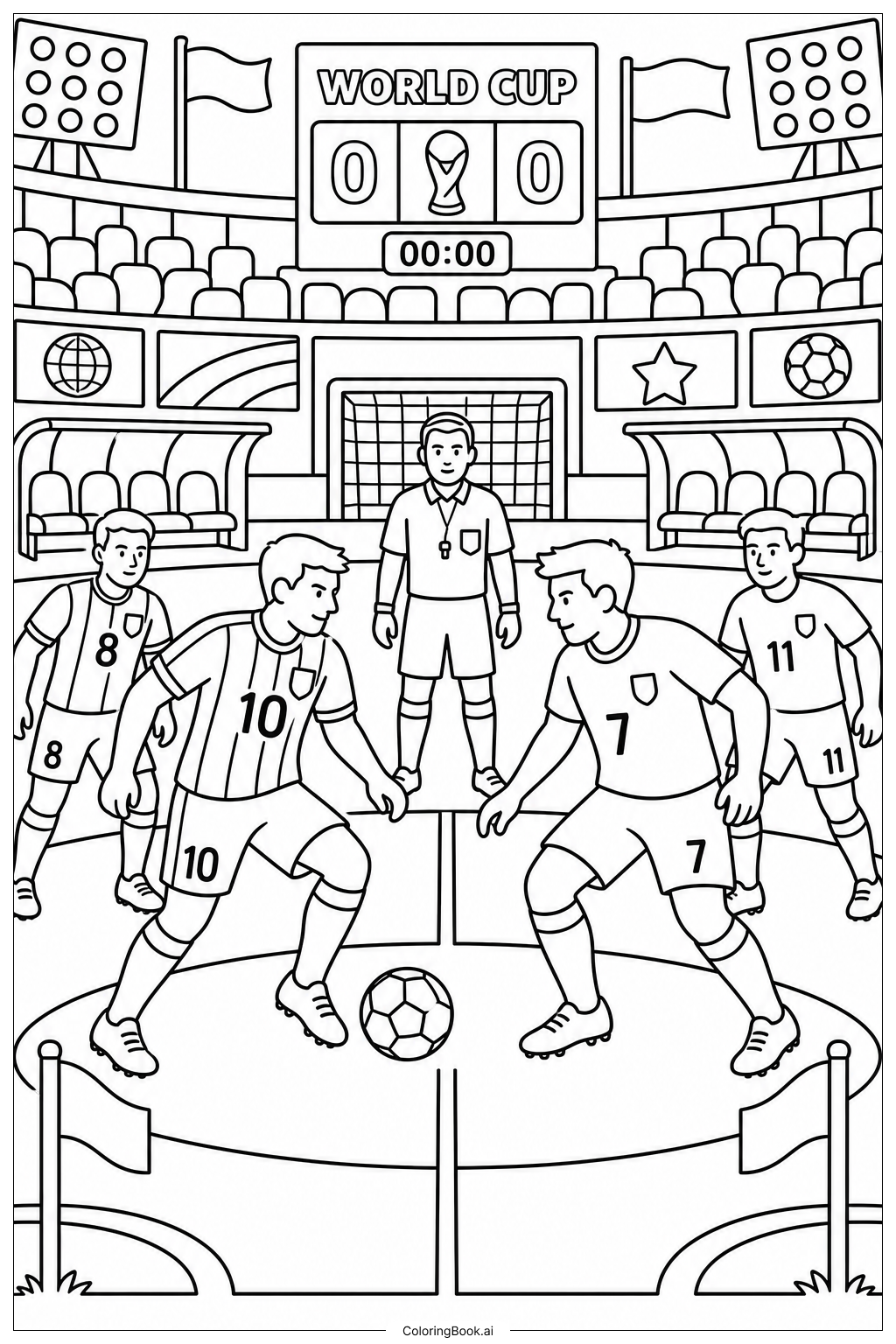
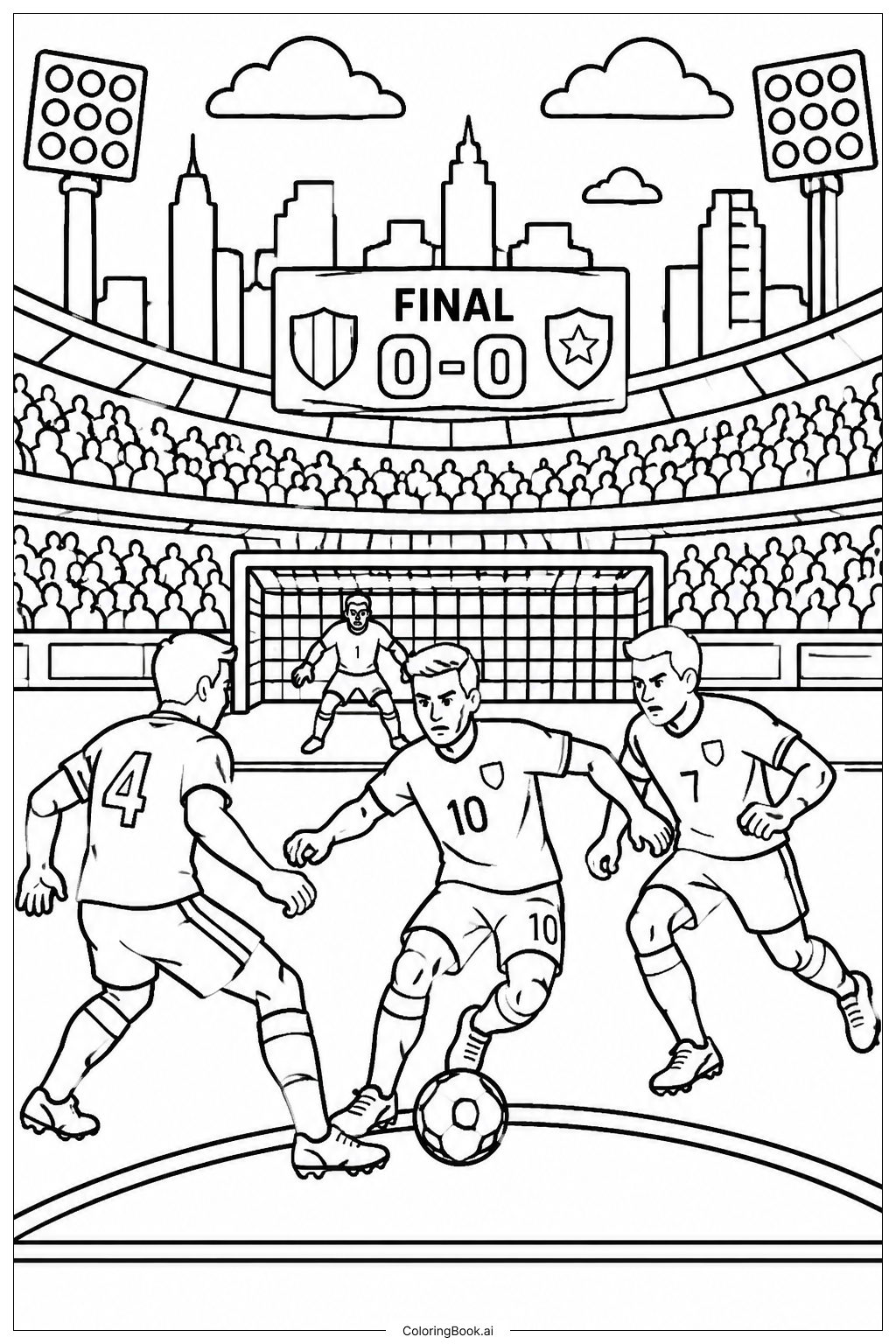
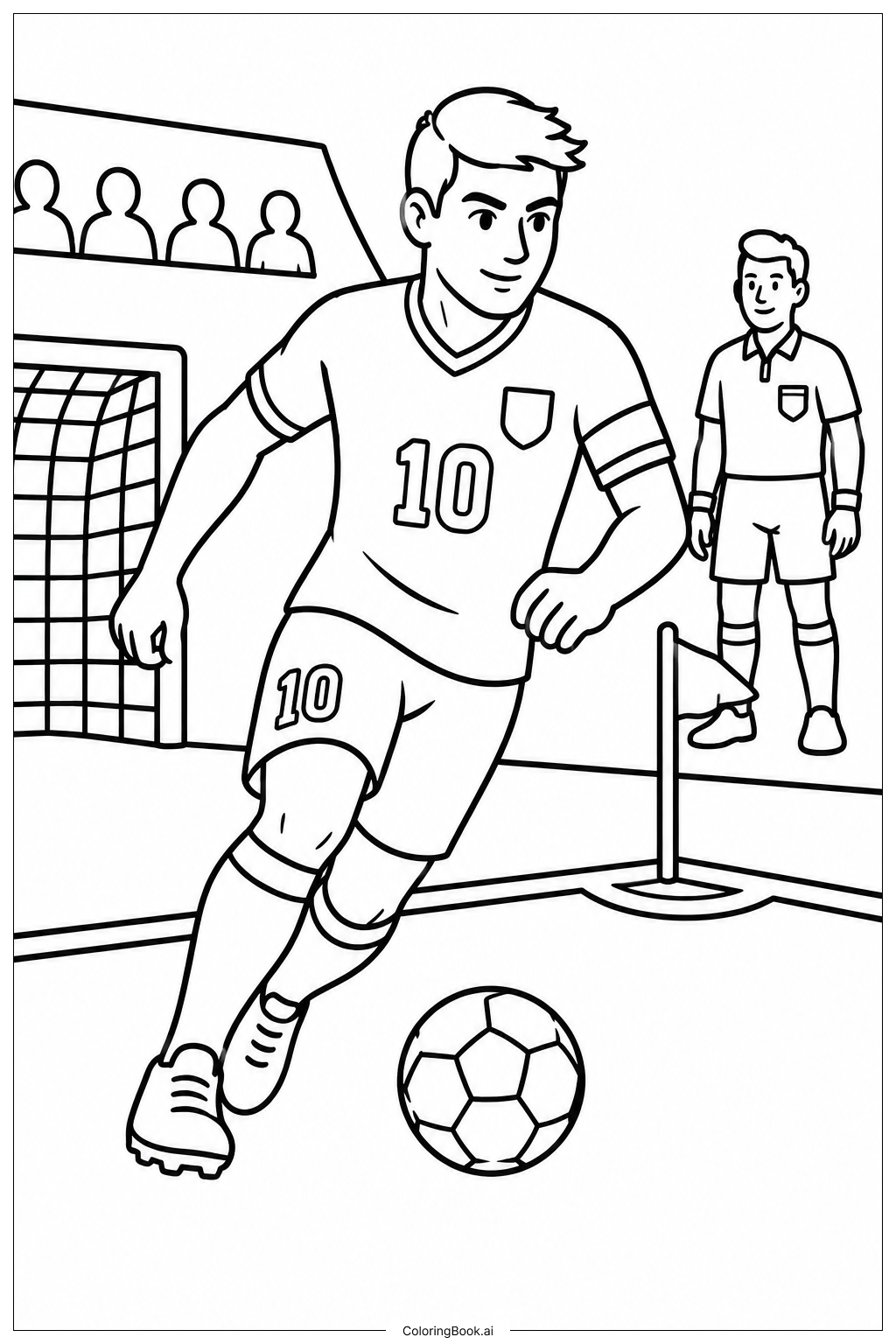
Start with the player's skin tone using light peach, brown, or tan shades depending on the look you want. For the jersey and shorts, pick bold team colors like red, blue, yellow, or green to make the uniform stand out. Use white or contrasting colors for the jersey number and stripes. Color the socks in a matching team color and make the cleats dark brown or black. The soccer ball is best done in classic black and white, or you can go creative with bright colors. For the stadium background, use light blues and grays for the stands and add small splashes of color for the crowd. Try blending colors on the grass to give it a natural green feel. Younger colorists can keep things simple with flat colors, while older kids can try shading on the player's arms and legs to show muscle tone and movement.
Coloring challenges: Which parts are difficult to color and need attention for World Cup Player Dribbling coloring page?
• Jersey Details and Numbers: The player's jersey likely includes small design elements like stripes, a collar, and a number on the back or front. Staying inside these fine lines requires a steady hand and thin-tipped colored pencils or fine markers. Rushing through this area can cause colors to bleed into each other.\n\n• Foot and Ball Interaction: The area where the player's foot meets the soccer ball is one of the trickiest parts of this image. The overlapping shapes of the cleat, sock, and ball create a compact zone where multiple colors need to meet cleanly. Take your time and work from the ball outward to avoid smudging.\n\n• Motion Lines and Background: Lines suggesting speed and movement can be hard to color without losing their effect. Using very light shading or leaving them close to the base paper color helps preserve the sense of action. Applying too much color in these areas can flatten the dynamic feel of the image.\n\n• Crowd and Stadium Background: The background crowd is made up of many small, tightly packed shapes. Filling each one individually is time-consuming. A good strategy is to use broader strokes with a few repeating colors like blue, red, and yellow to suggest a lively crowd without needing to color every figure precisely.\n\n• Shading for Depth and Movement: Creating a three-dimensional look on the player's body — especially the arms, legs, and torso — requires layering light and dark tones. This is challenging for beginners but very rewarding. Focus on adding darker shading along the inner edges of limbs and lighter tones where light would naturally hit the player.
Benefits of coloring books: Advantages of drawing World Cup Player Dribbling coloring page
Coloring this World Cup Player Dribbling page offers a wonderful mix of fun and learning for kids of all ages. First, it helps build fine motor skills. Carefully staying inside the lines of a detailed soccer player trains the small muscles in the hands and improves pencil control, which also helps with handwriting. Second, it encourages creativity. Choosing team colors, deciding on skin tones, and personalizing the uniform lets each child make the image their very own. There is no wrong answer — every choice is a creative one. Third, it sparks an interest in sports. Coloring a soccer player in action can inspire kids to learn more about the World Cup, different countries, and the game itself. It opens the door to conversations about teamwork, dedication, and global culture. Fourth, it supports focus and patience. Completing a detailed image like this one teaches kids to slow down, concentrate, and see a task through to the end — all valuable life skills. Finally, it is simply a joyful activity. Sitting down with crayons or colored pencils and bringing a soccer hero to life is relaxing, satisfying, and a great way to celebrate the beautiful game.