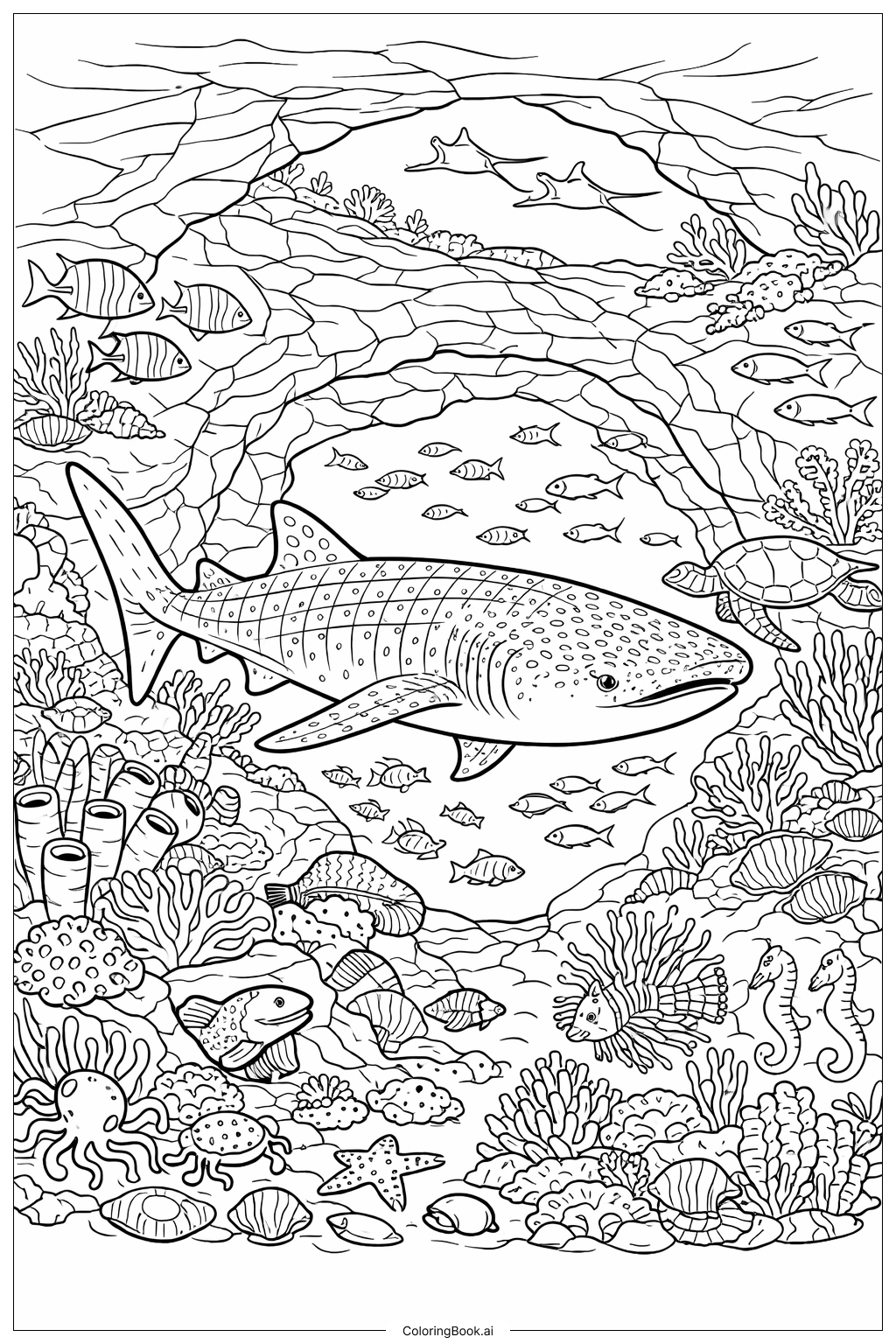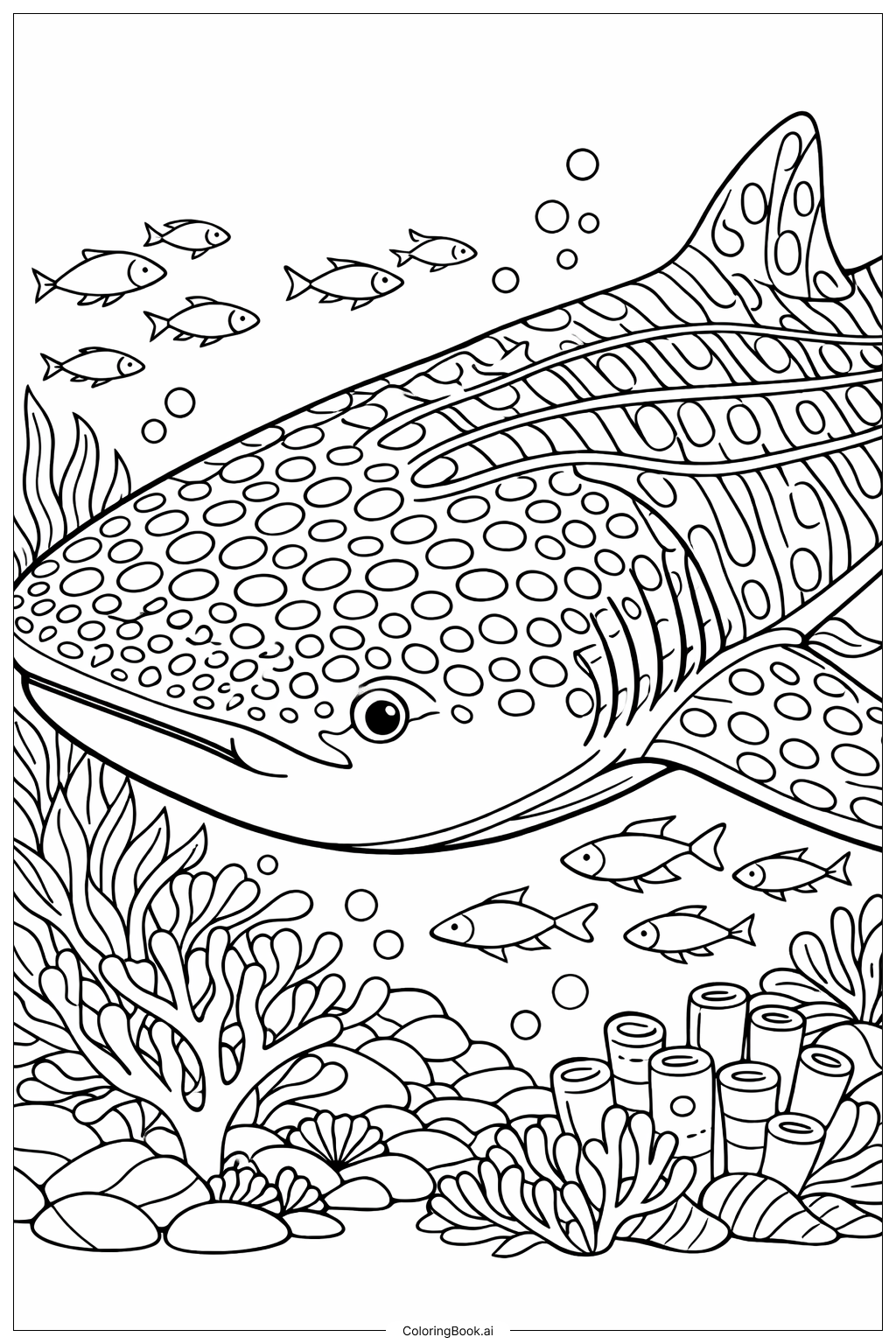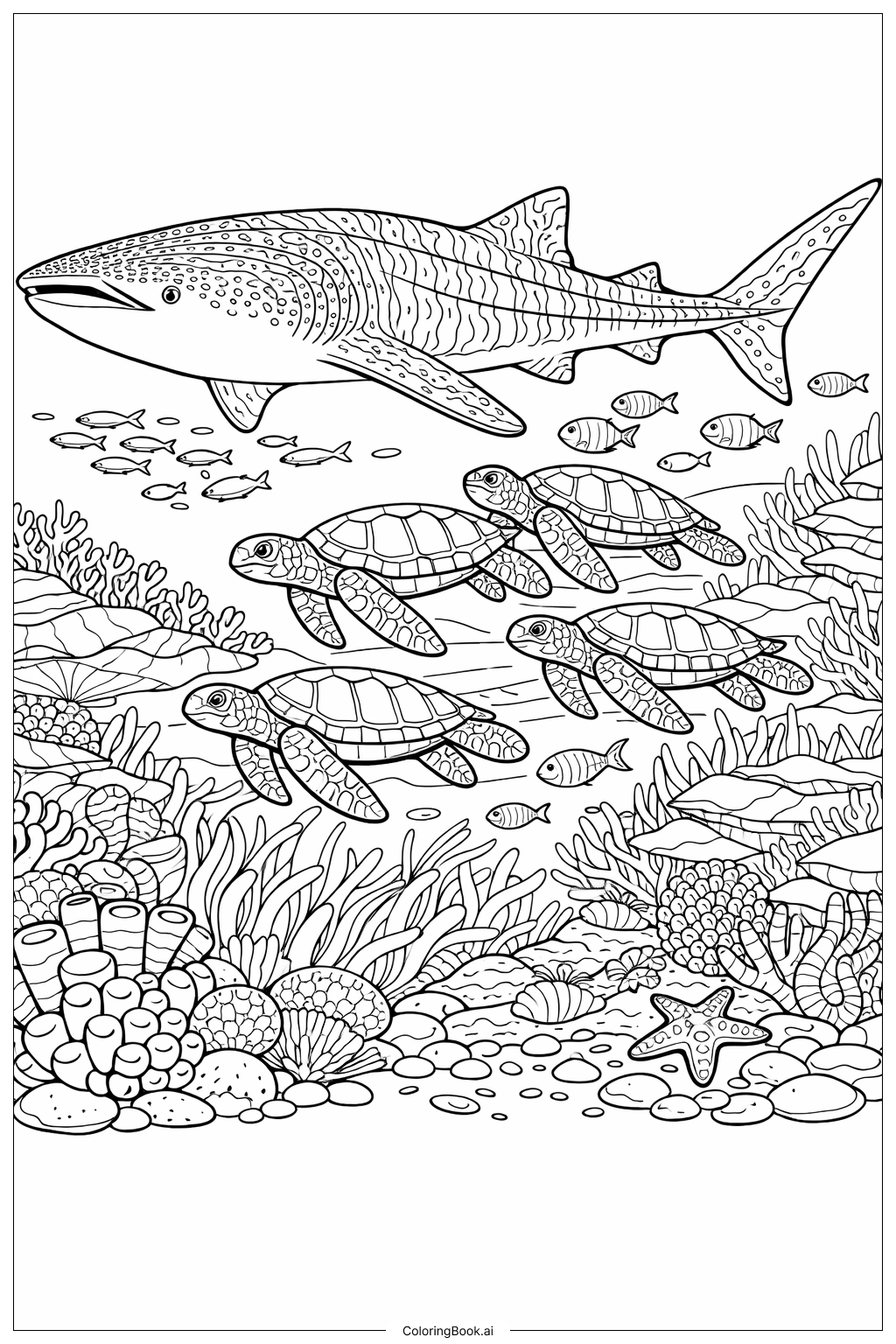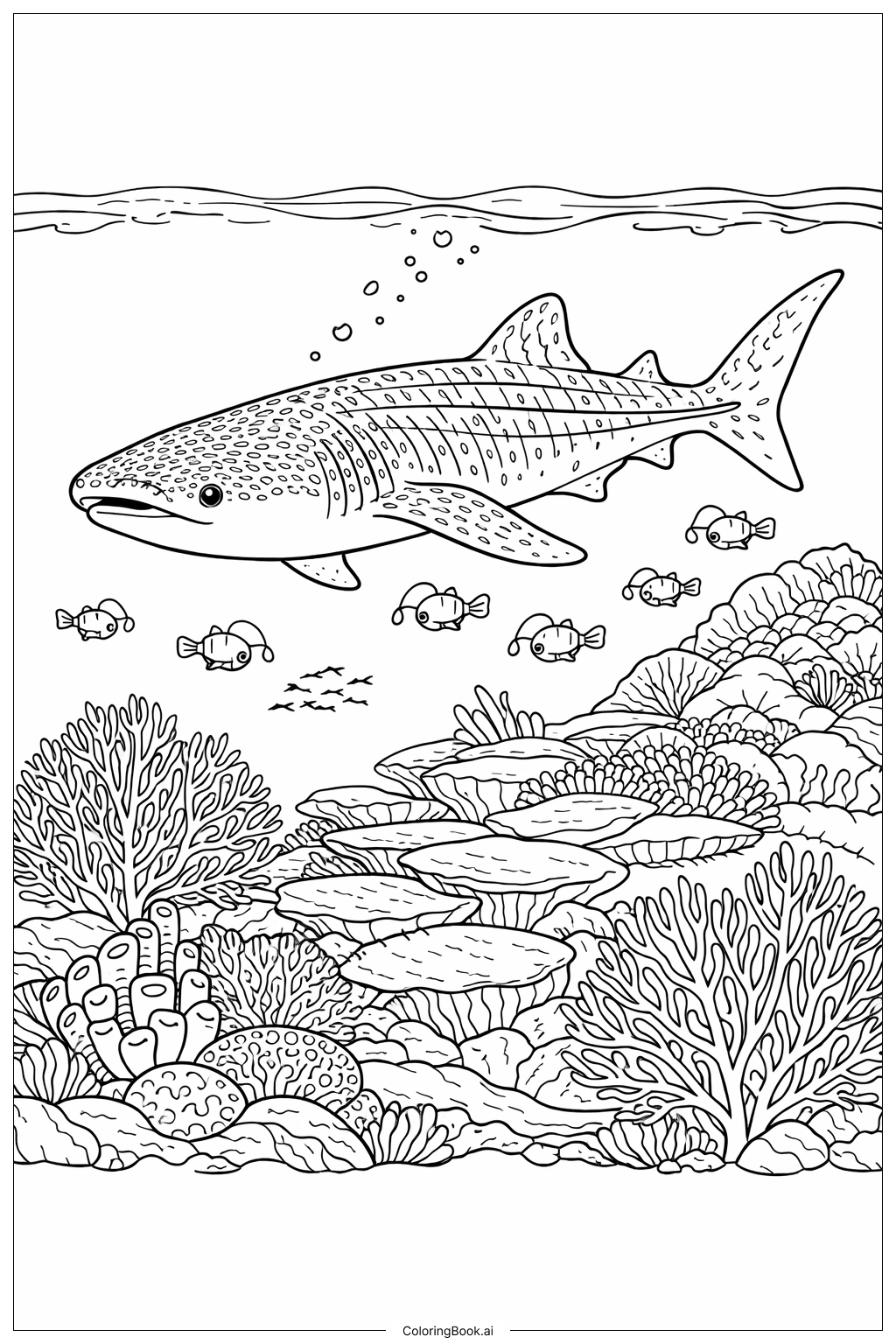
Coloring tips: How to color Whale Shark Exploring Kelp coloring page well?
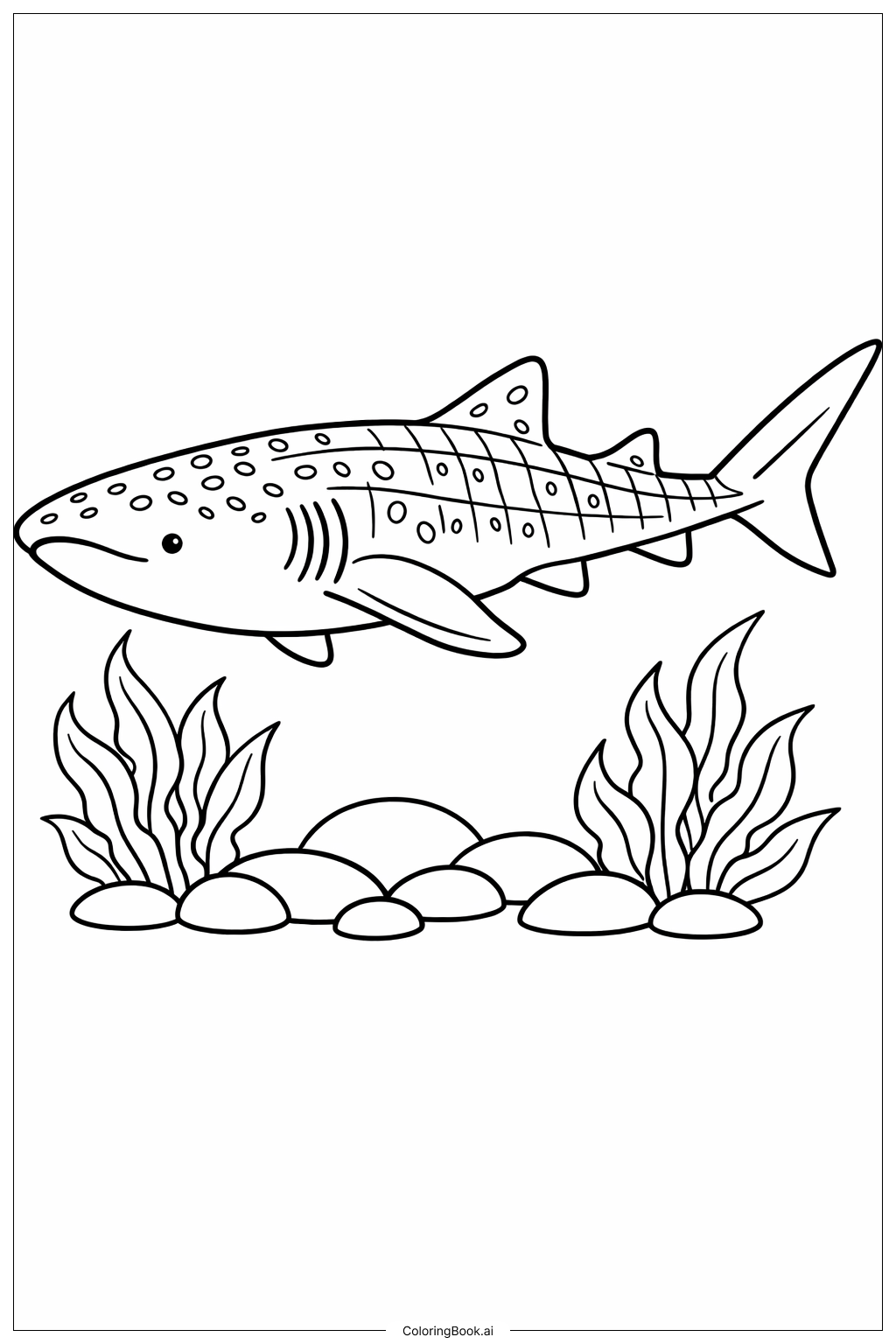
For this Whale Shark Exploring Kelp image, start by coloring the whale shark’s body in shades of gray or blue-gray. Use white or light cream for its spots and stripes to create contrast. The kelp leaves can be colored in different tones of green, from dark olive to bright lime, to show their depth and freshness. To give the water a calm feeling, choose soft blues or turquoise shades in the background. You can also add light touches of yellow or light green on the kelp leaves to show sunlight filtering through the water. Try using smooth strokes to color the whale shark and leafy patterns for the kelp to add texture.
Coloring challenges: Which parts are difficult to color and need attention for Whale Shark Exploring Kelp coloring page?
• Detail Work: The whale shark’s body has many small spots and stripes that require careful coloring to keep them neat and visible without blending together.
• Texture Contrast: Capturing the smooth skin of the whale shark versus the textured, leafy kelp can be tricky because they use different coloring styles and shades.
• Layering Colors: The kelp leaves overlap in places, so choosing and layering different green tones correctly is important to show depth.
• Water Background: Balancing the right colors and gradients in the background to suggest underwater light while not overpowering the main subject can be a challenge.
• Maintaining Shape: Coloring inside the whale shark’s silhouette without crossing into the kelp or background parts needs steady focus, especially around detailed areas like the mouth and fins.
Benefits of coloring books: Advantages of drawing Whale Shark Exploring Kelp coloring page
Coloring this Whale Shark Exploring Kelp image helps develop fine motor skills by requiring careful attention to small details like the spots and narrow kelp leaves. It encourages using color contrast and shading to bring underwater scenes to life, improving understanding of light and texture. This activity also invites creativity in choosing natural shades while inspiring curiosity about marine life and ocean habitats. Children and adults alike can enjoy the calming experience of coloring flowing kelp and the gentle, graceful movement of the whale shark. It’s a fun way to practice patience and focus while connecting with nature through art.