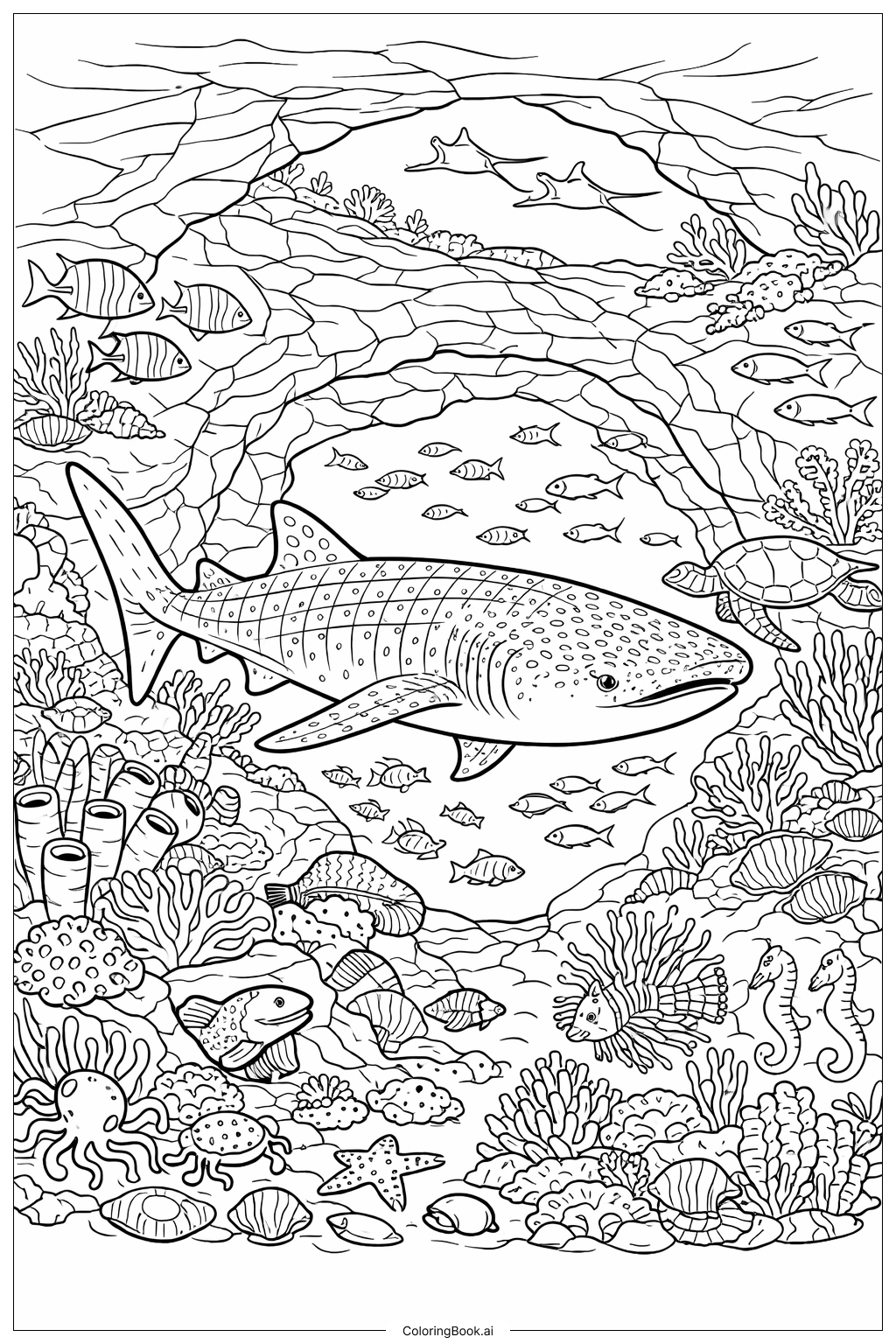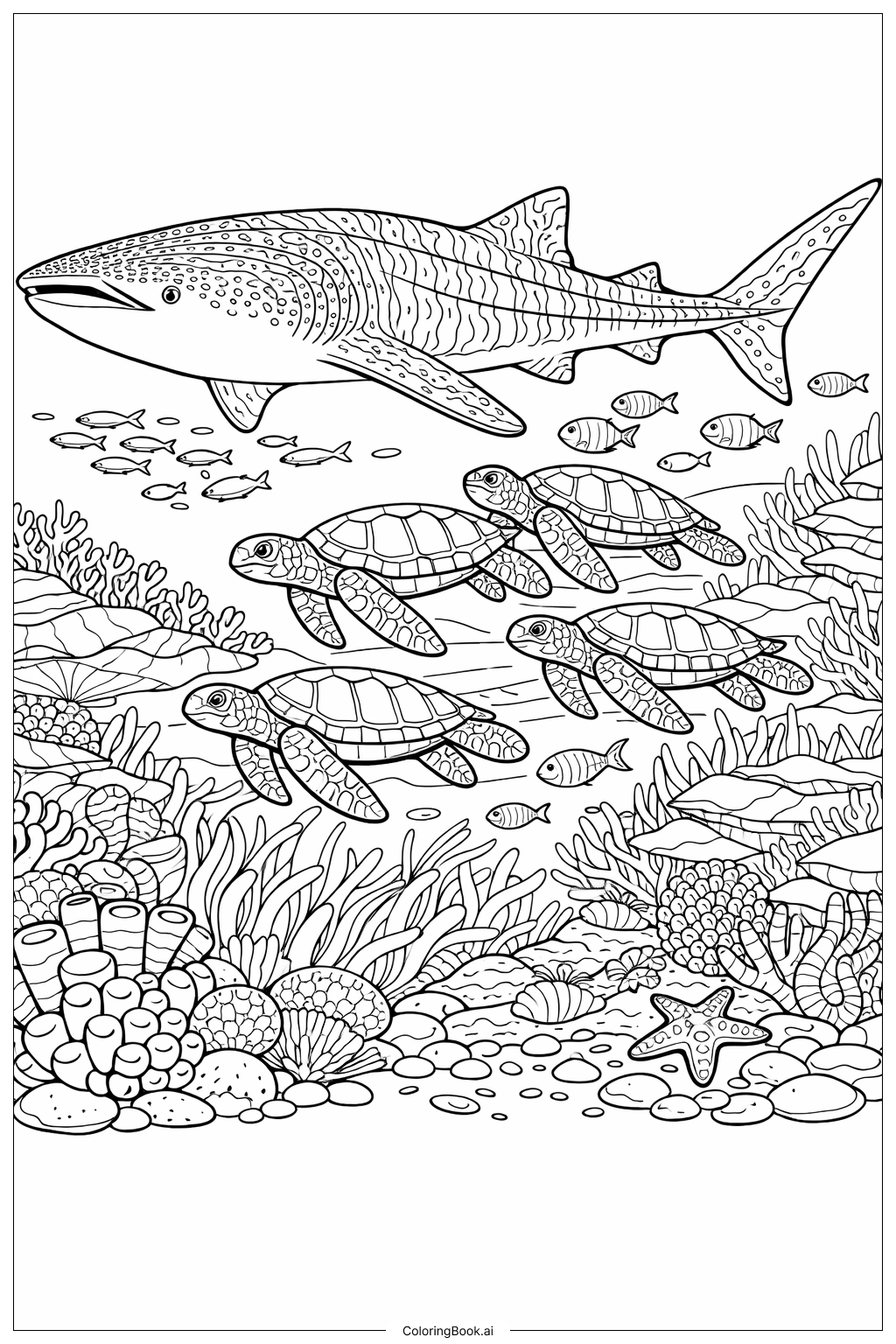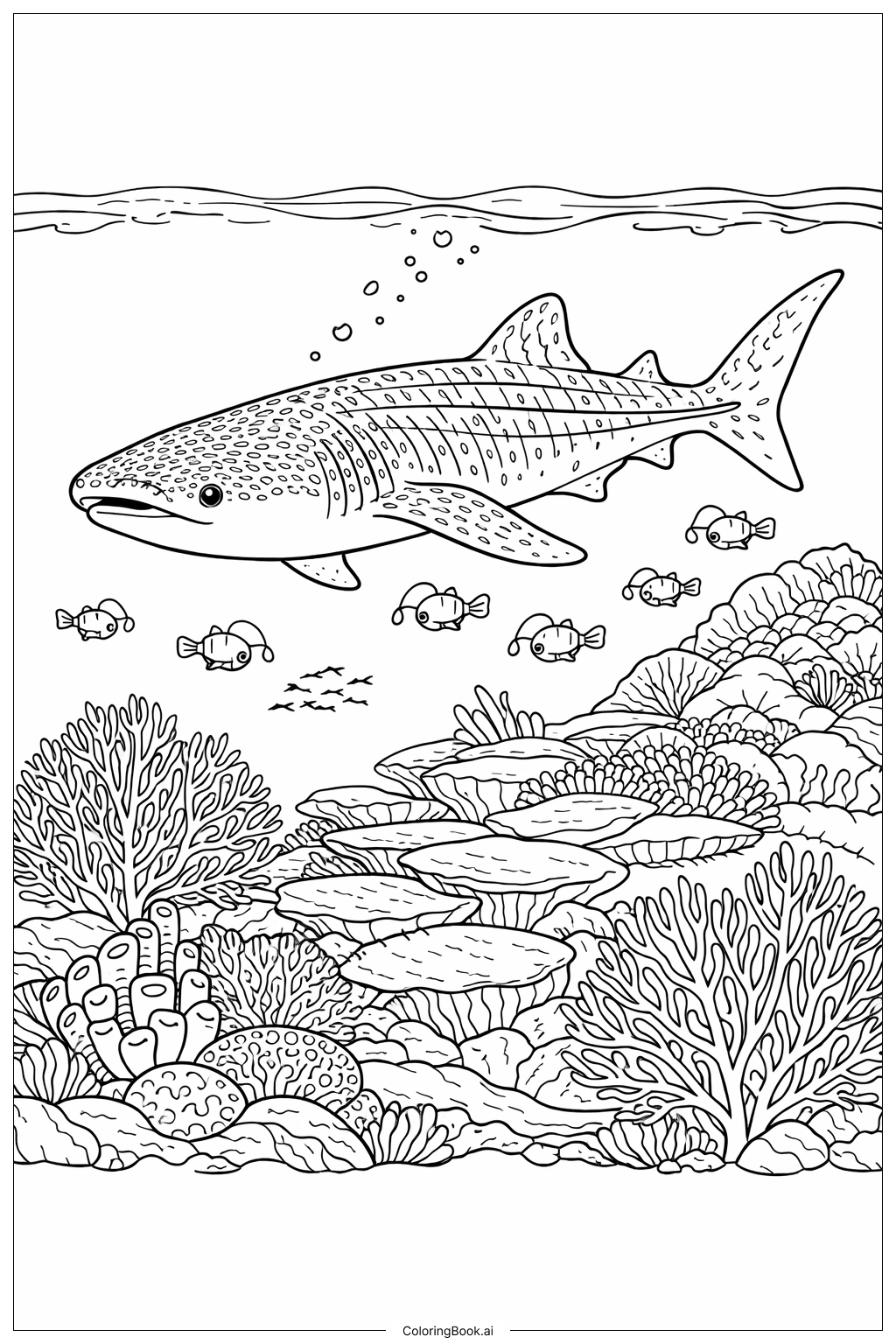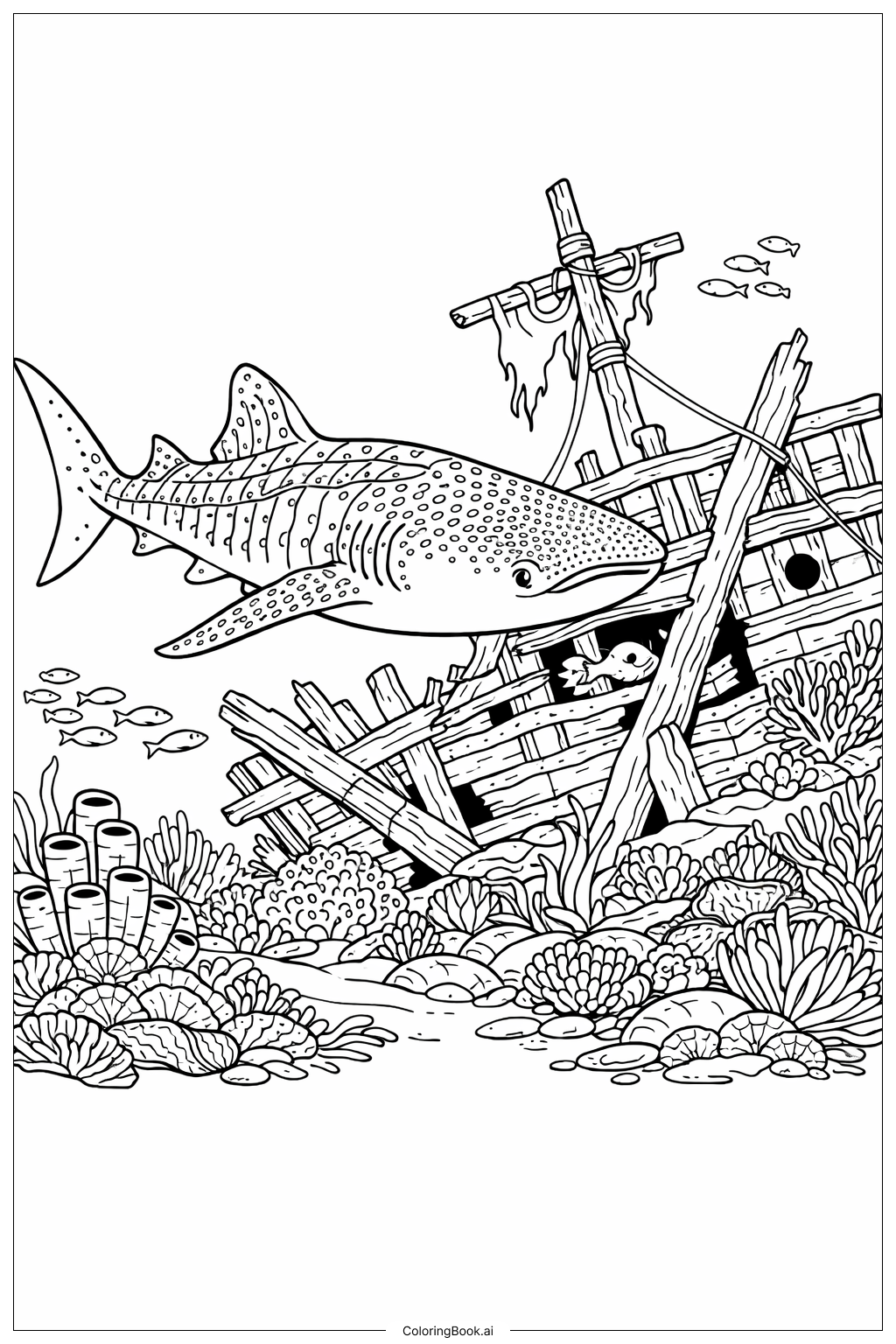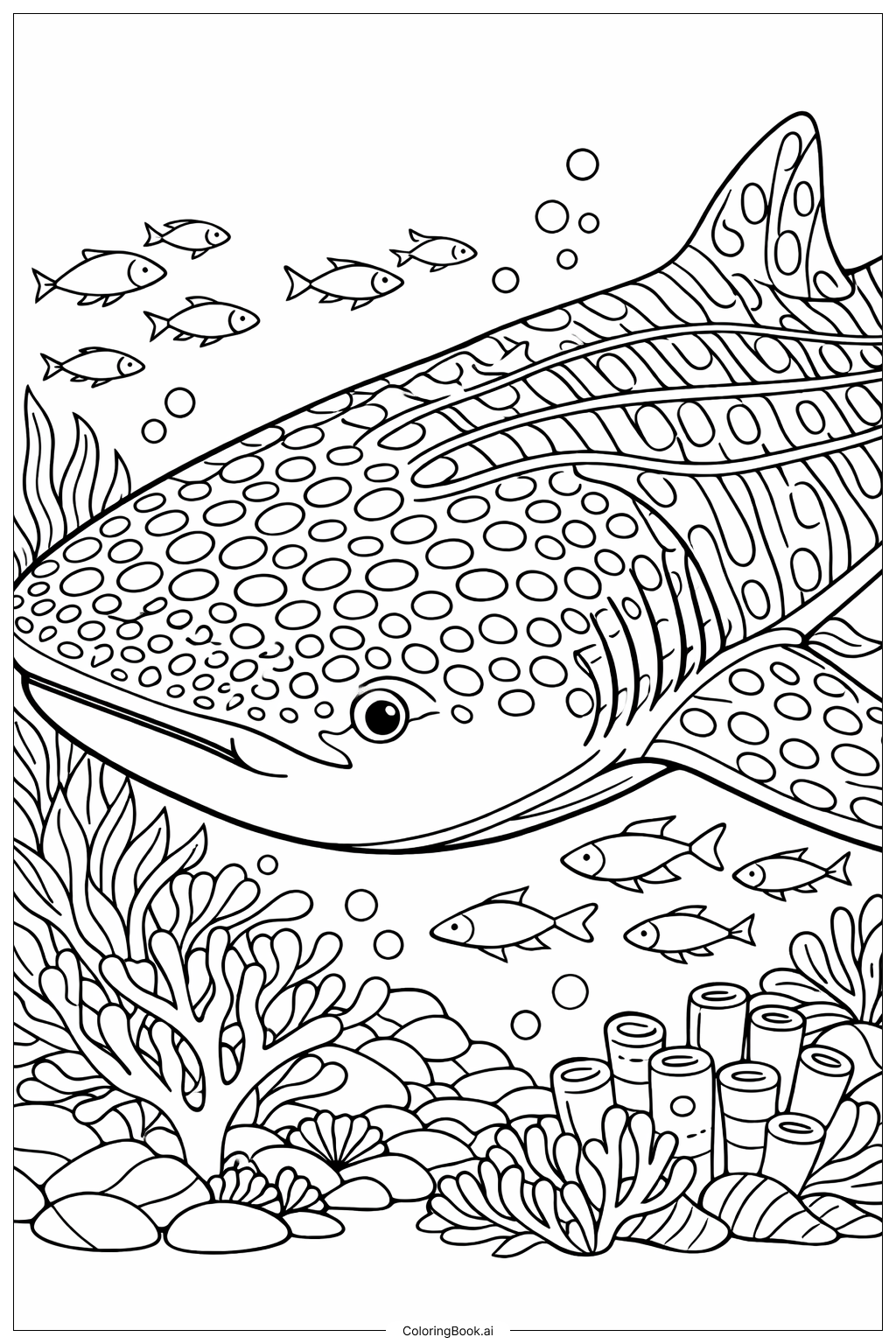
Coloring tips: How to color Whale Shark Close Up Pattern Study coloring page well?
Use soft blues and greens for the water to create a calm underwater feeling. Color the whale shark with light gray or pale blue for the body and add white or lighter tones to the spots and stripes for a realistic look. Use vibrant colors like red, orange, yellow, and pink for the corals and sea plants to make them stand out. The small fish can be bright colors such as yellow or silver. Try to use shading to show the depth and shape of the whale shark and coral. Keep the bubbles white or light blue to keep them light and floating.
Coloring challenges: Which parts are difficult to color and need attention for Whale Shark Close Up Pattern Study coloring page?
1. Small Dots and Patterns: Coloring the many small dots and stripes on the whale shark requires patience and a steady hand to keep them neat and clear.\n2. Coral Details: The many branches and small shapes in the coral might be tricky to color inside the lines finely.\n3. Different Textures: Coloring the whale shark’s smooth skin, rough coral, and flowing seaweed differently needs attention to detail and color variety.\n4. Layering Colors: To show the underwater light and shadow on the scene, blending colors without mixing them unevenly can be hard.\n5. Maintaining Contrast: Keeping the whale shark visible and bright while coloring the busy coral background needs careful color choice.
Benefits of coloring books: Advantages of drawing Whale Shark Close Up Pattern Study coloring page
Coloring this picture helps children learn about ocean animals and their habitats. It improves fine motor skills by coloring different shapes and small details. The detailed patterns encourage focus and attention to detail. It also boosts creativity with choosing colors for coral and fish. Finally, coloring an underwater scene is calming and fun, inviting kids to explore the beauty of sea life.