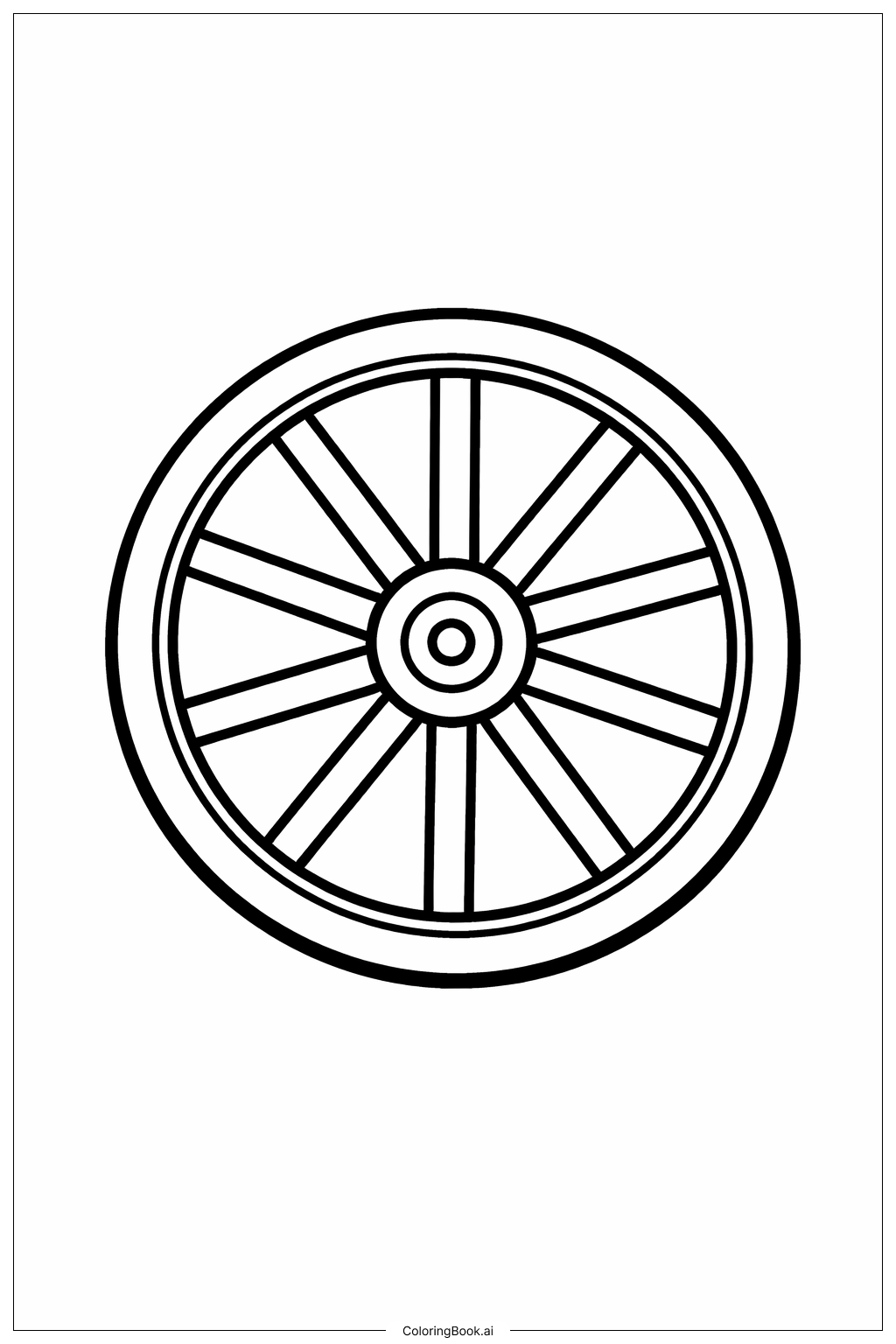
Coloring tips: How to color Western Wagon Wheel coloring page well?
Start by coloring the outer rim in a wood-like brown to give it a natural look. Use a darker shade for the central hub to make it stand out. The spokes can be colored in a lighter brown or beige to add contrast. For fun, you can also use colors like grey or black for the metal parts if you imagine they are reinforced with iron. Remember to color inside the lines carefully to keep the wheel neat. Try blending shades to make the wheel look three-dimensional and realistic.
Coloring challenges: Which parts are difficult to color and need attention for Western Wagon Wheel coloring page?
1. The thin spokes may be tricky to color without going outside the lines, so steady hand control is needed. 2. Choosing the right shades to show wood and metal parts separately can be hard because the colors should be close but distinct. 3. Coloring the circular shapes evenly is important to keep the wheel balanced looking, which can be challenging for younger kids. 4. Adding shading to create a 3D effect takes patience and understanding of light and shadow. 5. Keeping the small circles in the center neat may require fine motor skills since the space is tight.
Benefits of coloring books: Advantages of drawing Western Wagon Wheel coloring page
Coloring this wagon wheel improves fine motor skills as children practice coloring within narrow spokes and circular shapes. It also teaches them about simple shapes like circles and lines. Working on this image helps develop focus and patience, especially when trying to create realistic colors and shading. Moreover, it encourages creativity by letting children decide how to color wood and metal parts. Finally, it connects kids to Western history and the importance of wagons in early travel through imaginative play.