Coloring tips: How to color Western Desert Wildlife Scene coloring page well?
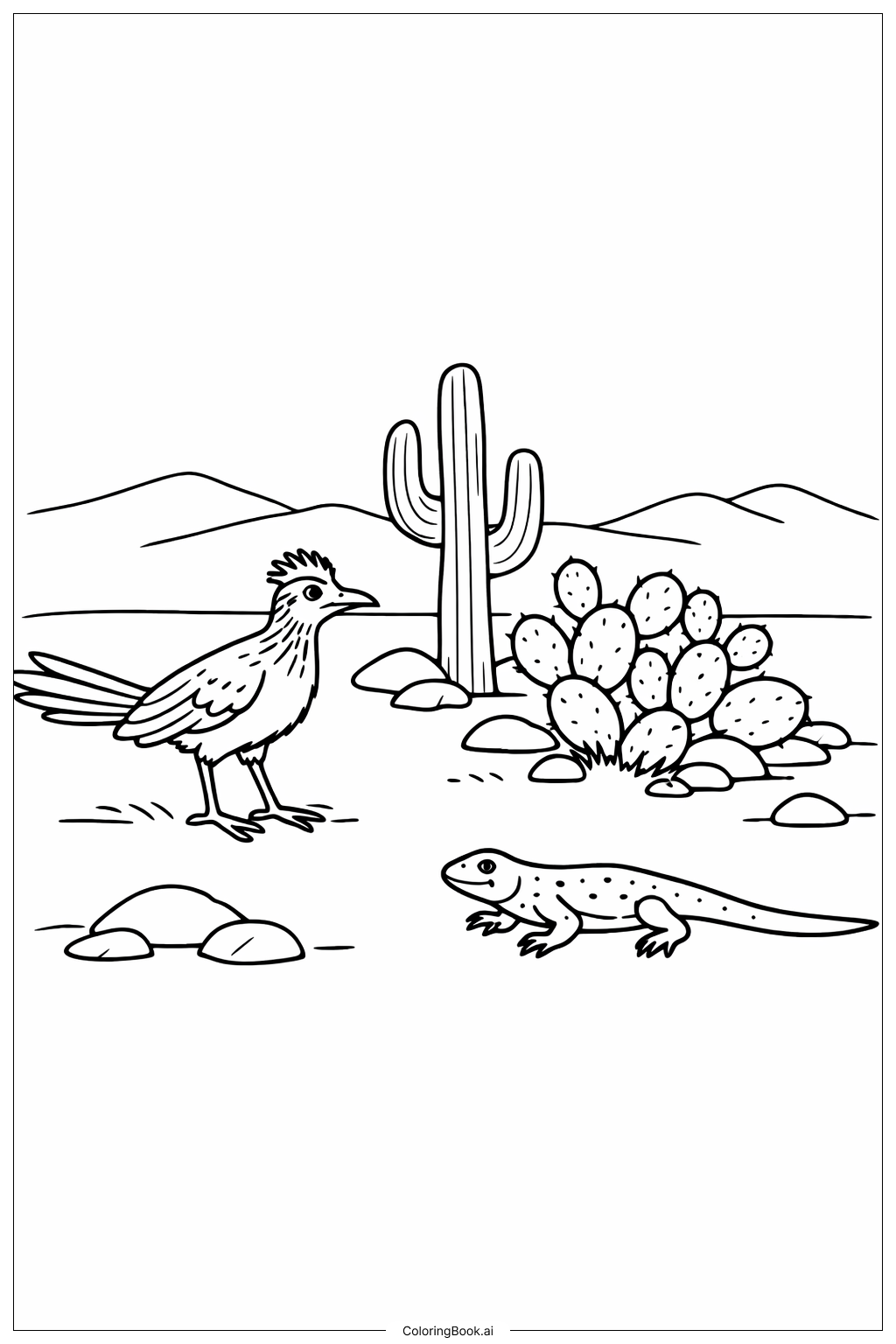
Start with the sky using a warm mix of light blue and pale yellow to give a sunny desert feel. Use sandy tan and light brown for the ground and rocks. Color the saguaro and prickly pear cactus with shades of green, from bright lime to deep olive. Give the rattlesnake earthy tones like brown, tan, and rust with dark diamond patterns on its back. Use grey and white for the owl, and add bright yellow for its eyes. The roadrunner looks great in streaks of brown, white, and blue. Color the jackrabbit in soft grey and beige. Use warm oranges and reds for any distant hills or sunset tones in the background. This scene gives Kids and Adults plenty of space to get creative and try blending colors to make the animals feel alive.
Coloring challenges: Which parts are difficult to color and need attention for Western Desert Wildlife Scene coloring page?
• Snake Pattern Details: The rattlesnake's body is covered in repeating diamond-shaped scales and patterns. Staying inside each small shape while using multiple shades of brown and tan requires a steady hand and patience. Rushing this section can make the design look blurry or uneven.
• Cactus Spines and Texture: Both the saguaro and prickly pear cactus have many thin spines and surface ridges. Coloring around these tiny details without going over the lines is tricky, especially for younger colorists. Using a sharp pencil or fine-tipped marker will help a lot here.
• Feather and Fur Layering: Birds like the owl and roadrunner have feathers with multiple tones that blend into each other. Achieving a realistic or visually interesting look means applying light colors first, then layering darker shades on top. This blending technique takes practice and is one of the more advanced parts of this scene.
• Multiple Animals in One Scene: This image has five or more different animals, each with its own color palette. Keeping track of which colors belong to which animal, and making sure no two nearby creatures look too similar, can be challenging. Planning your color choices before you start helps avoid confusion.
• Background Depth and Space: Creating a sense of distance in the desert background — where the ground fades into hills and sky — requires using lighter, cooler colors in the distance and warmer, darker tones up front. This technique, called atmospheric perspective, is a wonderful skill to practice but can feel difficult for beginners.
Benefits of coloring books: Advantages of drawing Western Desert Wildlife Scene coloring page
Coloring this Western desert wildlife scene offers a wonderful mix of fun and learning. As you fill in each animal and plant, you naturally learn about the creatures that live in the American Southwest. It sparks curiosity and encourages kids to ask questions about nature and desert ecosystems.
The variety of shapes and textures in this scene helps develop fine motor skills and hand-eye coordination. Working carefully around small details like cactus spines and snake scales builds focus and patience over time.
Choosing colors for each animal also encourages creative thinking. There is no single right answer, so colorists of all ages feel free to express their own ideas and personalities through their color choices.
For Adults, this detailed scene offers a calming, meditative experience. Concentrating on the lines and colors helps quiet a busy mind and reduce stress after a long day.
For Boys and Girls, completing a complex scene like this gives a strong sense of achievement. Seeing the finished page come to life with color builds confidence and pride in their own work.
Overall, this Coloring Page brings together art, nature, and imagination in one enjoyable activity that the whole family can share. It is a Free and Printable way to spend quality creative time together.