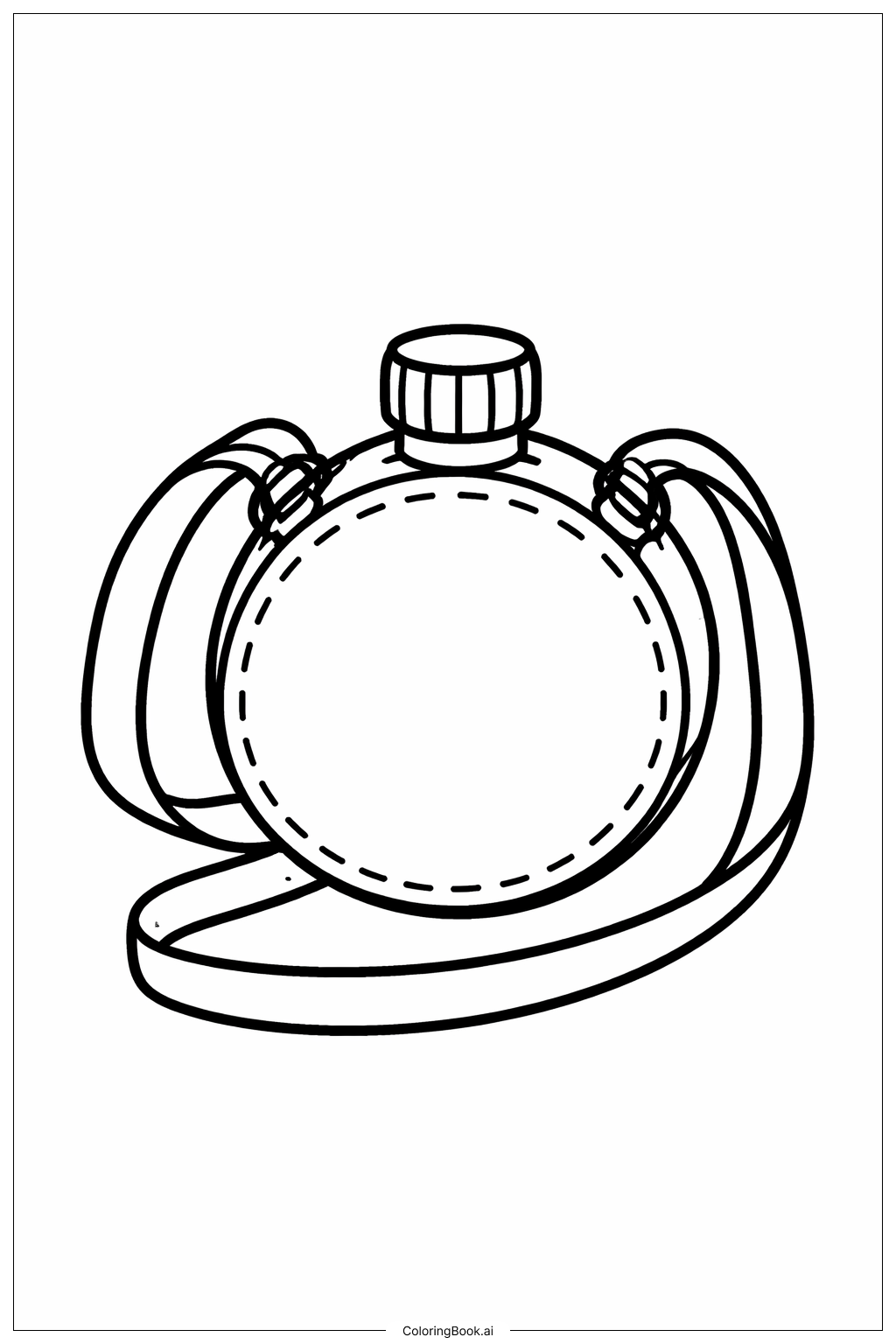
Coloring tips: How to color Western Canteen Bottle coloring page well?
For coloring this Western Canteen Bottle, try using warm earthy tones to bring out a rustic look. Browns, tans, and ochres are great for the leather cover and stitches. You can also add some soft shading with darker browns or reds to create a worn leather effect. For the bottle itself, use light grays, silvers, or muted greens to suggest metal or glass material. Consider adding subtle highlights with light yellow or cream colors to make the bottle look shiny in spots. Feel free to use complementary colors for the strap and button snap to make them stand out. This mix of natural colors will help the canteen feel authentic and ready for adventure.
Coloring challenges: Which parts are difficult to color and need attention for Western Canteen Bottle coloring page?
• Fine Stitching Details: The leather cover has tiny stitches and seams that require careful coloring to stay neat, especially around curved edges.
• Texture Variation: Differentiating the smooth metal or glass bottle surface from the rugged leather cover can be tricky. Using varying shades and smooth blending techniques is important.
• Small Button and Strap: Accurately coloring the tiny button snap and strap loop demands steady hands and attention to small details.
• Shading and Highlights: Adding realistic light reflections and shadows to show the bottle's shape and material requires some practice with gradients and shading.
• Maintaining Clean Edges: The bottle’s shape involves curves and borders where colors should not cross, so precision is needed to keep the coloring tidy.
Benefits of coloring books: Advantages of drawing Western Canteen Bottle coloring page
Coloring this Western Canteen Bottle helps develop fine motor skills as children practice careful, detailed work around stitches and small parts. It encourages creativity through choosing natural colors and experimenting with shading to make materials look realistic. It also introduces kids to historical and cultural objects from the Western frontier, sparking curiosity about life in the past. Coloring this image builds patience and concentration because the shape and texture demand thoughtful attention. It’s a fun, engaging way for children to connect art with history and nature while improving their hand-eye coordination.