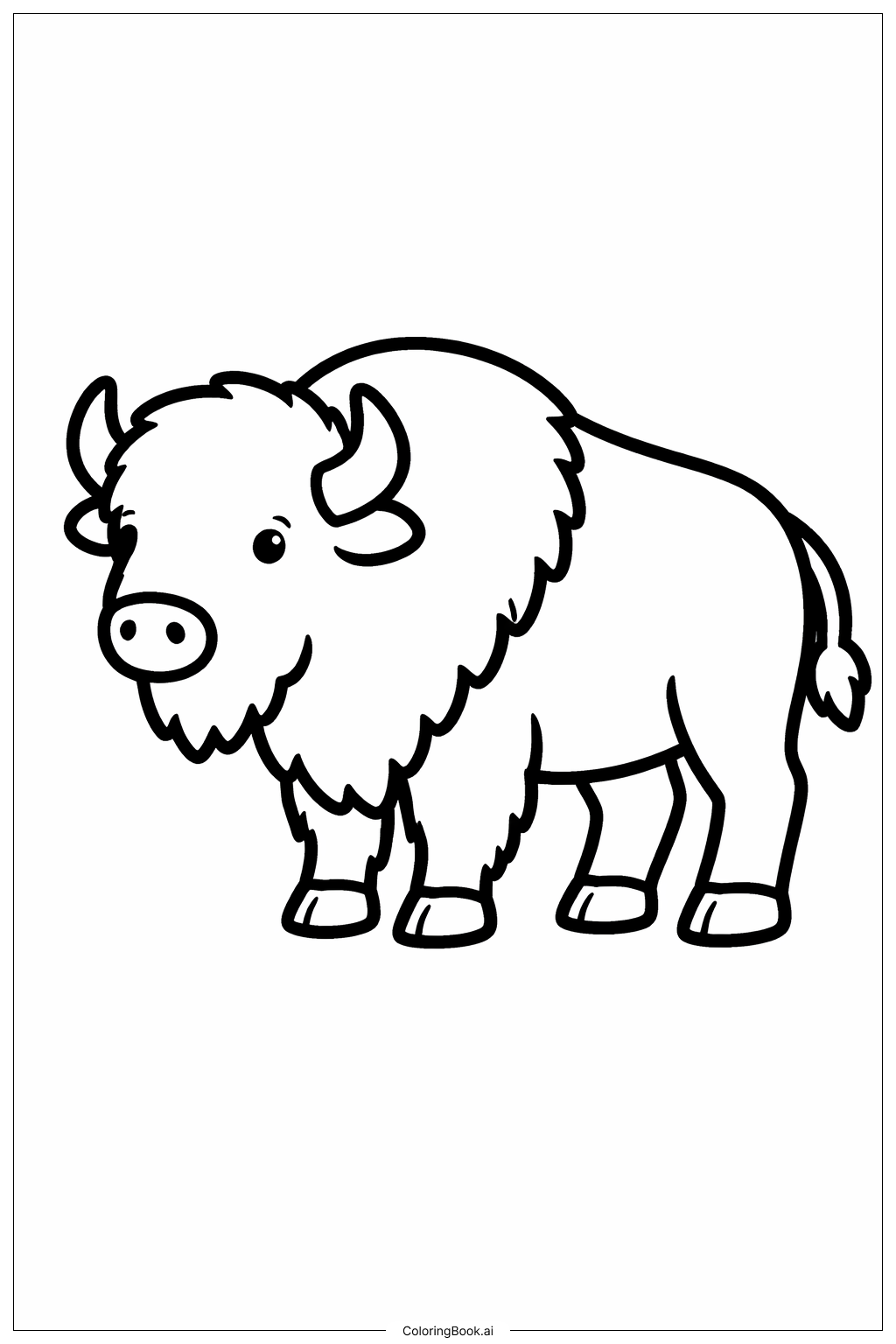
Coloring tips: How to color Western Buffalo Silhouette coloring page well?
Start with the buffalo's body by choosing warm, earthy tones like dark brown or chocolate for the main silhouette. Use a slightly lighter tan or golden brown for the thick, shaggy fur around the head, chest, and shoulders to show texture and depth. The horns can be colored in a creamy off-white or pale gray. For the hooves, try a deep charcoal or dark gray. If the image includes a background, think about wide open prairie colors — soft yellows, warm oranges, or dusty greens to suggest grasslands. A faded blue or golden sky can add a beautiful Western sunrise or sunset feel. Younger colorists can keep things simple with just two or three colors, while older kids can try shading and blending to make the fur look fluffy and realistic.
Coloring challenges: Which parts are difficult to color and need attention for Western Buffalo Silhouette coloring page?
• Shaggy Fur Texture: The buffalo's thick, shaggy mane and chest fur are one of the most challenging areas to color. To make it look realistic, you need to use multiple shades of brown and apply short, directional strokes that follow the natural flow of the fur. Blending lighter and darker tones side by side creates depth and volume, but this requires patience and a steady hand.
• Subtle Tonal Variation Across the Body: Even though this is a silhouette, the body still benefits from tonal variation. The back and hump area can be darker, while the underbelly and legs may be slightly lighter. Achieving this gradient effect without obvious streaks or hard lines can be tricky, especially with markers or crayons.
• Horn and Hoof Details: The curved horns and solid hooves are smaller, defined sections that require precision. Coloring within the curved outlines of the horns without going outside the lines demands careful control. Choosing the right shading for these areas — lighter at the tips, darker at the base — adds realism but is difficult for younger colorists.
• Background and Foreground Balance: If a background prairie or sky is included, balancing the colors so the buffalo silhouette remains the clear focal point is a real challenge. Using colors that are too similar to the buffalo's tones can make the image look flat or confusing. Selecting complementary, lighter background hues helps the buffalo stand out dramatically.
• Large Open Silhouette Areas: The broad back and flanks of the buffalo are large, open areas. Coloring these evenly without streaks, blotches, or uneven patches requires consistent pressure and smooth technique, which can be challenging for beginners using crayons or colored pencils.
Benefits of coloring books: Advantages of drawing Western Buffalo Silhouette coloring page
Coloring this Western Buffalo Silhouette offers a wonderful range of benefits for kids and adults alike. For younger children, staying within the bold, clear outlines of the buffalo helps improve fine motor skills and hand-eye coordination. It also builds focus and concentration as they carefully fill in different sections of the image.
For older kids and teens, choosing colors and experimenting with shading encourages creative thinking and artistic expression. Learning how to mix tones to recreate fur texture is a fun, low-pressure way to develop real art skills.
Beyond the artistic side, this image is a great way to spark curiosity about nature and history. The American bison is an iconic symbol of the Western frontier and Native American culture, so coloring this page can inspire conversations about wildlife, conservation, and the natural world.
For adults, the large, flowing shapes of the silhouette make it a calming and meditative activity. Focusing on smooth, even coloring strokes helps reduce stress and encourages mindfulness. It is a satisfying creative outlet that requires no prior experience.
Overall, this coloring page is a versatile, enriching activity that combines creativity, learning, and relaxation in one beautifully simple image.