Coloring tips: How to color Vegetables In A Row coloring page well?
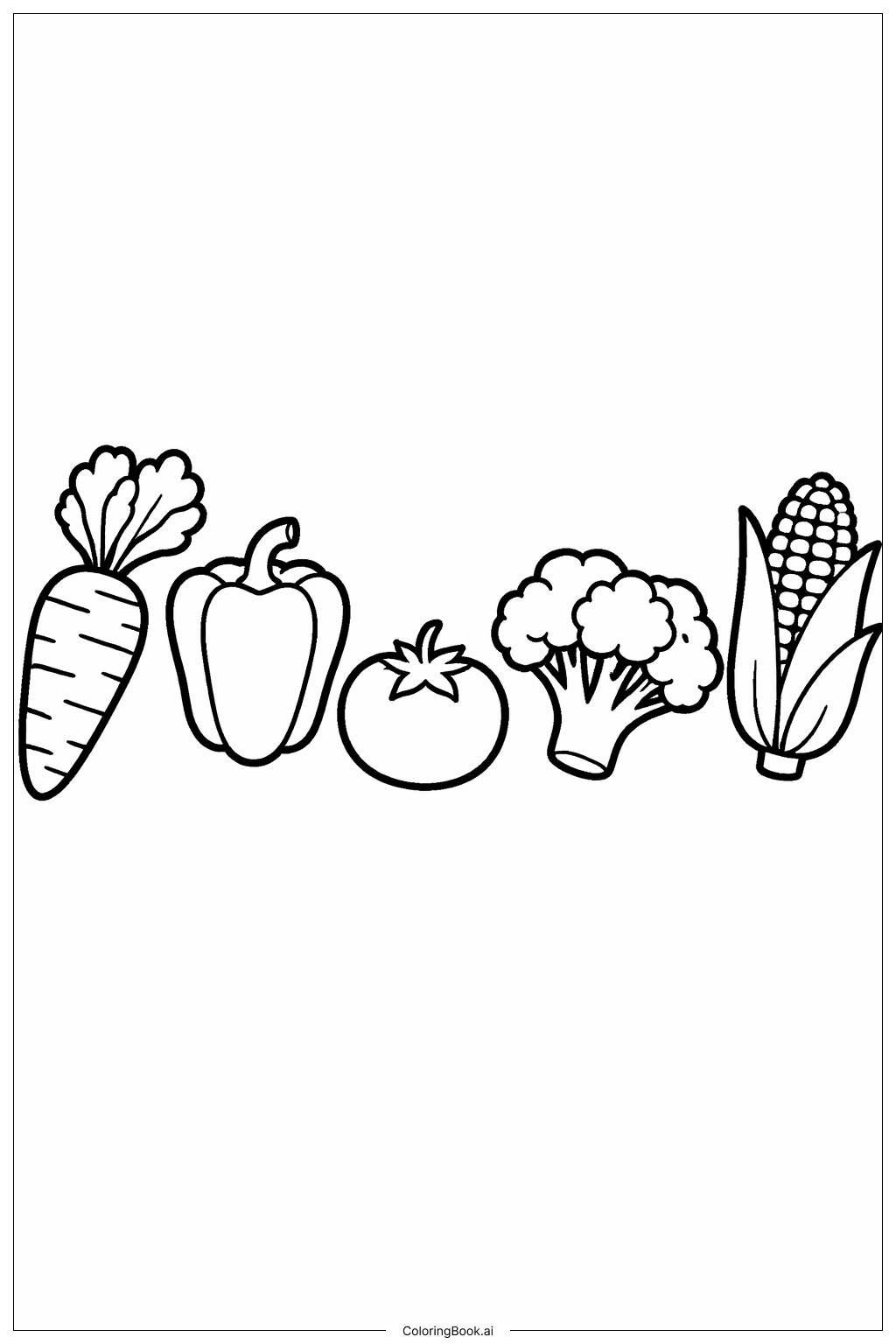
To color this picture, start by choosing bright, natural colors for each vegetable. The carrot can be colored orange with green leaves on top. Use red or green for the bell pepper to add variety. The tomato should be colored red or pink. For the broccoli, use different shades of green to show the bumpy texture of the florets and the stalk. The corn can be colored yellow for the kernels with light green leaves. Try to color inside the lines carefully to keep the shapes clear. You can also add light shading to make the vegetables look more three-dimensional and lively. Using crayons or colored pencils works well for this kind of detail.
Coloring challenges: Which parts are difficult to color and need attention for Vegetables In A Row coloring page?
1. Small Details: The broccoli and corn have many tiny parts to color, which can be tricky for younger children. They will need patience to stay within these small areas.
2. Shape Boundaries: Some vegetables like the bell pepper have curved lines that may be harder to color neatly.
3. Texture: Painting the bumpy texture of the broccoli and the corn kernels requires careful coloring to show the detail clearly.
4. Color Choices: Picking the right natural colors for each vegetable might be confusing since some vegetables come in multiple colors.
5. Leafy Sections: The carrot’s leafy top has thin, wavy shapes which can be challenging to color without going outside the lines.
Benefits of coloring books: Advantages of drawing Vegetables In A Row coloring page
Coloring this vegetable picture helps children improve their hand-eye coordination and fine motor skills. It encourages attention to detail and teaches patience while coloring small and tricky parts. The picture also builds knowledge about healthy foods and vegetables. By choosing colors, kids can explore creativity and learn about color matching in a fun way. Overall, it promotes focus, creativity, and an interest in good nutrition.