Coloring tips: How to color Vegetables School Lunch Tray coloring page well?
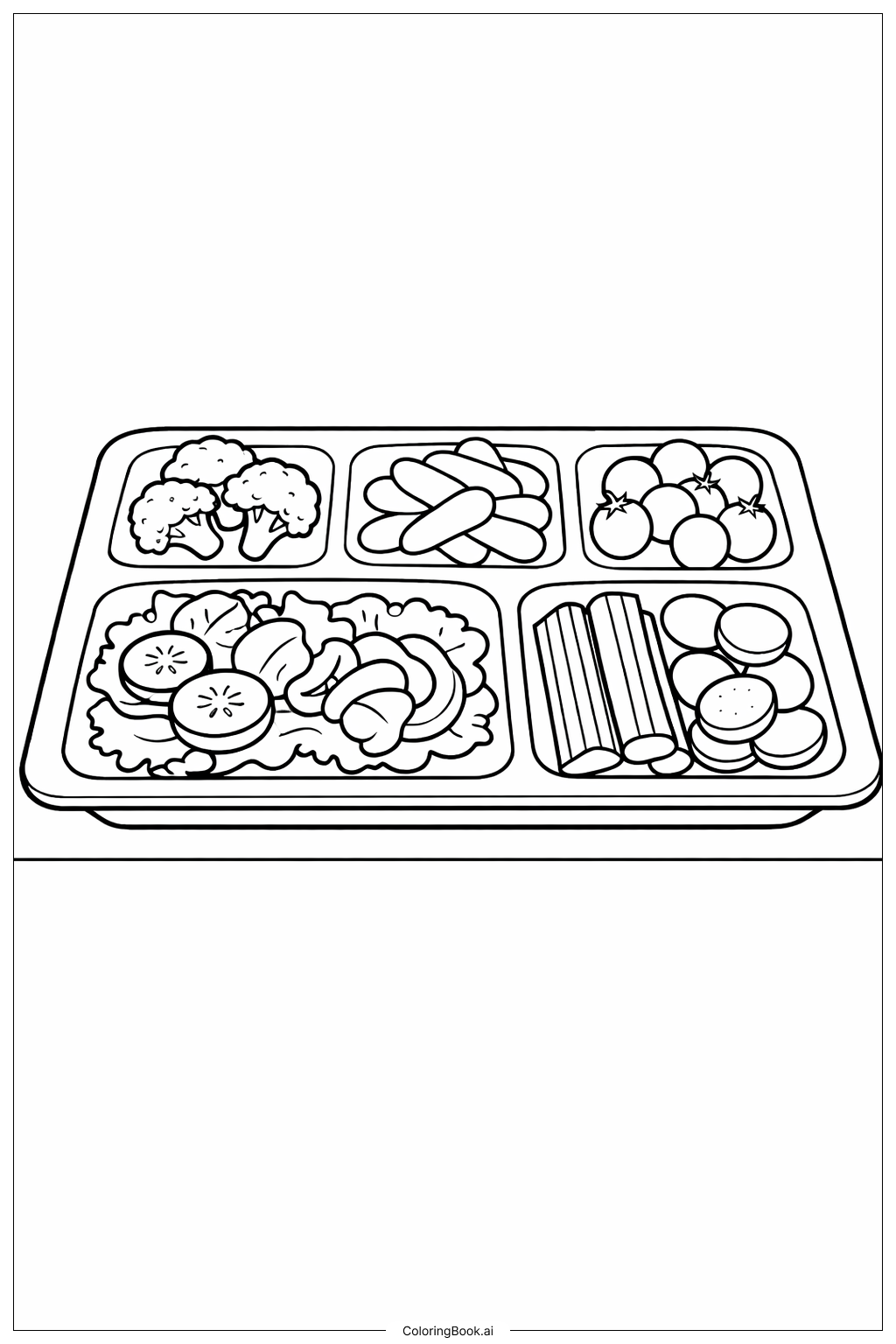
Use bright and natural colors to make the vegetables look fresh and tasty. For the broccoli, choose different shades of green to show the texture. Color the baby carrots with orange and add some light brown or green for detail. Use red for the cherry tomatoes and add a little green for the stems. The cucumbers can be light green with darker green edges. Mushrooms are usually light brown or beige. For the lettuce, use various shades of green to create depth. Celery sticks should be a pale green, and radishes can be colored red with white parts. Try using crayons or colored pencils for smooth coloring and blending.
Coloring challenges: Which parts are difficult to color and need attention for Vegetables School Lunch Tray coloring page?
1. Keeping colors inside the small vegetable sections can be tricky because of the tiny shapes. 2. Coloring the broccoli and lettuce needs attention to detail to show their texture well. 3. Using the right shades of green for different vegetables can be confusing. 4. The overlapping vegetables like cucumber slices and mushrooms require careful coloring to make them stand out. 5. Coloring small parts like tomato stems and radish slices needs precision and focus to avoid mixing colors.
Benefits of coloring books: Advantages of drawing Vegetables School Lunch Tray coloring page
Coloring this picture helps improve focus and hand-eye coordination because it has small and detailed parts. It also encourages children to learn about different vegetables and their shapes. Coloring fresh vegetables can make kids more interested in healthy eating. The variety of colors allows creativity and helps practice color recognition. Overall, this activity is fun and educational, promoting a good habit of choosing healthy foods.