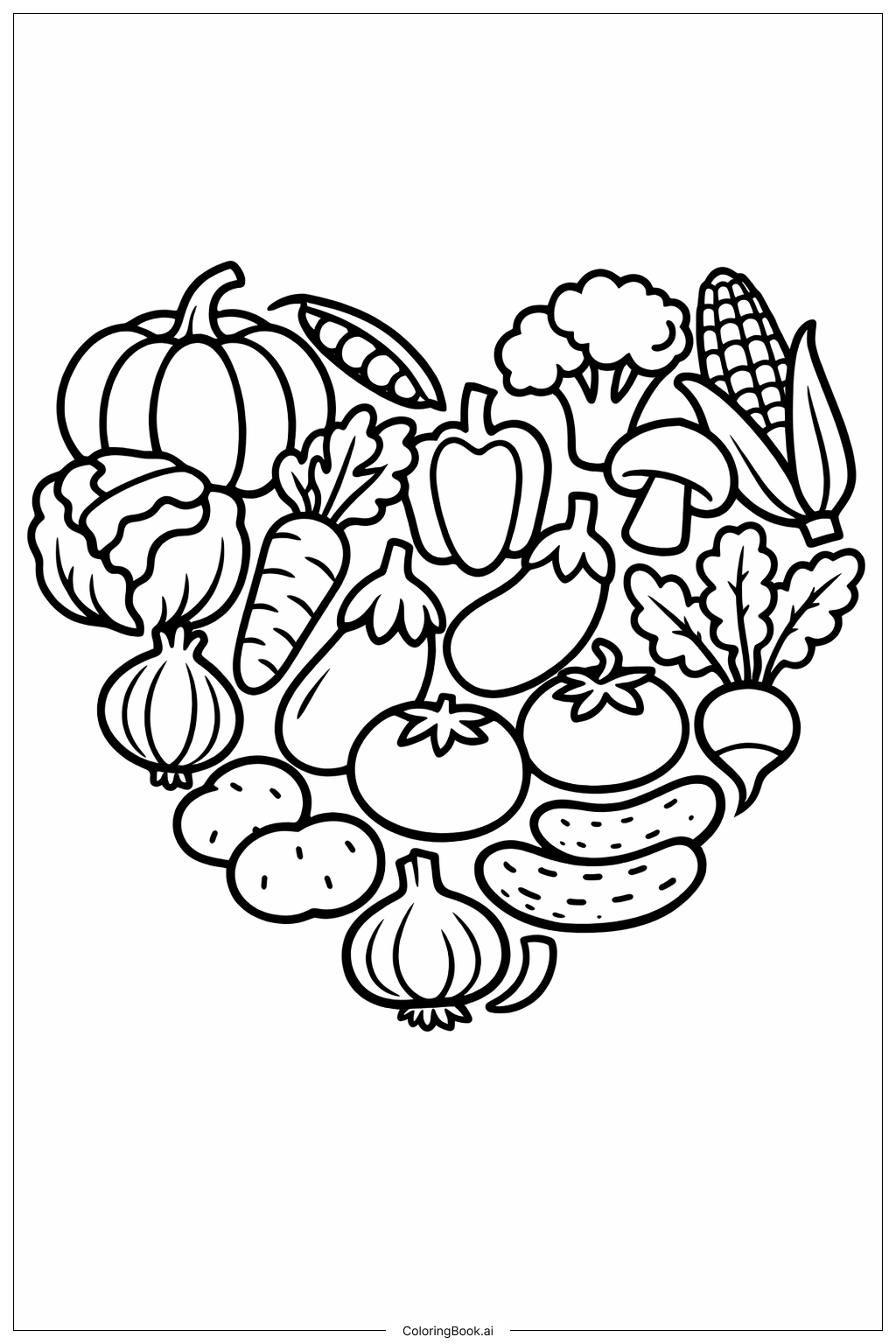
Coloring tips: How to color Vegetables Heart Shape coloring page well?
Use bright and natural colors to make the vegetables look fresh and lively. For example, color the pumpkin orange, carrots orange with green leaves, tomatoes red, corn yellow with green husks, and peas green. Try to color each vegetable differently to show the variety. You can also experiment with shading by making the edges darker and the center lighter to give a 3D effect. Don’t forget to color the leaves green and the stems brown or green. Use small strokes for details and bigger strokes for larger areas.
Coloring challenges: Which parts are difficult to color and need attention for Vegetables Heart Shape coloring page?
1. Many small parts: Some vegetables have small sections like peas in the pod or corn kernels, which can be tricky to color carefully.
2. Overlapping shapes: The vegetables overlap, so staying inside the lines without mixing colors might be hard.
3. Different shapes: Each vegetable has a different shape and texture, so you need to use different coloring techniques to show this.
4. Color choices: Picking the right colors to make the vegetables look natural but still appealing can be confusing.
5. Staying inside lines: As the lines are close together in some areas, it might be difficult to avoid coloring outside the lines.
Benefits of coloring books: Advantages of drawing Vegetables Heart Shape coloring page
Coloring this page helps children learn about different vegetables and their shapes. It improves hand-eye coordination as they try to color within the lines. It also encourages creativity when choosing colors and experimenting with shading. This activity can teach kids about healthy eating and the importance of vegetables. Coloring helps relax the mind and reduces stress, making it a fun and educational experience. It also builds focus and patience.