Coloring tips: How to color Realistic School Of Tuna Under The Sea coloring page well?
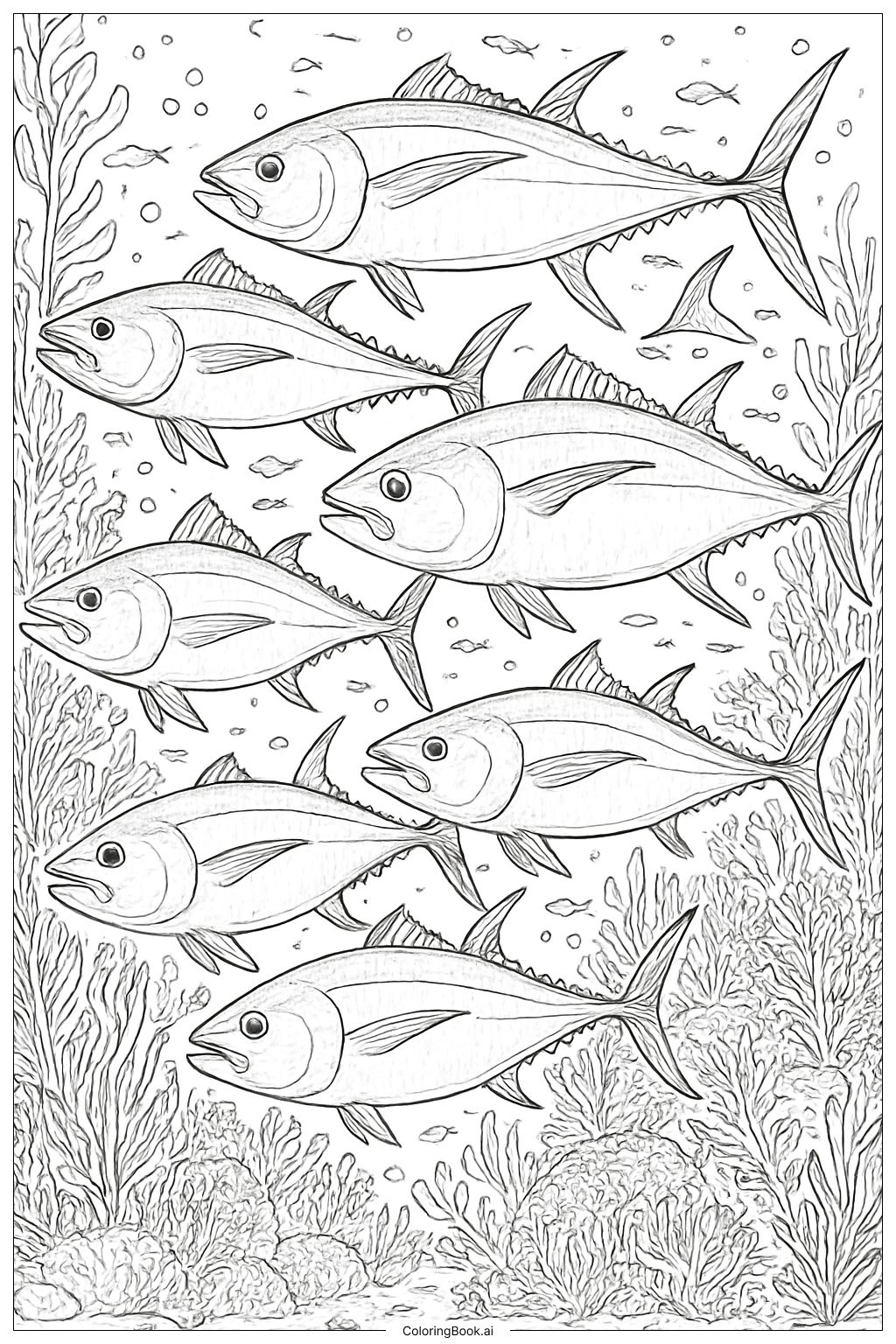
Start by choosing shades of blue and green for the underwater plants and coral. Use different colors for different types of seaweed, such as light green, dark green, and even brown. For the tuna, use shades of silver, gray, blue, or even hints of purple to show their shiny scales. Color the small fish with bright colors like yellow, orange, or red to make them stand out. Use light blues and whites for the water and bubbles to give a fresh feeling. Try to color the fish in a way that shows their shape and texture, like using lighter colors on the belly and darker on the back.
Coloring challenges: Which parts are difficult to color and need attention for Realistic School Of Tuna Under The Sea coloring page?
1. The tuna fish have many small fins and details which can be tricky to color neatly.
2. The background has lots of seaweed and coral with thin, detailed lines that need careful coloring.
3. Differentiating between the similar shapes of the tuna can be hard without using varied shades.
4. Balancing bright colors for small fish and subtle tones for the main tuna to keep the picture harmonious.
5. Coloring bubbles and water effects smoothly while keeping the fish and plants clear is challenging.
Benefits of coloring books: Advantages of drawing Realistic School Of Tuna Under The Sea coloring page
Coloring this underwater scene helps improve attention to detail because there are many small parts like fins, seaweed, and bubbles. It encourages creativity by allowing choices of colors for different fish and plants. This activity also develops fine motor skills as kids carefully color thin lines and small areas. Coloring nature scenes like this builds an appreciation for marine life and the ocean environment. It can be calming and fun, helping children relax while learning about sea animals.