Coloring tips: How to color Octopus In A Garden Under The Sea coloring page well?
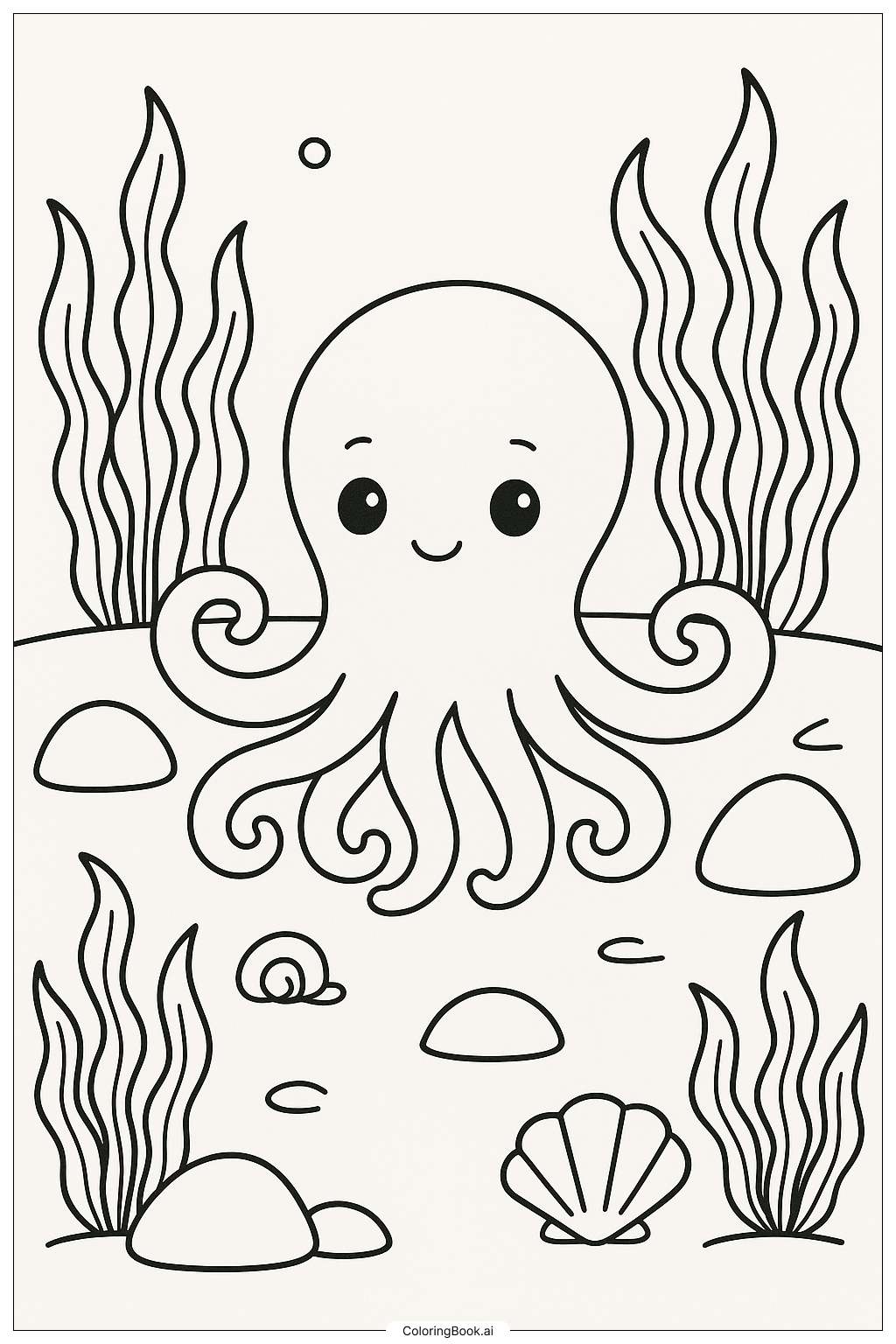
Use bright and lively colors to bring the underwater garden to life. You can color the octopus in shades of orange, red, or purple to make it stand out. Try coloring the sea plants in different shades of green and blue to give a natural underwater effect. The sandy floor can be light yellow or beige, with the rocks in soft grey or brown. For the seashell, try pink, white, or light orange. You can also add some light blue or aqua for the water background to make the scene feel deeper underwater. Mix and match colors to create a fun and colorful undersea garden.
Coloring challenges: Which parts are difficult to color and need attention for Octopus In A Garden Under The Sea coloring page?
1. Curling arms: The octopus has many curly arms that may be tricky to color neatly without going outside the lines.
2. Thin sea plants: The long, wavy sea plants have narrow and close lines, which need careful coloring to avoid smudging.
3. Small details: Items like the small snail and tiny bubbles require precise coloring to keep the picture neat.
4. Color blending: Making the underwater garden look natural with different shades of blues, greens, and sandy colors might be challenging for beginners.
5. Staying inside the lines: The overall intricate shapes need careful attention to avoid coloring outside the lines, especially for younger children.
Benefits of coloring books: Advantages of drawing Octopus In A Garden Under The Sea coloring page
Coloring this picture helps children practice fine motor skills by carefully filling small and detailed areas. It encourages creativity through choosing different colors for the octopus, plants, and sea floor. Coloring the big shapes like the octopus also helps with hand-eye coordination. The peaceful underwater scene can be relaxing and enjoyable, improving focus and patience. Overall, it provides a fun and educational way to learn about sea life while improving artistic skills.