Coloring tips: How to color Intricate Coral Reef Under The Sea coloring page well?
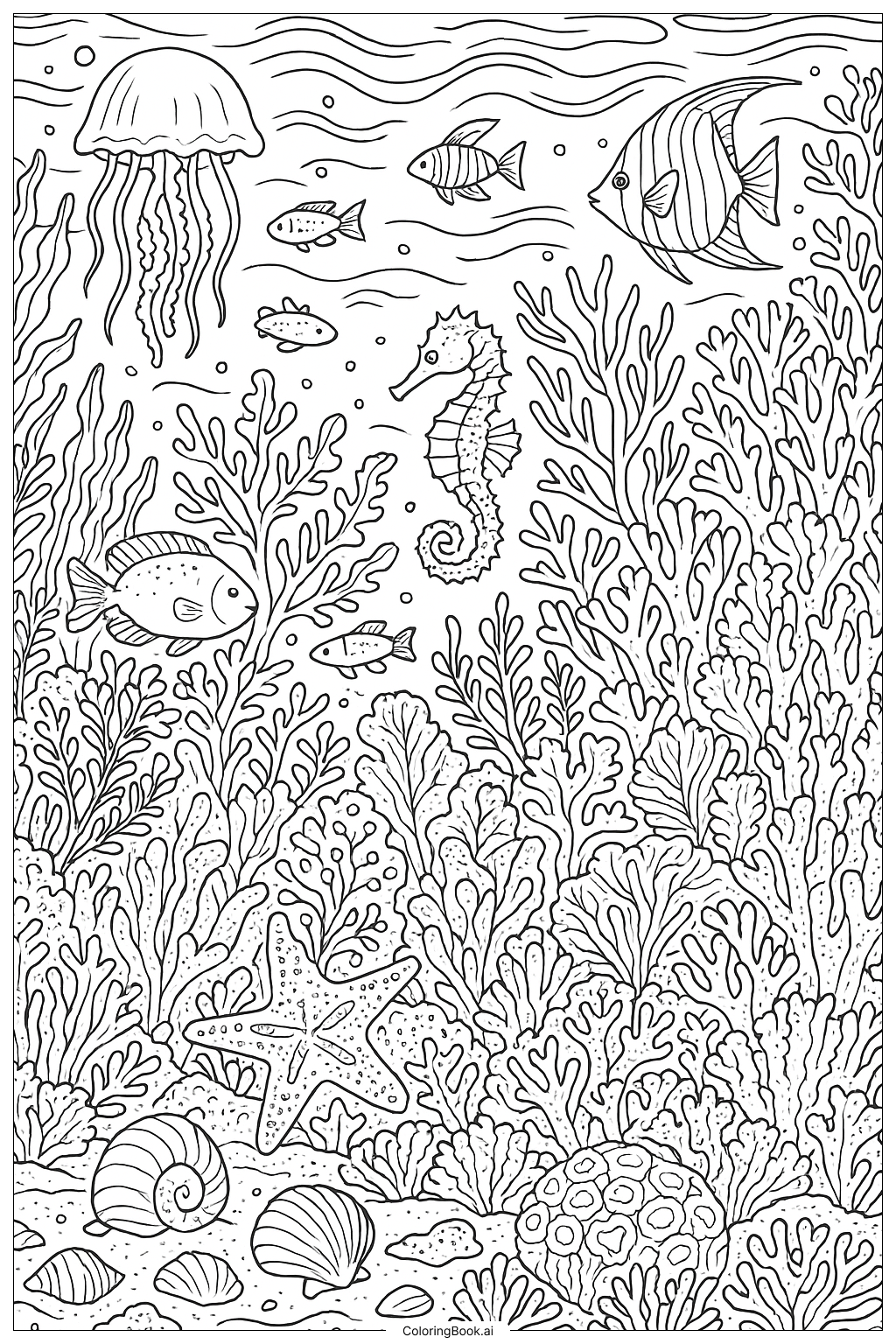
Start with the background water first. Use deep blues and soft teals to create the feeling of ocean depth. Then move to the coral structures. Use warm pinks, oranges, reds, and purples to make them pop. Sea fans look great in soft lavender or pale yellow. For the tropical fish, go bold and bright — yellows, blues, oranges, and greens all work well. Give each fish its own unique color combination to make the scene lively. Color the starfish in sandy orange or red. The octopus can be a rich reddish-brown or even purple. Use lighter shades near the top of the image to suggest sunlight filtering through the water. Add a bit of white or pale blue to areas around the coral to suggest gentle water movement. Take your time with the small details — tiny dots, stripes, and patterns on the sea creatures can make your finished page look truly stunning.
Coloring challenges: Which parts are difficult to color and need attention for Intricate Coral Reef Under The Sea coloring page?
Coloring this intricate coral reef scene comes with several challenges that will test your patience and precision. Here are the key difficulties to keep in mind:
• Tiny Fine Details: The coral structures are packed with small, intricate patterns including dots, spirals, and branching lines. Coloring inside these tight spaces requires a sharp pencil or a fine-tipped marker. Using a tool that is too thick will cause colors to bleed outside the lines and ruin the delicate look of the coral.
• Color Variety and Balance: With so many different sea creatures and coral types in one scene, choosing colors that work together without clashing is a real challenge. You need to plan your color palette in advance. Too many bright colors used at full intensity can make the image look chaotic instead of harmonious.
• Layering and Depth: Creating a sense of underwater depth requires using darker shades in the background and lighter, brighter tones in the foreground. Blending colors smoothly to suggest water and shadow is a skill that takes practice, especially for younger colorists.
• Overlapping Elements: Many parts of this image overlap — fish swim in front of coral, anemones sit beside sponges, and seaweed crosses over rocks. Deciding which element goes in front and coloring accordingly without muddying the image requires careful planning and a steady hand.
• Staying Within Borders: The sheer density of this image means that the spaces between lines are sometimes very narrow. Keeping colors neatly within each section, especially around the small fish fins, coral tips, and bubble details, demands a high level of focus and control.
Benefits of coloring books: Advantages of drawing Intricate Coral Reef Under The Sea coloring page
Coloring this coral reef scene is a wonderful activity for kids and adults alike. Here is why it is so good for you:
It builds focus and patience. The many fine details in this image require you to slow down, concentrate, and work carefully. This kind of focused activity helps train attention and calm a busy mind.
It sparks creativity. Choosing colors for corals, fish, and sea plants encourages creative thinking. There are no wrong answers — every color choice makes your page unique.
It teaches about nature. While coloring, kids naturally learn about ocean life. They discover what coral reefs look like, what creatures live there, and why these ecosystems are so rich and colorful. It is learning through play.
It reduces stress. The repetitive, gentle motion of coloring has a soothing effect on the brain. Many Adults use detailed coloring pages as a form of relaxation and mindfulness.
It improves fine motor skills. Guiding a pencil or marker through narrow spaces strengthens hand muscles and improves coordination. This is especially valuable for younger children who are still developing their grip and control.
Most of all, finishing this beautiful underwater scene gives a real sense of accomplishment and pride. It is a piece of art you created yourself.