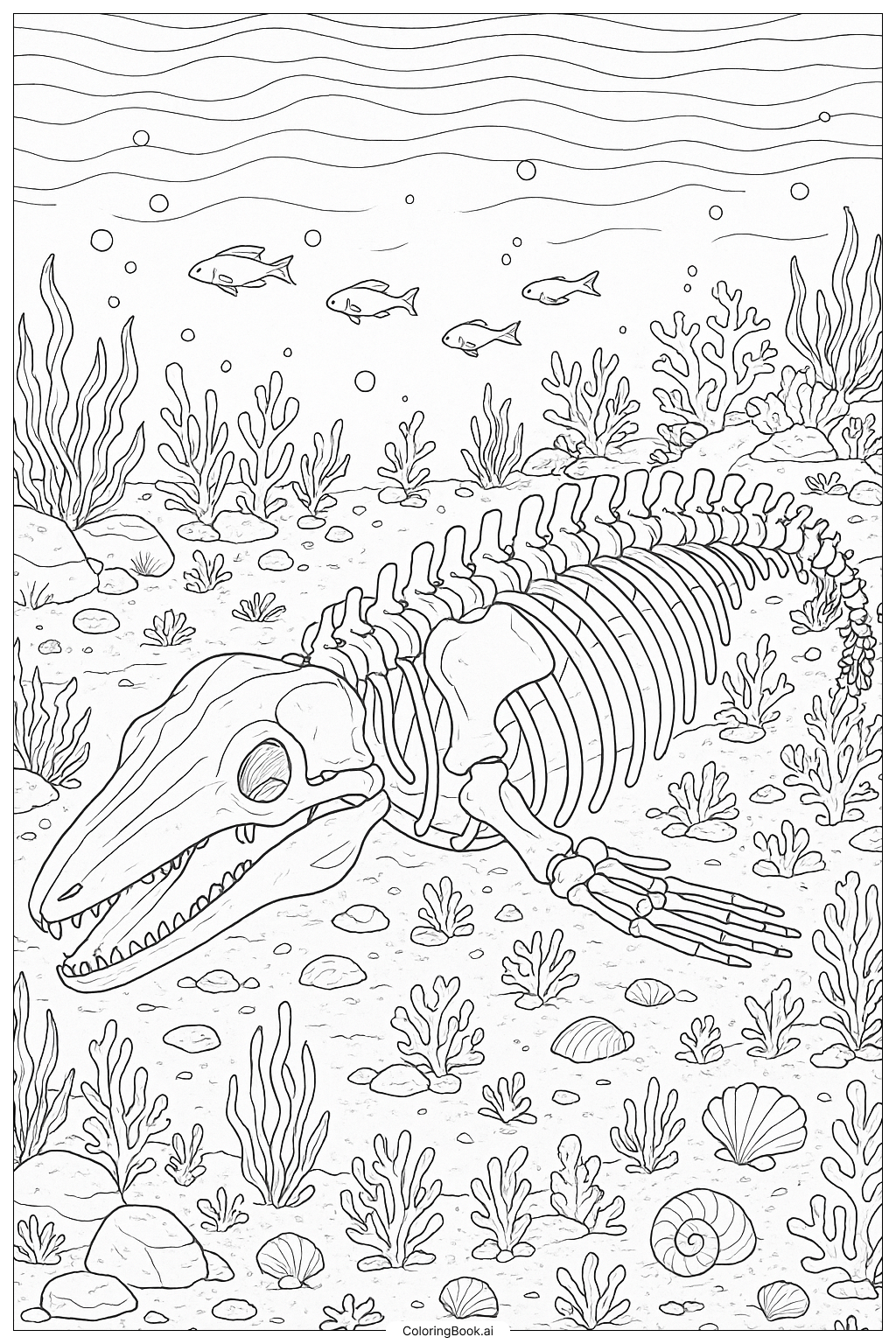
Coloring tips: How to color A Whale Skeleton On The Seabed Under The Sea coloring page well?
Use different shades of blue and green to color the water and seaweed to create an underwater feel. For the whale skeleton, try light gray or beige colors with shadows in darker gray to give it a realistic bone look. Color the small fish with bright colors like orange, yellow, or red to make them stand out. The rocks can be colored in light brown or sandy tones. Use soft colors for the seashells, like pinks and purples, to add variety. Try blending colors gently to create soft transitions, especially in the water and plants.
Coloring challenges: Which parts are difficult to color and need attention for A Whale Skeleton On The Seabed Under The Sea coloring page?
1. The whale skeleton has many small bones with thin outlines, making it tricky to color within the lines without overlapping. 2. Coloring the underwater plants and seaweed requires attention because of their many narrow shapes and close spaces. 3. The fish are small and detailed, needing careful coloring to keep them neat and visible. 4. Adding shading and shadows to the bones and rocks to make them look realistic can be challenging for beginners. 5. Blending colors to show water depth and light effects may be hard but will improve the picture's overall appearance.
Benefits of coloring books: Advantages of drawing A Whale Skeleton On The Seabed Under The Sea coloring page
Coloring this picture helps improve focus and patience because of its detailed elements. It encourages creativity by choosing colors for underwater life and skeleton bones. This activity teaches about ocean animals and the seabed environment, making learning fun. It also helps kids practice fine motor skills with small areas to color. Overall, it promotes relaxation and a sense of accomplishment after completing the image.