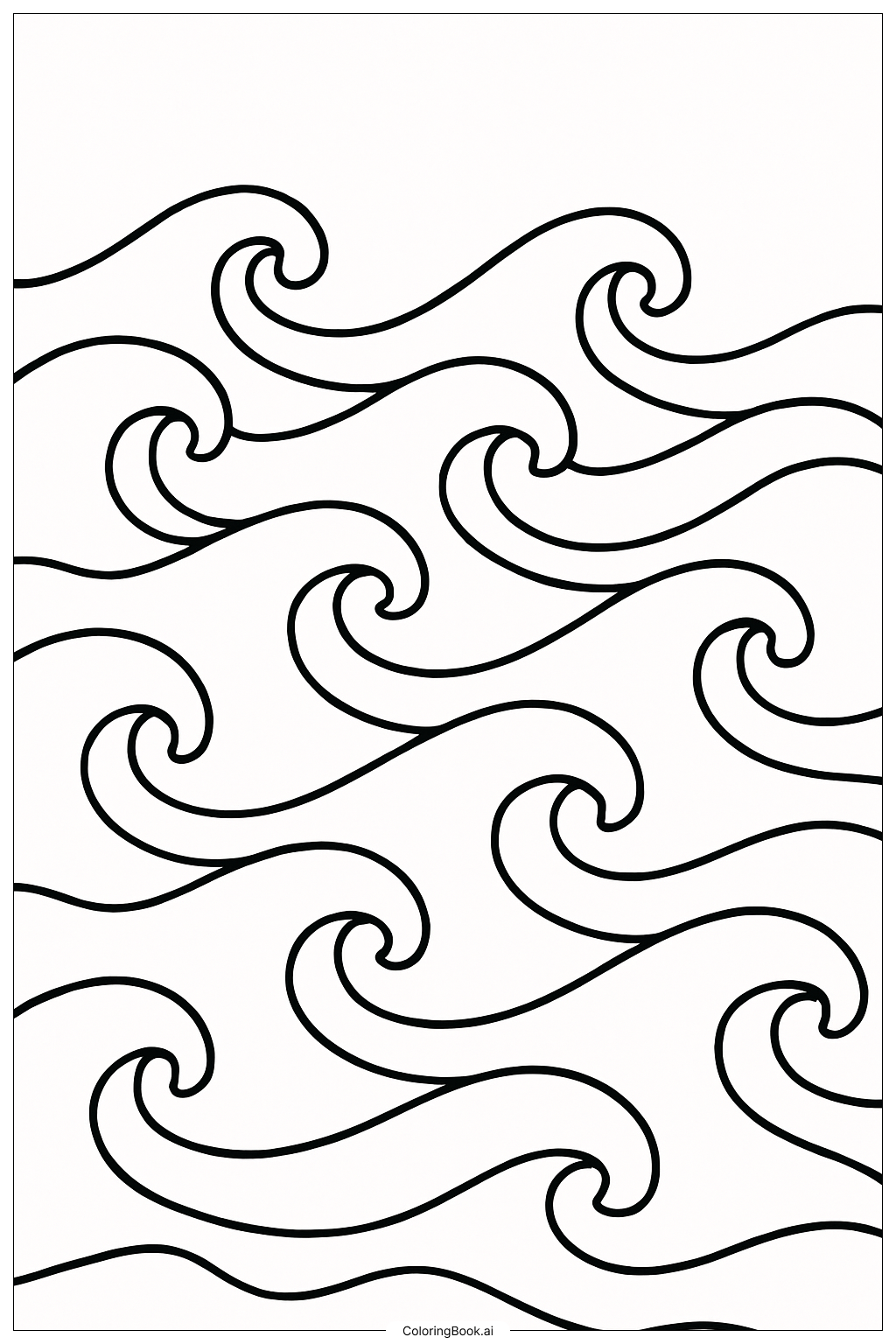
Coloring tips: How to color A Wavy Trippy Ocean coloring page well?
Try using different shades of blue to color each wave to show the movement of the ocean. You can also add some green or teal to make the waves look more natural and lively. To make the picture trippy and fun, use bright or unusual colors like purples, pinks, and oranges. You can color each wave in a gradient from dark to light to show depth or use alternating colors for a playful effect. Remember to color inside the lines carefully and blend colors smoothly to make the waves shine. Adding some white highlights will also give the waves a sparkling look.
Coloring challenges: Which parts are difficult to color and need attention for A Wavy Trippy Ocean coloring page?
1. The repeating wave shapes require steady coloring to keep the design neat and smooth.
2. Blending colors to create smooth gradients can be tricky, especially for young children.
3. Deciding on color schemes that balance bright and natural tones needs some planning.
4. Keeping within the curved lines without coloring outside takes focus and control.
5. Making sure each wave stands out while still looking like part of the ocean can be challenging.
Benefits of coloring books: Advantages of drawing A Wavy Trippy Ocean coloring page
Coloring this wavy ocean helps improve hand-eye coordination and fine motor skills. It teaches children how to stay inside lines and practice patience. Using different colors lets kids explore creativity and learn about color mixing. The repetitive patterns have a calming effect, helping to reduce stress. Coloring encourages focus and relaxation while letting imaginations run free.