Coloring tips: How to color The Lorax Planting Truffula Seeds coloring page well?
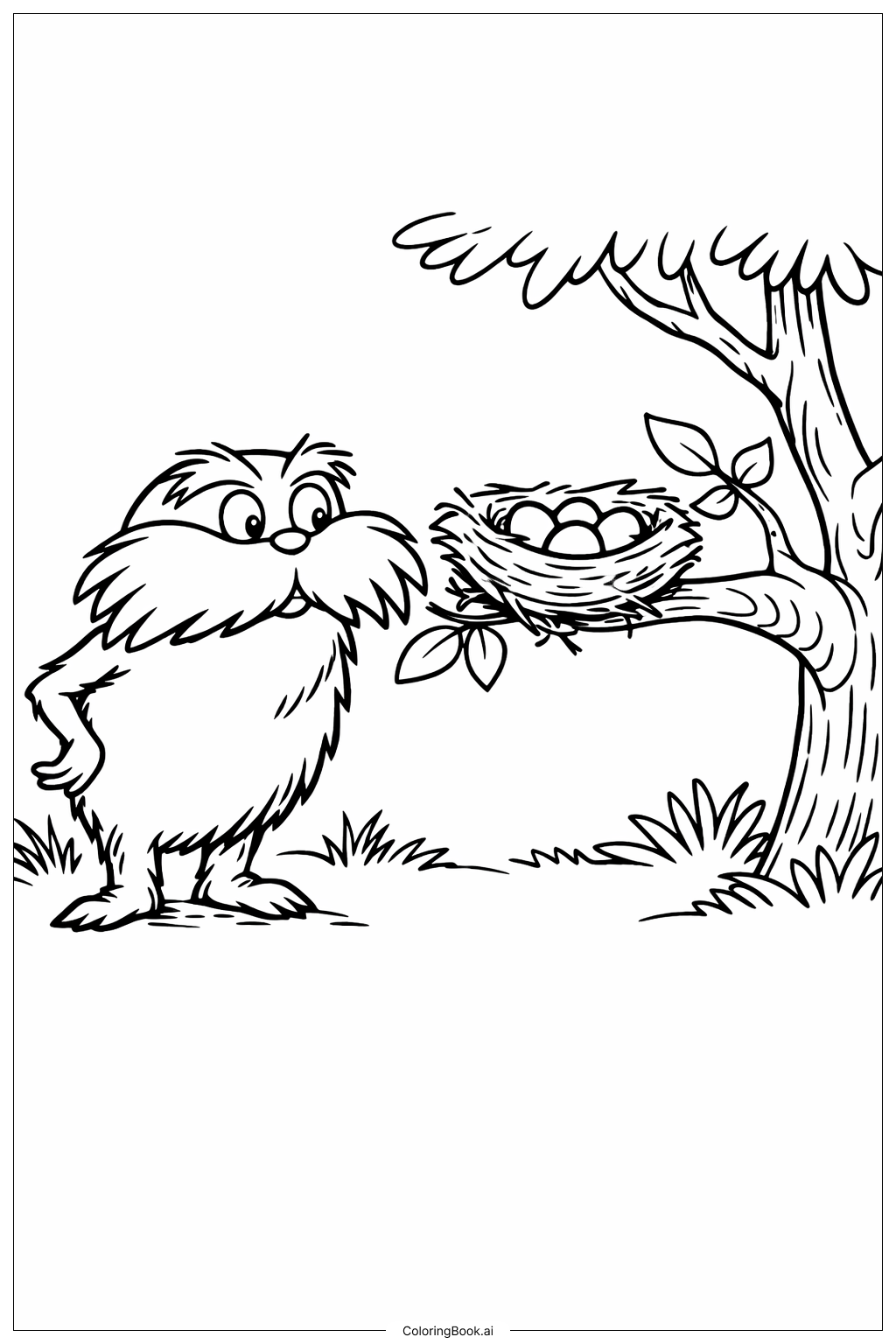
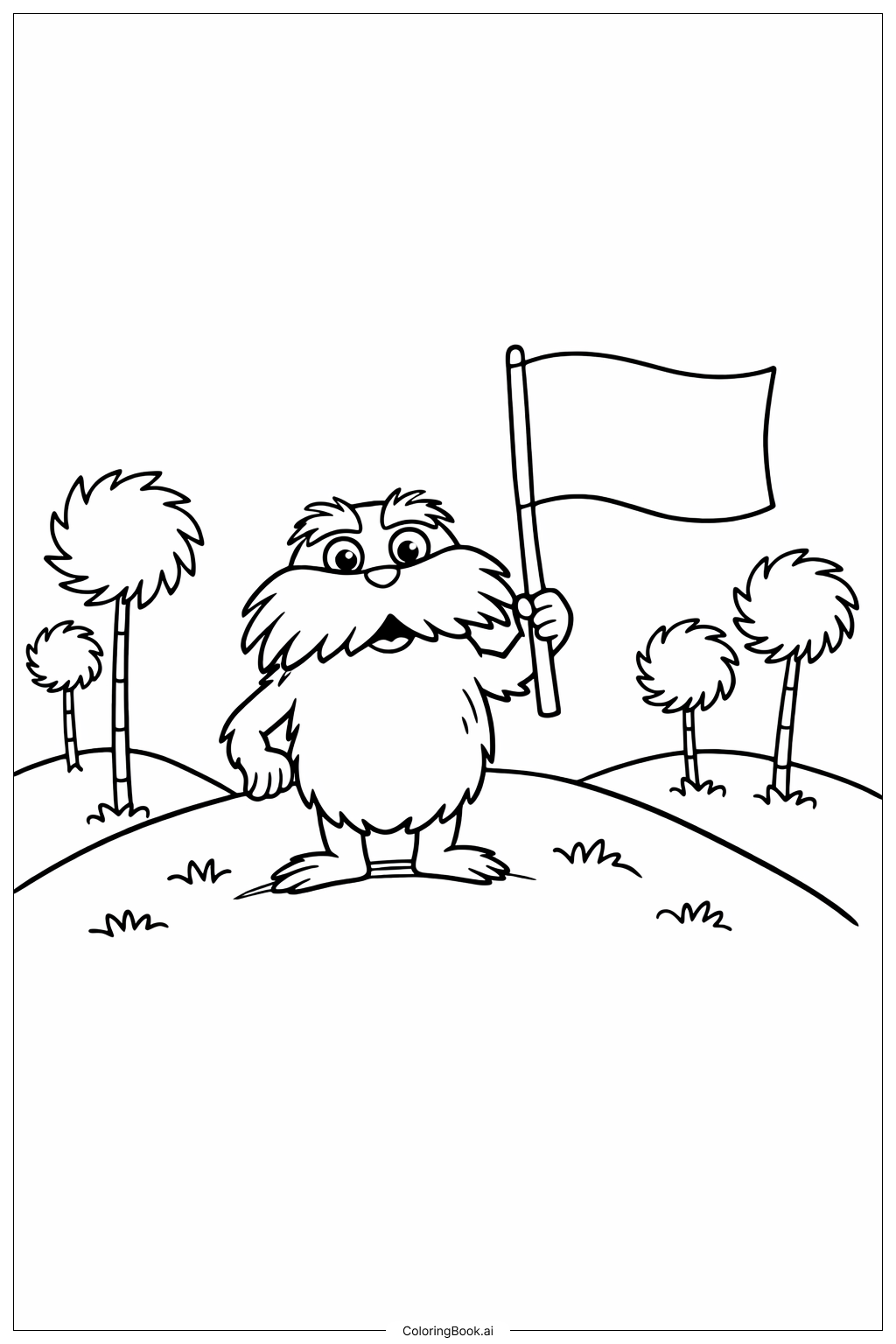
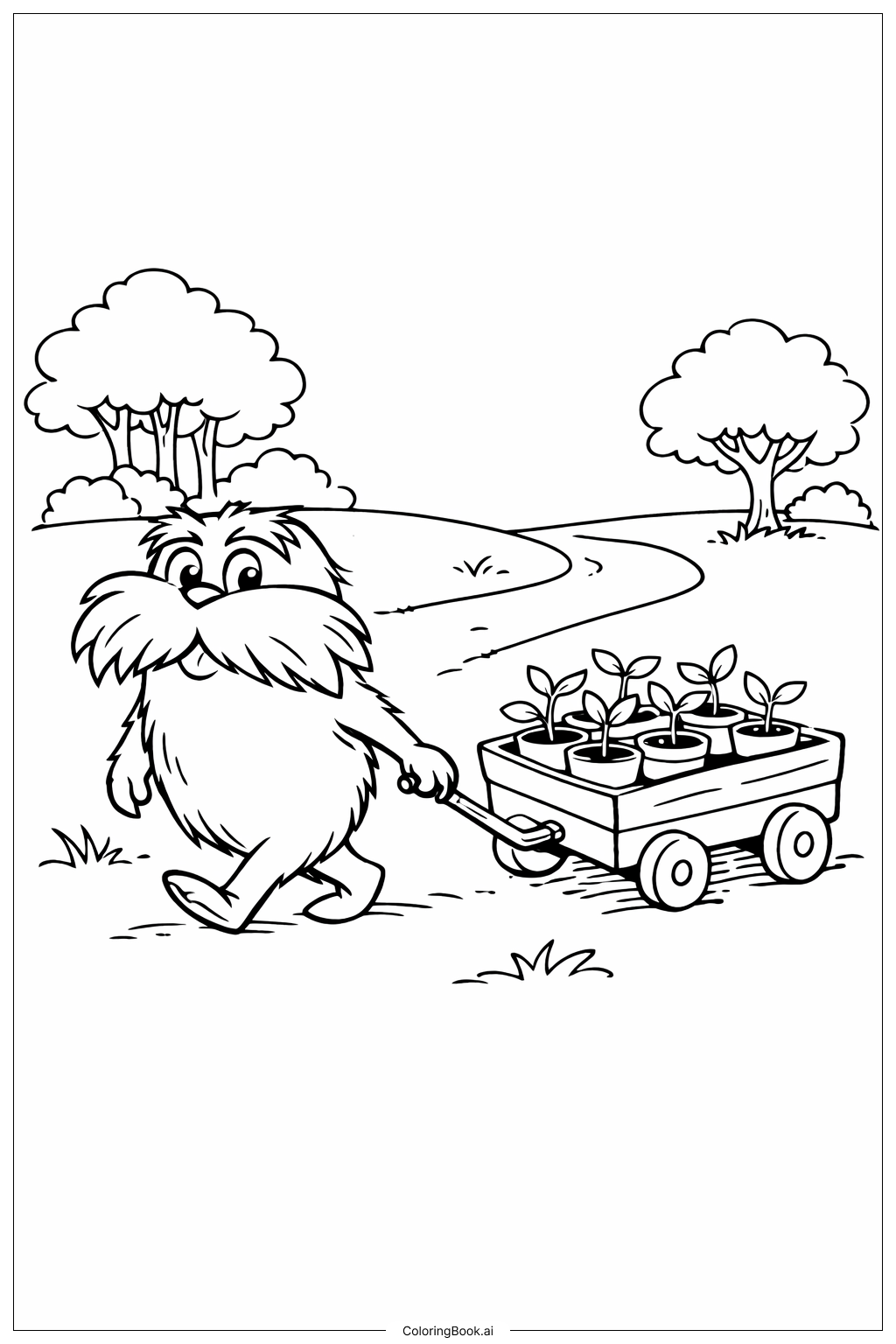
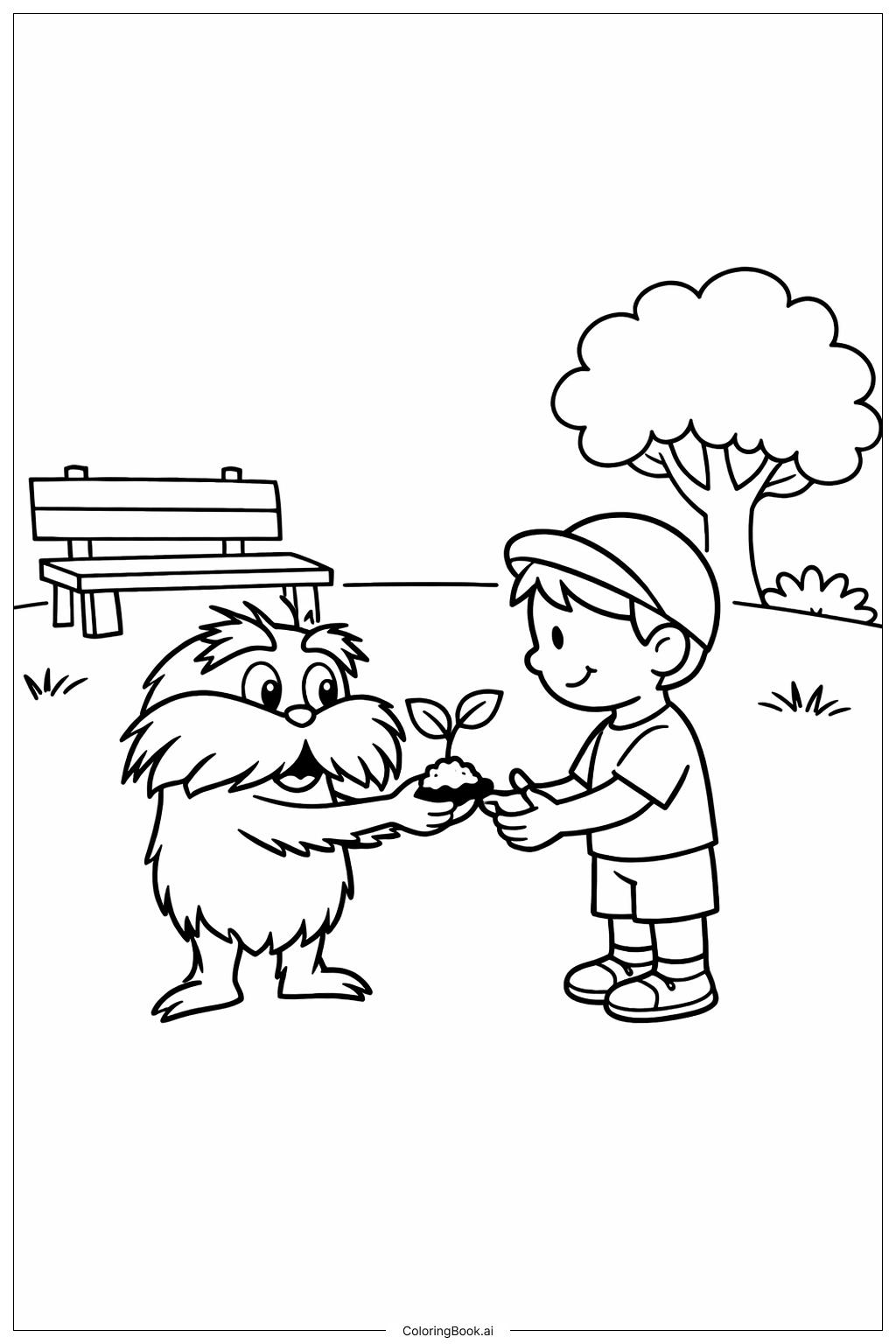
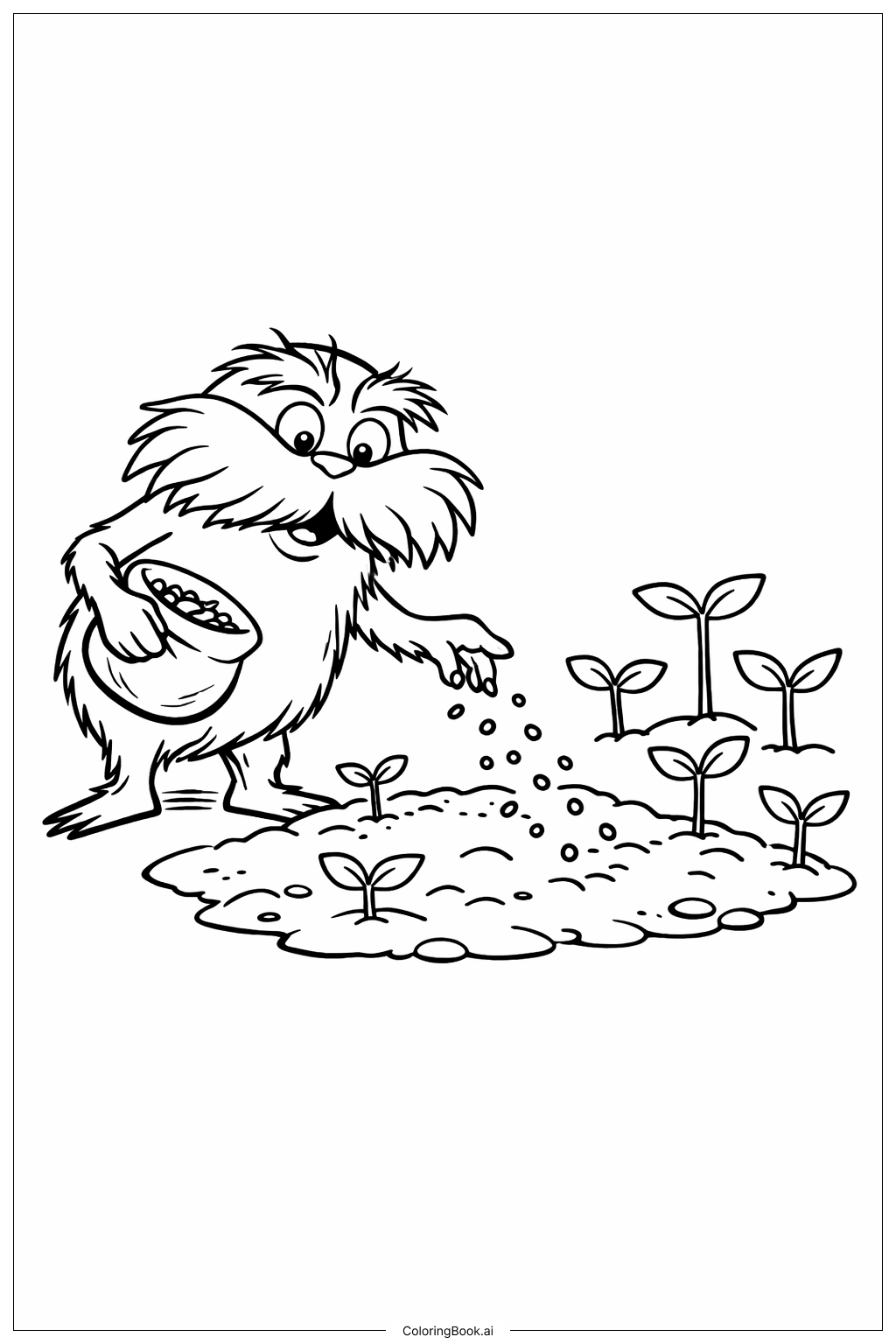
Use bright and natural colors to bring this scene to life. For the Lorax, use warm oranges or yellows to capture his friendly and vibrant look. The seeds can be small brown dots, and the young plants should be colored in different shades of green to show new growth. The soil can be a mix of brown shades for a natural earth feel. Try using lighter greens for smaller plants and darker greens for taller ones to add depth. You can also color the background with light blue or soft colors to keep the focus on the Lorax and plants.
Coloring challenges: Which parts are difficult to color and need attention for The Lorax Planting Truffula Seeds coloring page?
1. Small Details: The seeds are tiny, so coloring them neatly requires good control and attention.
2. Varying Plant Sizes: The plants are different heights, which can be tricky to shade properly for a natural look.
3. Fur Texture: The Lorax’s furry body and mustache have many lines, making it challenging to avoid coloring outside the lines.
4. Soil Texture: The soil has many small shapes and bumps that need careful color blending to look realistic.
5. Space Balance: The picture has open space, so balancing colors between the Lorax, seeds, plants, and soil helps keep the image interesting and lively.
Benefits of coloring books: Advantages of drawing The Lorax Planting Truffula Seeds coloring page
Coloring this picture helps improve hand-eye coordination and fine motor skills through careful coloring of small seeds and detailed fur. It encourages creativity by choosing colors and adding depth with shading. Children learn about nature and the importance of planting and taking care of the environment. This activity also promotes focus and patience as kids work to color within the lines and balance the different parts of the picture. Overall, it’s a fun and educational way to connect with the story of the Lorax and the message of caring for our planet.