Coloring tips: How to color The Lorax Hugging A Seedling coloring page well?
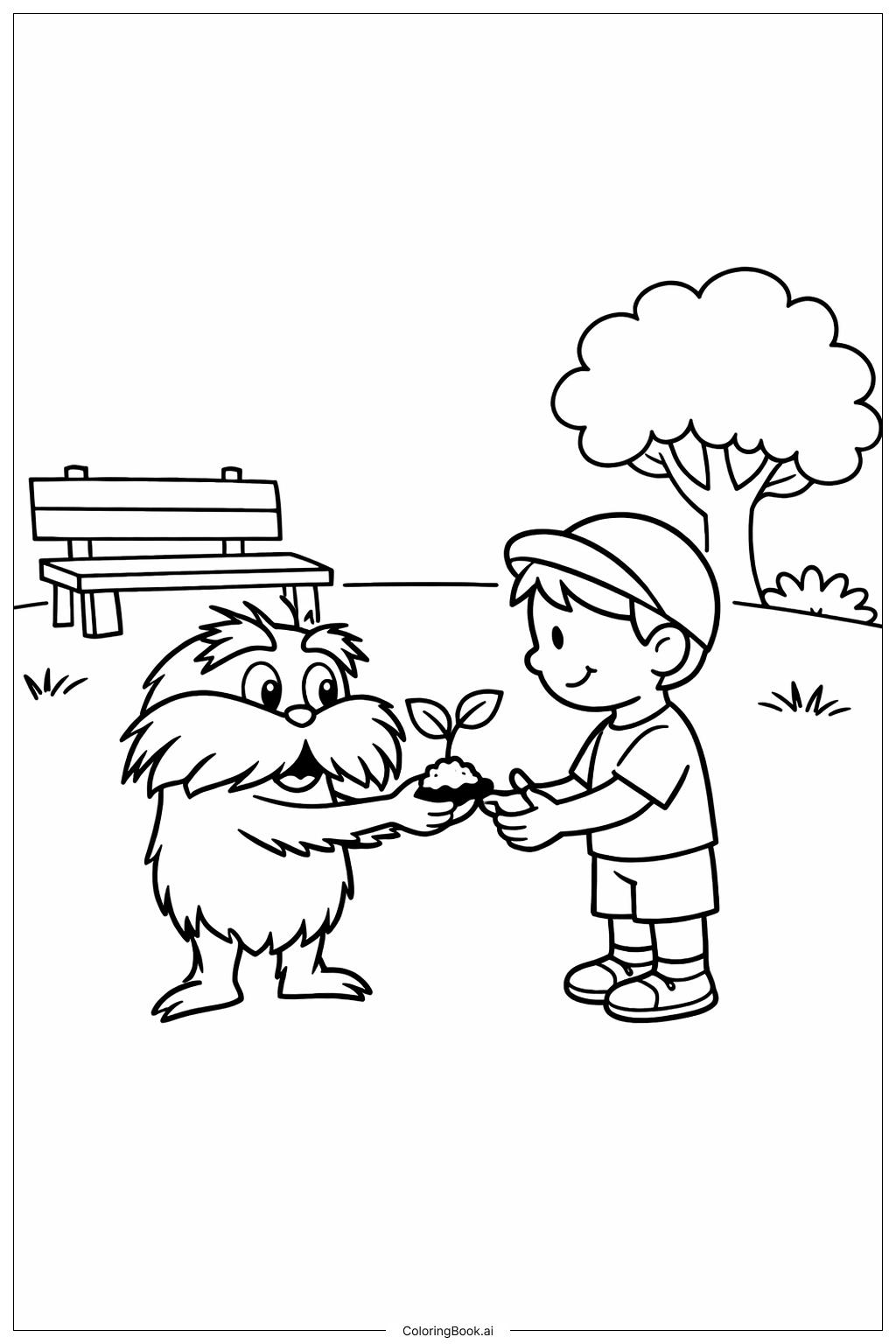
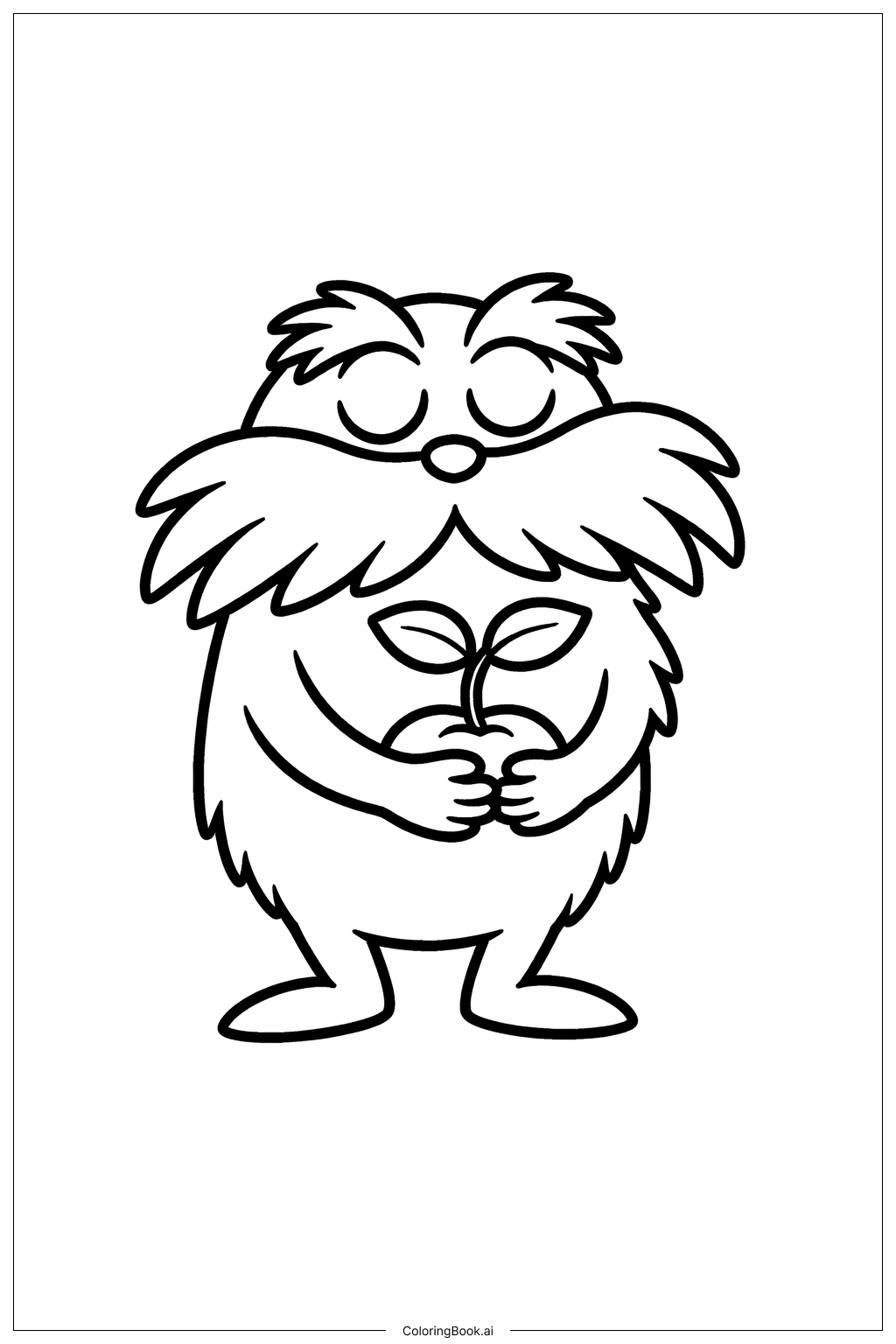
Use warm and earthy colors to bring this image to life. Color the Lorax using shades of orange and yellow to reflect his bright and friendly personality. The seedling should be colored in fresh shades of green to show new life and growth. You can use brown or dark orange for the soil or seed that the seedling grows from. Adding light green shades to the leaves can give a natural effect. Try to color the mustache and eyebrows in bright yellow or orange to create contrast. Keep the background simple or use soft sky blue to suggest a peaceful outdoor scene.
Coloring challenges: Which parts are difficult to color and need attention for The Lorax Hugging A Seedling coloring page?
1. The Lorax’s bushy mustache and eyebrows have many curved lines close together, which might be tricky for younger kids to color neatly. 2. The seedling's small leaves require careful coloring to stay within the lines due to their tiny size. 3. Coloring the round seed shape may be difficult to blend well with the green leaves without mixing colors messily. 4. The Lorax's furry body has uneven edges, making it a little hard to color evenly without going outside the lines. 5. Keeping the overall color balance between warm Lorax tones and fresh green plant colors can be challenging for beginners.
Benefits of coloring books: Advantages of drawing The Lorax Hugging A Seedling coloring page
Coloring this image helps children practice fine motor skills by coloring small and detailed parts like leaves and the mustache. It encourages creativity as children decide what colors to use for the Lorax and the seedling. The picture promotes environmental awareness by showing the Lorax caring for a young plant. It also teaches patience and focus, as kids need to carefully color within the lines. Overall, it is a fun and educational way to connect art with caring for nature.