Coloring tips: How to color Stegosaurus Eating Leaves From A Tree coloring page well?
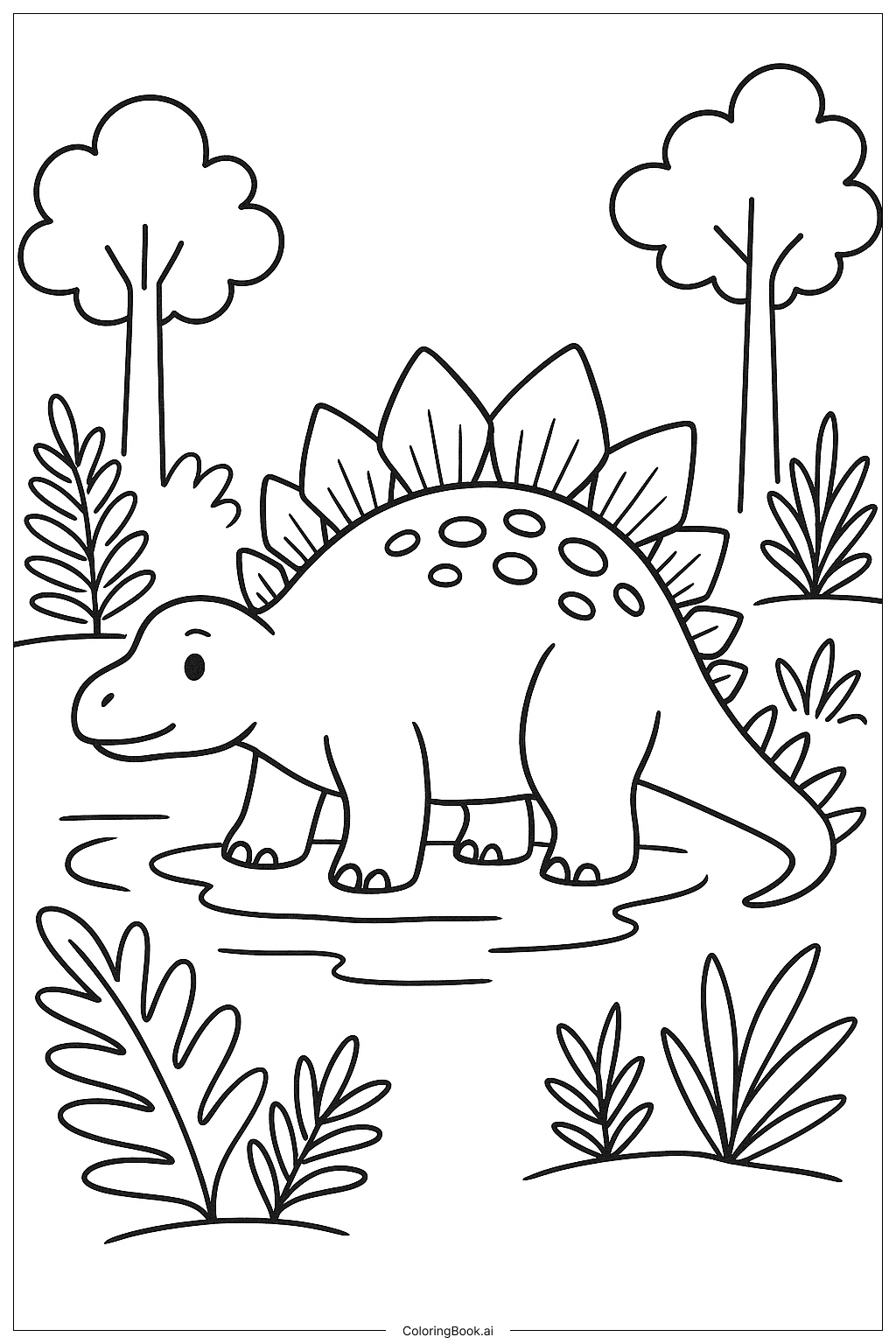
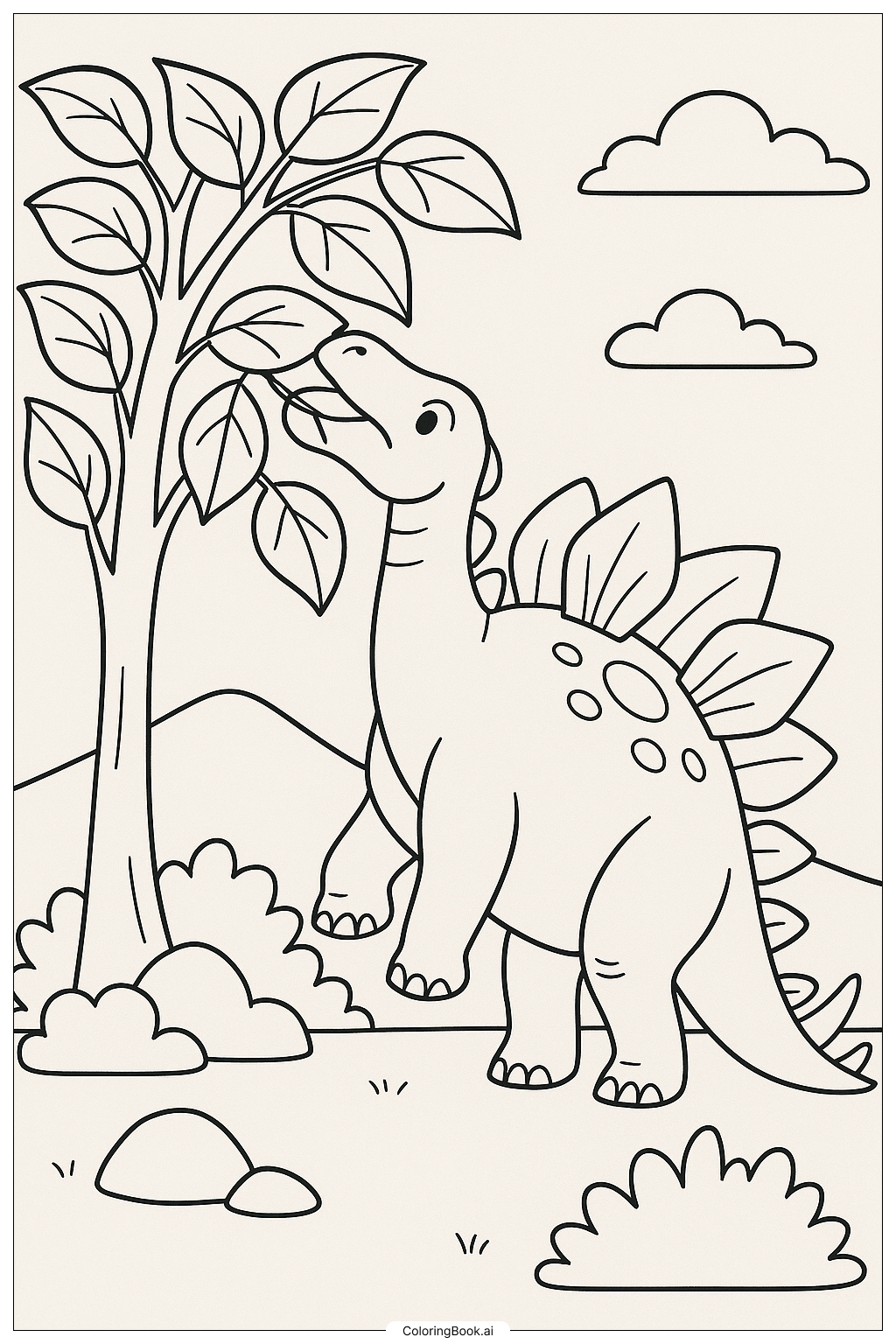
Start with the Stegosaurus body by using a medium green or earthy brown for the main skin. You can add darker shading along the belly and underside to give it depth. The back plates are a highlight of this image — try using warm colors like orange, red, or yellow to make them stand out. Alternate colors between plates to create a bold, eye-catching pattern. For the tail spikes, use a pale yellow or ivory tone. Color the tree trunk in brown with gray highlights, and fill the leaves with bright or deep greens. Add some yellow-green to the leaf edges for a sunlit look. Use lighter greens for the ferns and ground plants. A soft blue or warm tan background can help bring the whole prehistoric scene to life. Feel free to mix colors and experiment — there are no wrong choices here!
Coloring challenges: Which parts are difficult to color and need attention for Stegosaurus Eating Leaves From A Tree coloring page?
• Back Plates Detail: The Stegosaurus has a long row of large, diamond-shaped plates running down its spine. Each plate has a unique curved edge and inner detail lines. Coloring each plate individually without bleeding into the body or neighboring plates requires a steady hand and a fine-tipped coloring tool. Choosing whether to make the plates all one color or a gradient adds another layer of decision-making.
• Skin Texture and Shading: The dinosaur's body is large and rounded, which means flat coloring can look dull. To give the skin a realistic or lively look, kids and artists need to think about where light hits the body and where shadows fall. Layering two or three shades of the same color in the right areas creates a three-dimensional effect, which can be tricky for younger colorists.
• Tree Leaves and Branches: The tree in the background has many overlapping leaves and branching lines. Keeping the leaf areas separate from the branches while maintaining a natural, flowing color palette takes patience. Mixing different shades of green without making the foliage look muddy is a common challenge.
• Ground Foliage Details: The ferns and small plants at the base of the scene are full of thin lines and small shapes. These tiny elements are easy to overlook but important for a finished, polished result. Using the tip of a colored pencil or a thin marker is recommended to avoid coloring outside the small outlines.
• Overall Color Harmony: Balancing bold dinosaur colors with the natural greens of the jungle setting requires thought. Too many bright colors can make the scene feel chaotic, while too few can make it look flat.
Benefits of coloring books: Advantages of drawing Stegosaurus Eating Leaves From A Tree coloring page
Coloring this Stegosaurus page offers a wonderful mix of fun and learning for kids and dinosaur fans of all ages. As children fill in the prehistoric scene, they build fine motor skills and hand-eye coordination by carefully staying within the lines and handling small detail areas like the back plates and leaf edges. Choosing colors for the Stegosaurus encourages creative thinking and boosts confidence, since there is no single correct answer — every version is unique. Learning about dinosaur features, like the iconic back plates and tail spikes, sparks curiosity about science and natural history in a relaxed, enjoyable way. The detailed jungle setting with trees, ferns, and ground plants also introduces kids to the concept of prehistoric ecosystems. For older children and adults, the shading and layering challenges make this a mindful, calming activity that helps reduce stress and improve focus. Completing a full-color page gives a strong sense of accomplishment and pride. Whether used in a classroom, at home, or as a quiet solo activity, this coloring page is a great tool for building patience, attention to detail, and a love of art and dinosaurs alike.