Coloring tips: How to color Squishy Dumpling Balloon Stand coloring page well?
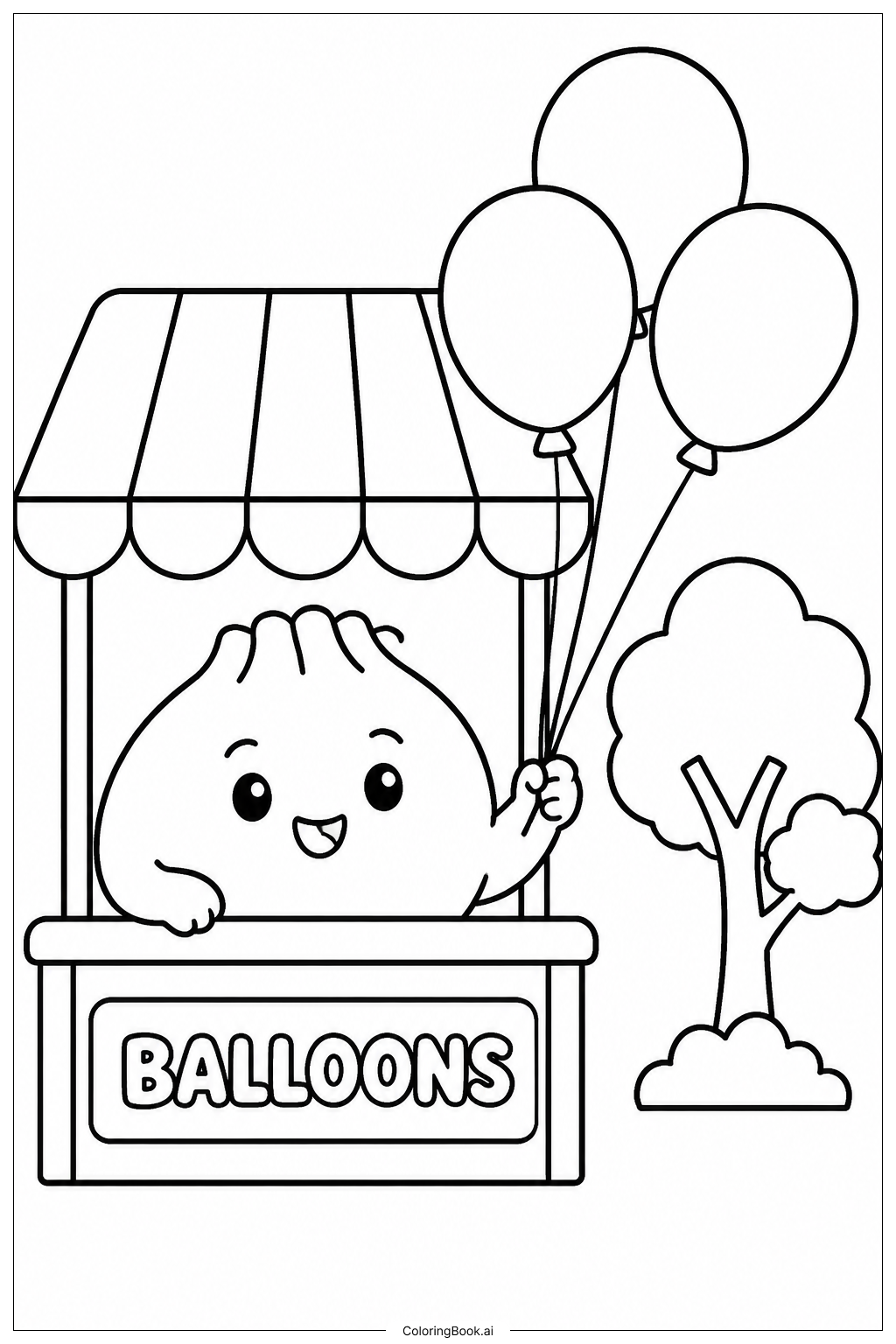
For coloring this playful scene, try using bright and cheerful colors to match the happy mood. You can color Squishy Dumpling with soft pastel shades like light pink or peach for a cute look. Use a mix of red, yellow, blue, and purple for the balloons, giving each balloon a shiny, fun feel. The balloon stand’s canopy can be striped with alternating colors like red and white or blue and yellow. Don’t forget to add shading and highlights to the balloons to make them look round and squishy. Feel free to get creative with your colors on the patterns and background too! This is a great chance to practice blending light and dark shades.
Coloring challenges: Which parts are difficult to color and need attention for Squishy Dumpling Balloon Stand coloring page?
• Balloon Shapes: The balloons have different shapes such as stars, hearts, and round orbs. Coloring these accurately and neatly requires good control to stay within the outline, especially with pointed shapes like stars and hearts. • Small Details: The balloon strings and the striped canopy have thin lines. Coloring these fine details without crossing over can be challenging, especially for younger children. • Shading and Highlights: To make the balloons look three-dimensional and squishy, shading is needed which can be hard for beginners to master. Adding smooth gradients from light to dark takes practice. • Patterned Stand: The balloon stand has multiple layers and patterns, so picking colors that match well without clashing requires planning. • Facial Features: Coloring the eyes, mouth, and cheeks on Squishy Dumpling carefully helps maintain the character’s cute expression, but these small areas need precision.
Benefits of coloring books: Advantages of drawing Squishy Dumpling Balloon Stand coloring page
Coloring this Squishy Dumpling Balloon Stand image is fun and helps develop important skills. It encourages creativity by letting children choose colors for balloons and decorations. Coloring inside the lines improves hand-eye coordination and fine motor skills. Working on small details enhances focus and attention to detail. Practicing shading and color blending supports early art techniques and introduces concepts like light and shadow. This activity also boosts patience and concentration, as children take their time to complete a joyful and lively picture. It can be a calming, satisfying experience while expressing imagination.