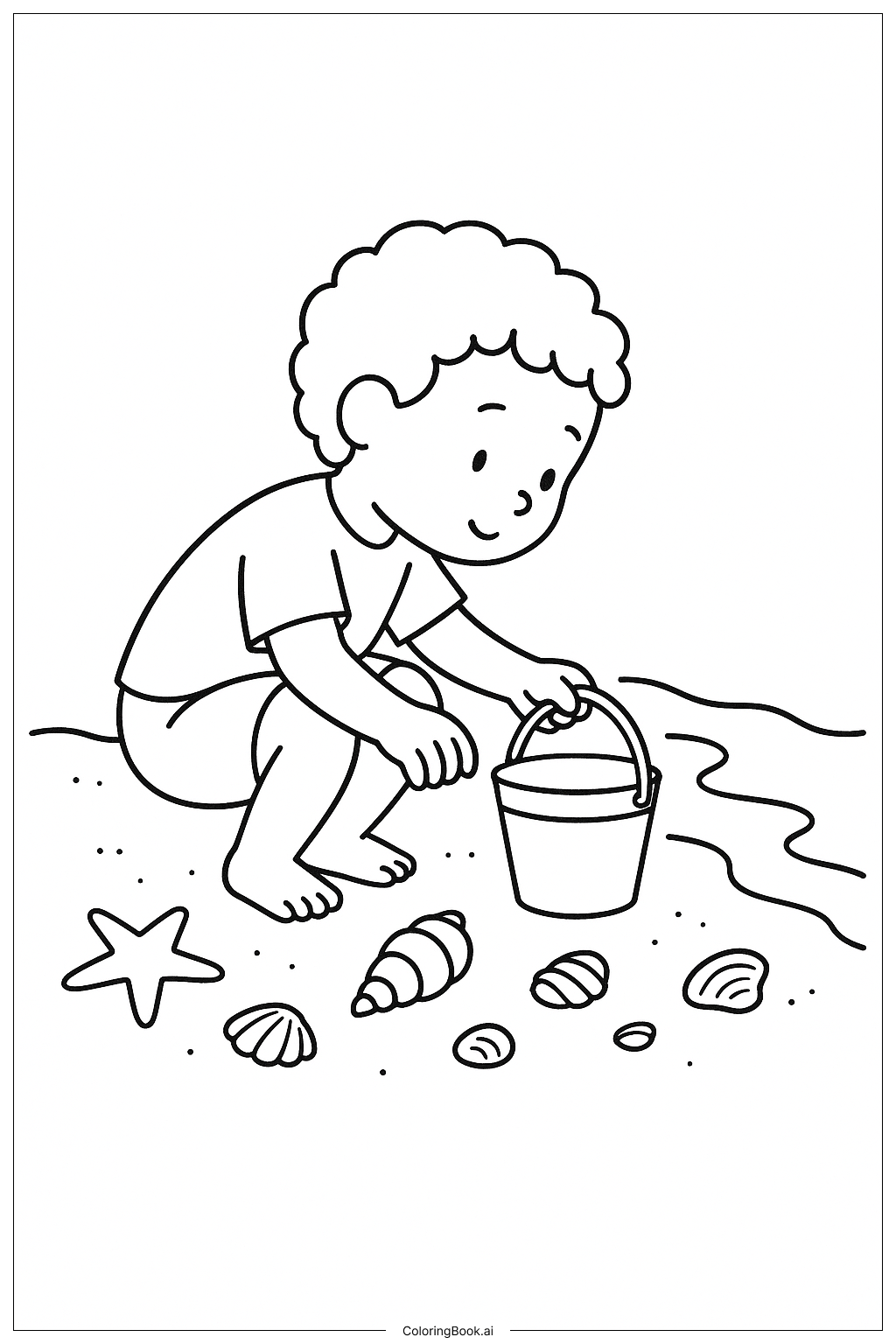
Coloring tips: How to color Spring Break Seashell Hunt coloring page well?
Start with the sky using a soft, pale blue to keep it bright and airy. Use a warm sandy yellow or tan for the beach. Color the ocean in layers — lighter aqua near the shore and deeper teal or blue farther out to show depth. For the seashells, have fun mixing colors! Try soft pinks, creamy whites, peach, tan, and light purple. Use slightly darker shades along the ridges and curves to give each shell a 3D look. Color the child's outfit in bright, cheerful Spring Break colors like coral, turquoise, or sunny yellow. The basket can be colored in warm brown or golden tones. Add light green to the beach grass. Use gentle gray or white for the seagulls. Don't be afraid to add your own patterns inside the shells — dots, stripes, or swirls can make each one unique and beautiful.
Coloring challenges: Which parts are difficult to color and need attention for Spring Break Seashell Hunt coloring page?
• Shell Texture and Detail: Each seashell in the image has its own unique ridges, spirals, and surface patterns. Staying inside these small, closely spaced lines requires a steady hand and a fine-tipped coloring tool. Rushing through these areas can make the shells look flat or messy, so take your time and work slowly on each one.
• Creating Depth in the Ocean: The water in the background needs to shift from light to dark to look realistic. Blending two or three shades of blue and aqua without harsh lines can be tricky, especially for younger colorists. Try using light, overlapping strokes and gradually layering darker tones as you move toward the horizon.
• Shading the Sand: Sand is not just one flat color. It has shadows, wet patches, and raised bumps. Using at least two shades of yellow or tan — one for highlights, one for shadows — makes the beach look natural. This kind of subtle shading takes practice and patience.
• The Child's Clothing and Hair: Small areas like a shirt collar, shoe details, or strands of hair require precision. Using pencils with sharp tips helps keep colors clean and separate. Mixing two close shades in these areas adds dimension without overwhelming the figure.
• Balancing the Overall Color Palette: With so many different elements — shells, sand, water, sky, grass, child, and basket — choosing colors that work well together across the whole scene is a real challenge. Picking a consistent warm-toned or cool-toned palette from the start helps everything look unified and visually pleasing.
Benefits of coloring books: Advantages of drawing Spring Break Seashell Hunt coloring page
Coloring this Spring Break Seashell Hunt page offers a wonderful mix of fun and learning for kids and adults alike. Working through the many small shell details builds fine motor skills and strengthens hand-eye coordination — both important for writing and everyday tasks. Choosing colors for the ocean, sand, and sky encourages creative thinking and artistic expression in a low-pressure, enjoyable way. For children, identifying different shell shapes while coloring sparks curiosity about nature and marine life, making it a gentle educational experience. The beach setting also brings a calm, peaceful feeling that can help reduce stress and anxiety. Focusing on one small area at a time trains concentration and patience — skills that carry over into school and daily life. Older kids and teens can challenge themselves with blending and shading techniques, turning this page into a mini art project they can be proud of. For adults, the repetitive, mindful nature of coloring detailed patterns like shells and waves is a well-known relaxation tool. Completing the full scene gives colorists of all ages a satisfying sense of accomplishment. Whether done solo or as a family activity during Spring Break, this page creates space for creativity, connection, and calm.