Coloring tips: How to color Spain Flag Soccer Ball coloring page well?
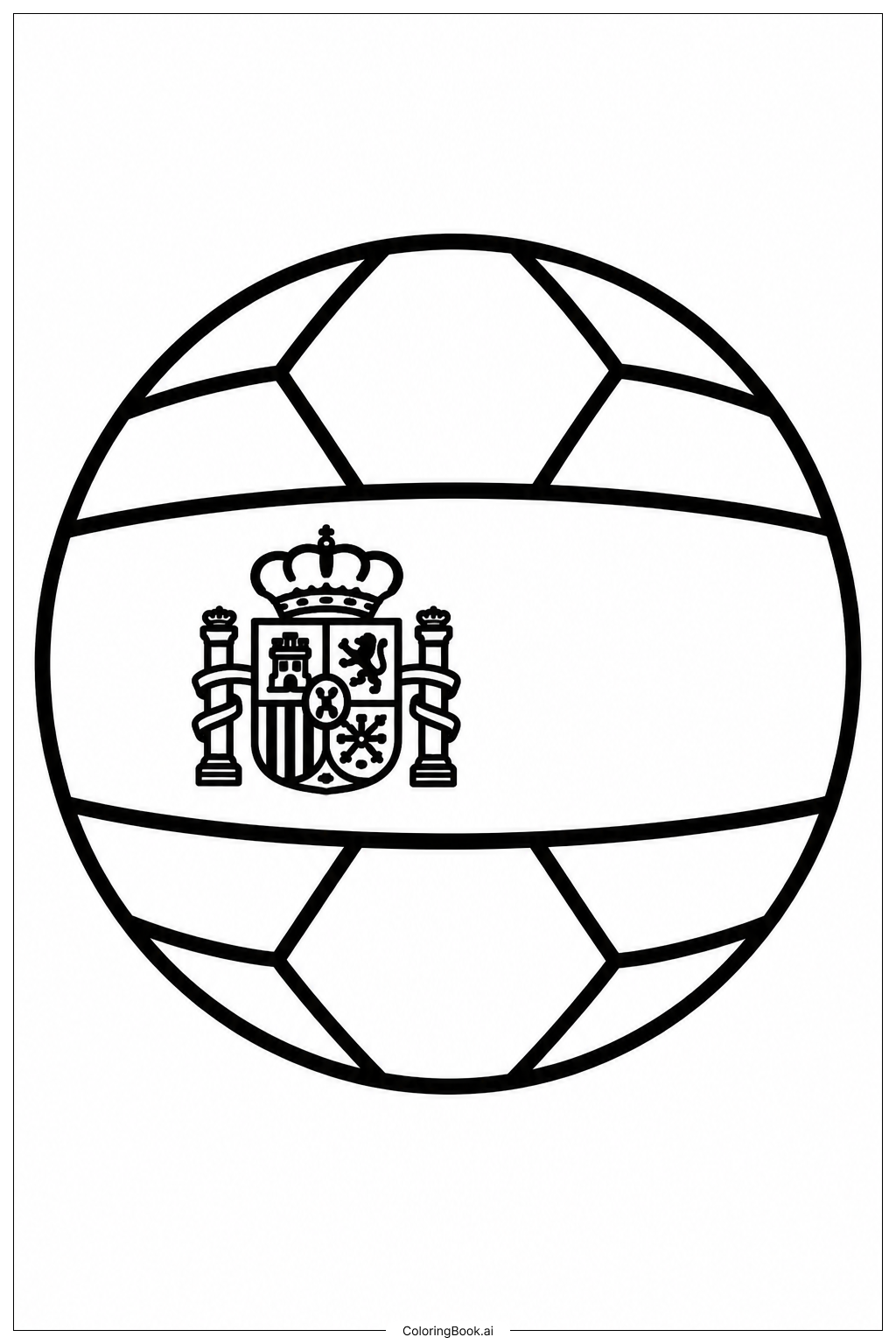
Start by coloring the red stripe panels with a bright, bold red. Use a rich golden yellow for the wide center stripe panels. These two colors are the heart of the Spain flag, so get them right first. For the coat of arms in the center, take your time. Use gold and yellow for the crown and shield border. Add deep red and purple for the shield sections. The two Pillars of Hercules can be colored in gold or light tan. Use a dark outline or brown to define the smaller details. Keep the soccer ball's panel lines clean by coloring inside the borders carefully. A white or light gray can be used for the ball's panel outlines to make the design pop. Try colored pencils for detail work and markers or crayons for the larger stripe areas.
Coloring challenges: Which parts are difficult to color and need attention for Spain Flag Soccer Ball coloring page?
• Coat of Arms Detail: The Spanish coat of arms is the most challenging part of this image. It contains a small shield with multiple sections, a crown, and two pillars. Each element is tiny and requires a steady hand. Using fine-tipped colored pencils is strongly recommended to stay within the lines and avoid smudging neighboring areas.
• Color Accuracy on Flag Stripes: The Spain flag has a specific shade of red (sometimes called vermilion) and a golden yellow. Matching these colors closely can be tricky, especially if you are working with a basic set of crayons or markers. Mixing or layering colors may be needed to get the right tone, which can be difficult for younger colorists.
• Panel Boundary Management: The soccer ball is made up of multiple curved panels. Each panel must be colored consistently to reflect either the red or yellow stripe of the flag. Keeping track of which panel belongs to which stripe section, and coloring them evenly without going over the panel lines, requires focus and patience.
• Curved Surface Shading: A soccer ball is round, and adding shading to suggest that three-dimensional shape is an advanced technique. Colorists who want a realistic look will need to apply lighter tones in the center of each panel and darker tones near the edges, which demands skill with blending tools.
• Small Pillar and Crown Elements: The two Pillars of Hercules flanking the coat of arms are narrow and tall. Filling them in without bleeding into the surrounding red and yellow areas is a real test of precision, especially for kids using thicker crayons or markers.
Benefits of coloring books: Advantages of drawing Spain Flag Soccer Ball coloring page
Coloring this Spain Flag Soccer Ball page brings together creativity, learning, and fun in one activity. As kids and adults work through the design, they naturally learn about the colors and symbols of the Spanish flag. Recognizing the red, yellow, and the coat of arms builds cultural awareness in a playful way. Fine motor skills get a real workout here. Carefully coloring the small coat of arms, the panel lines, and the pillars helps strengthen hand control and pencil grip, which supports writing and drawing skills for younger children. Focus and patience also grow with this image. The detailed sections encourage colorists to slow down, plan their color choices, and work methodically — all habits that carry over into school and daily life. For older colorists and adults, the repetitive motion of filling in the bold stripe panels can be relaxing and meditative, offering a simple way to unwind. The soccer theme also makes it especially appealing for sports fans, giving them a personal connection to the image that keeps them engaged from start to finish. Overall, this page is a rewarding mix of art, sport, and geography.