Coloring tips: How to color Spain Flag Shield coloring page well?
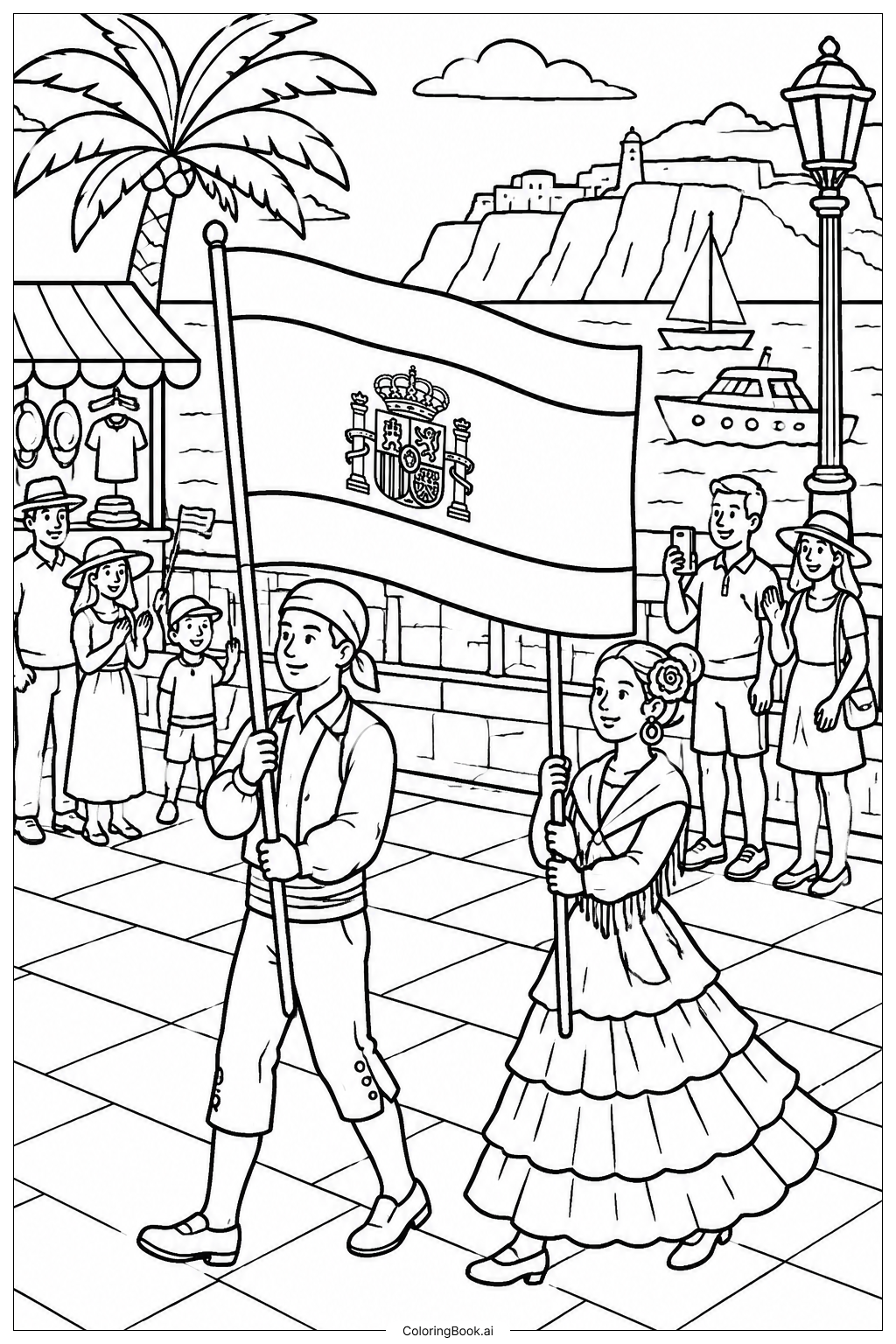
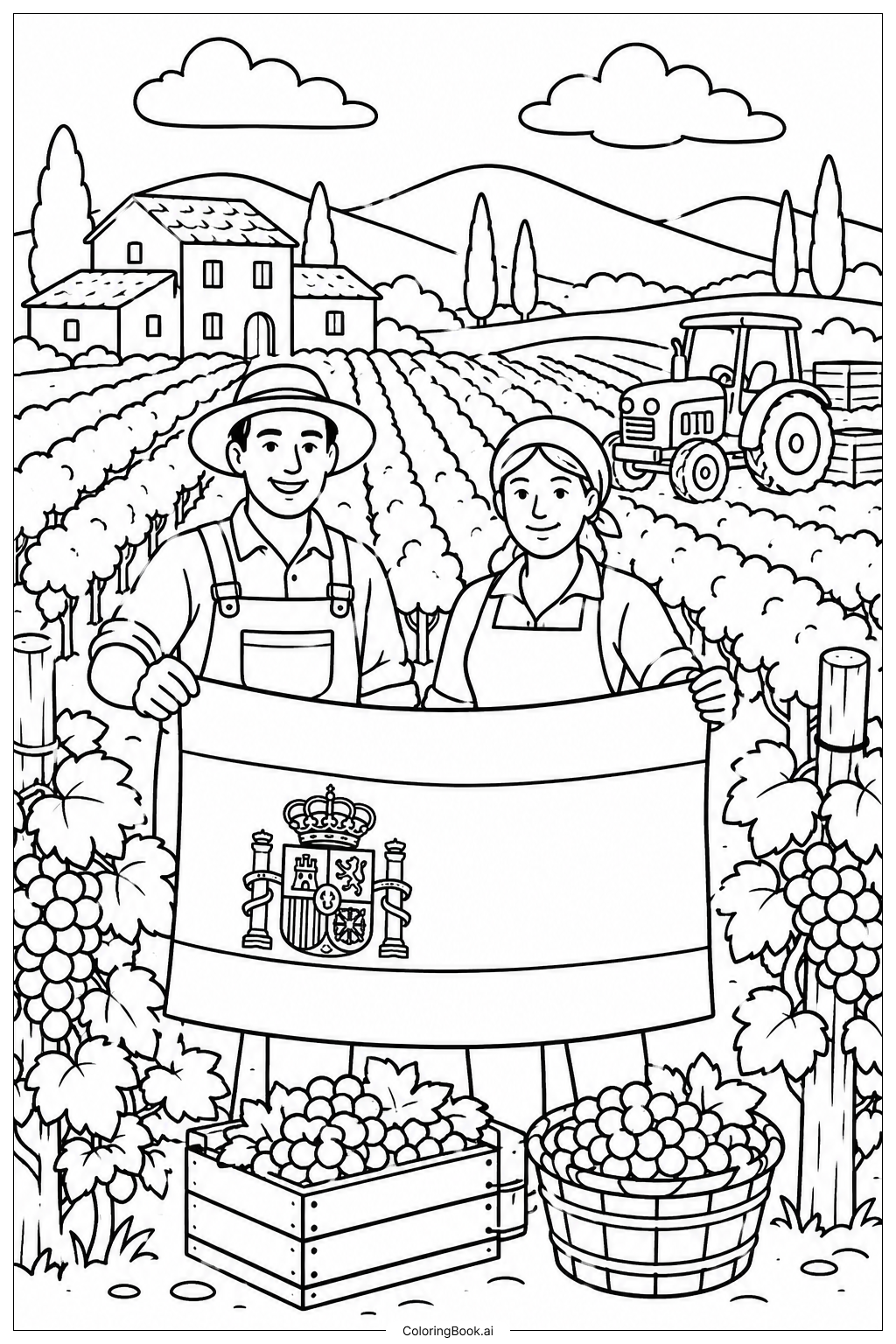
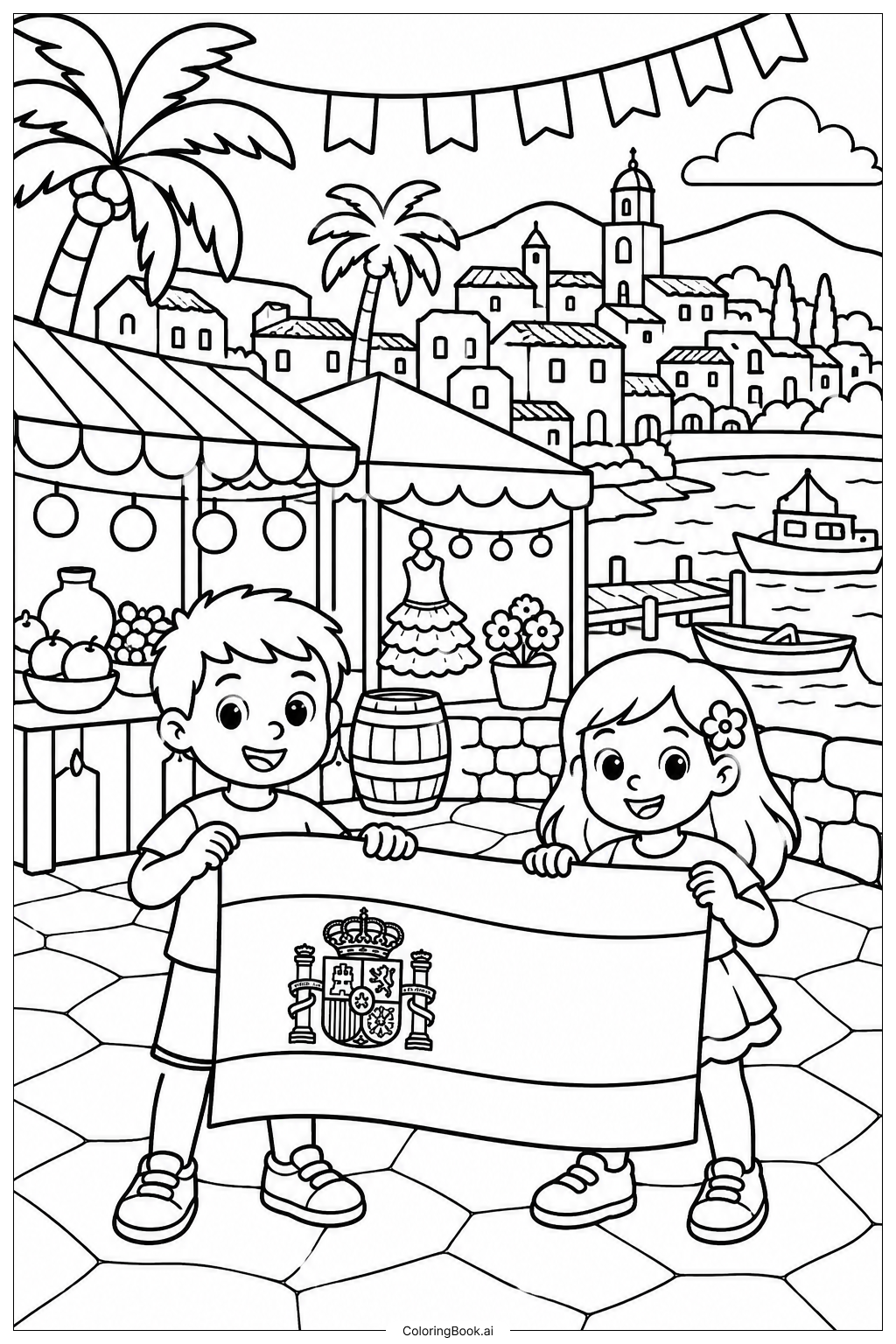
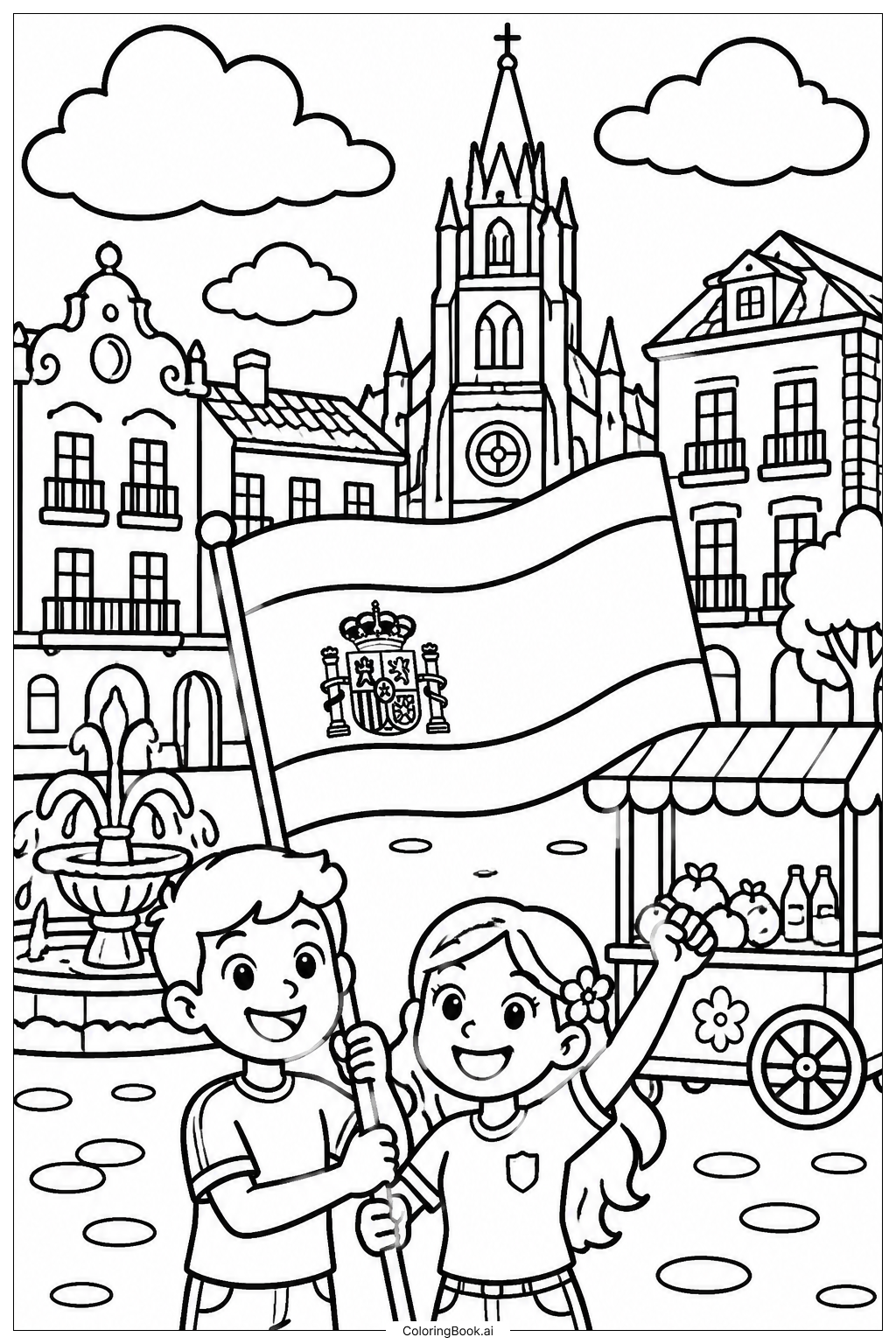
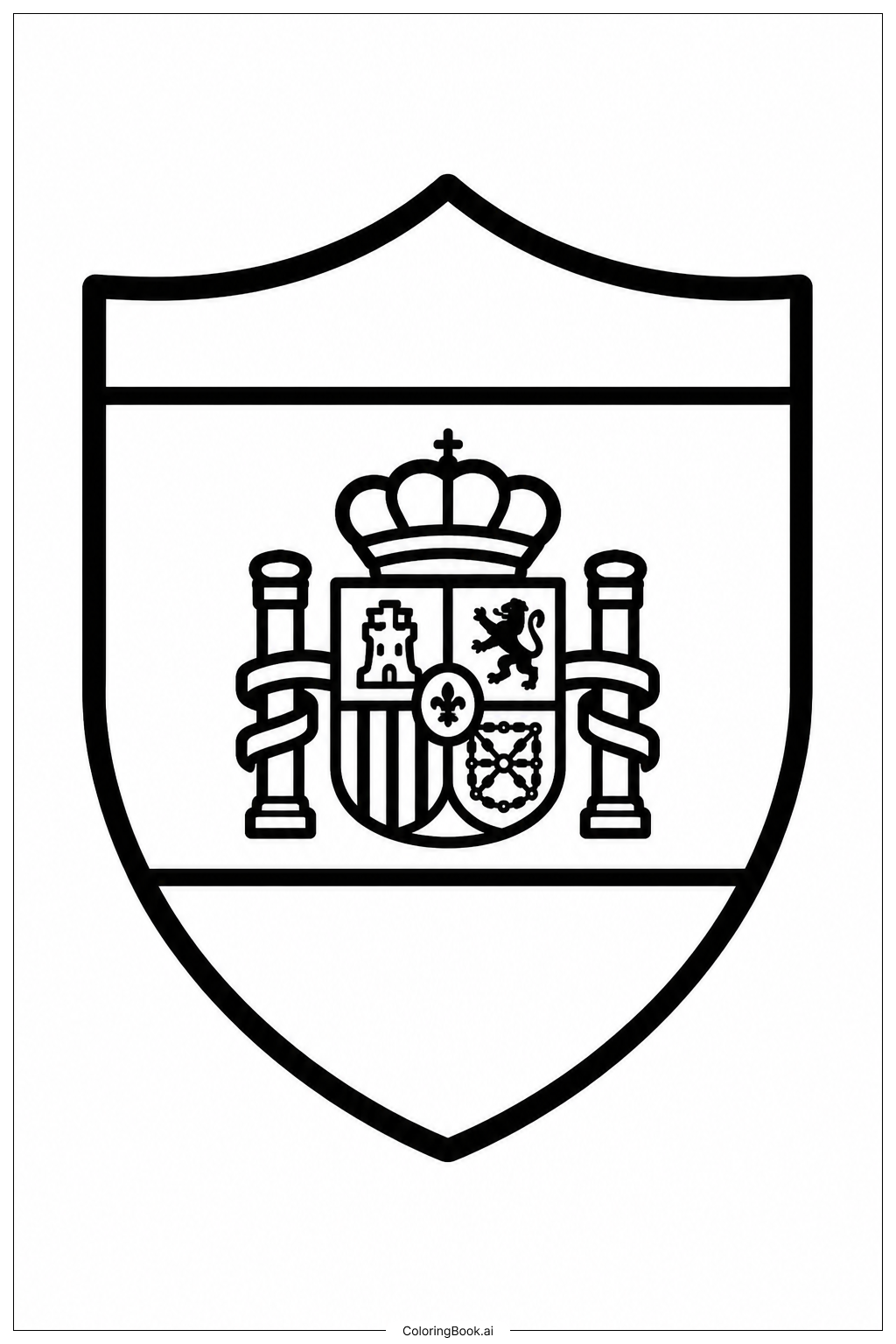
Start with the large background sections of the shield. Use red and gold (yellow) for the castle and lion quarters, as these are the traditional colors of Spain. Color the castle towers gold with red details, and the lion in gold on a red field. The Navarre section uses red with a gold chain pattern. The Granada pomegranate at the bottom is red with green leaves. The Pillars of Hercules can be colored in gray or tan to look like stone. Use deep blue for the banner wrapped around the columns. The royal crown at the top looks great in gold with red and blue jewel accents. Take your time with the small details — a fine-tipped marker or colored pencil works best. Younger kids can focus on the big sections first, while older colorists can enjoy filling in the tiny patterns inside each quarter.
Coloring challenges: Which parts are difficult to color and need attention for Spain Flag Shield coloring page?
• Quartered Shield Sections: The shield is divided into four distinct sections, each with its own symbol and color scheme. Keeping the colors accurate and contained within the tight borders of each quarter requires a steady hand and careful attention. Mixing up the colors between sections can make the final result look confusing, so planning ahead with the correct shades is important before applying any color.\n\n• Intricate Chain Pattern of Navarre: One of the trickiest parts of this image is the chain-link pattern found in the Navarre quarter. The small, repeating links are closely spaced and require a fine-tipped tool to color accurately. Rushing through this section often leads to smudging or bleeding outside the lines, so patience is essential here.\n\n• Pillars of Hercules and Banner: The two tall columns on either side of the shield have detailed textures, and the ribbon-like banner wraps around them in a flowing curve. Coloring the banner consistently while following its curves without losing the boundary lines is a real challenge, especially for younger colorists.\n\n• Royal Crown Details: The crown at the top of the shield contains multiple small compartments, jewels, and curved shapes. Each tiny element benefits from a different color or shade to stand out, which demands precision and a collection of well-sharpened pencils or fine markers.\n\n• Small Heraldic Symbols: The castle towers, lion figure, fleur-de-lis, and pomegranate are all small and packed with fine lines. Coloring inside these symbols without going over the outlines takes practice. Using a light touch and working slowly from the center outward helps maintain clean, neat results.
Benefits of coloring books: Advantages of drawing Spain Flag Shield coloring page
Coloring the Spain Flag Shield is a wonderful activity for kids and adults alike. It blends creativity with a real lesson in history and culture. As colorists work through each section of the shield, they naturally learn about the regions and kingdoms that make up modern Spain. This kind of hands-on learning sticks better than reading from a textbook.\n\nFor younger children, filling in the large sections of the shield builds fine motor skills and helps them practice staying within lines. Choosing colors and planning the design encourages decision-making and boosts confidence.\n\nFor older kids and adults, the detailed heraldic symbols offer a satisfying challenge that sharpens focus and concentration. Spending time on a complex coloring page is a well-known way to reduce stress and quiet a busy mind — similar to meditation.\n\nCompleting the full shield also gives a real sense of accomplishment. The finished page makes a great display piece and can spark conversations about Spanish history, geography, and culture. Whether used in a classroom, at home, or as a relaxing hobby, this Coloring Page connects art, history, and mindfulness in one enjoyable activity suitable for all ages.