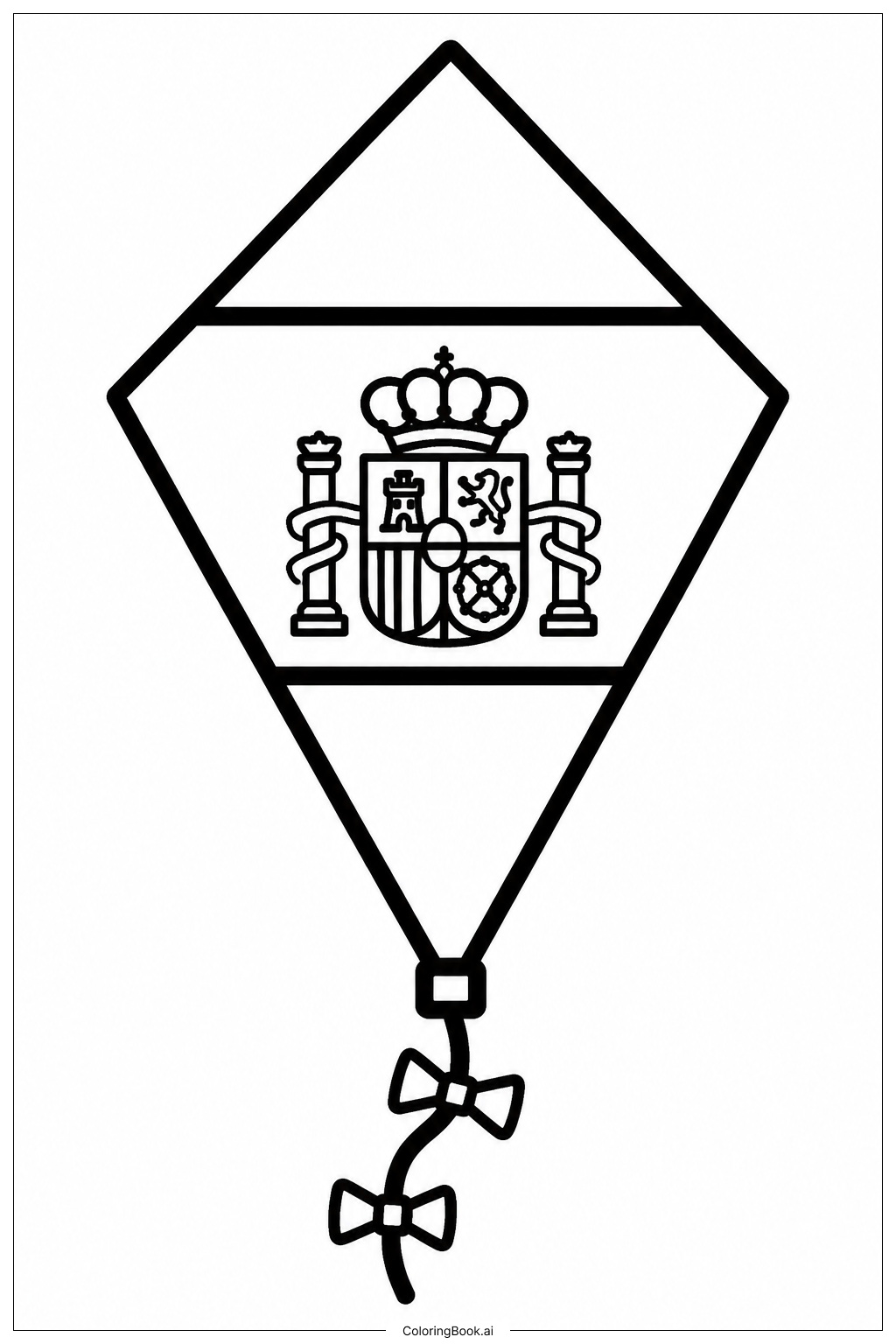
Coloring tips: How to color Spain Flag Kite coloring page well?
Start with the large red stripes on the top and bottom sections of the kite. Use a bright, bold red to make them stand out. Next, fill in the wide yellow stripe in the middle with a warm, golden yellow. For the coat of arms in the center, take your time — use a mix of red, yellow, and darker shades like brown or gold for the details. The kite tail can be colored in alternating red and yellow to match the flag's theme. Color the clouds light blue or white, and fill in the sky with a soft sky blue. Wind lines can be left uncolored or done in a pale blue. Feel free to add your own creative touches to make the scene feel alive and fun!
Coloring challenges: Which parts are difficult to color and need attention for Spain Flag Kite coloring page?
• Coat of Arms Details: The coat of arms at the center of the kite contains small, intricate shapes including a crown, shields, and tiny symbols. These elements require careful, precise coloring with fine-tipped colored pencils or thin markers. Rushing through this section may result in colors bleeding into each other, so patience is key.
• Staying Within the Stripe Boundaries: The kite has clearly defined red and yellow stripes, but the lines between them can be easy to cross, especially for younger colorists. Using a light hand and coloring slowly near the edges of each stripe will help keep the colors clean and separate.
• Matching the Flag's Colors Accurately: The Spanish flag uses a very specific shade of red and yellow. Choosing colors that are too dark, too orange, or too pink can make the final result look off. Try to pick a true scarlet red and a bright golden yellow for the most authentic look.
• The Kite Tail Sections: The long, flowing tail is made up of many small ribbon segments. Each one is small and close together, making it tricky to color without accidentally going outside the lines. Working section by section and letting each part dry before moving on is a helpful strategy.
• Sky and Wind Line Balance: The background sky and wind lines need to be colored lightly so they don't overpower the kite itself. Using gentle, even strokes for the sky and keeping wind lines subtle will help the kite remain the clear focal point of the image.
Benefits of coloring books: Advantages of drawing Spain Flag Kite coloring page
Coloring this Spain Flag Kite page offers a wonderful mix of fun and learning. As kids fill in the red and yellow stripes, they naturally learn about the colors and design of the Spanish flag, sparking curiosity about Spain and its culture. This gentle introduction to world flags can inspire conversations about geography, history, and different countries.
The act of coloring itself builds important skills. Staying within the lines improves hand-eye coordination and fine motor control. Choosing colors and planning how to fill the image encourages creative thinking and decision-making. Working through the detailed coat of arms section helps develop focus and patience.
For older children and teens, the challenge of accurately matching the flag's colors adds a layer of thoughtful practice that builds attention to detail. For younger kids, the larger stripe sections provide satisfying, confidence-building areas to color freely.
Beyond skills, coloring is simply a calming, enjoyable activity. It gives kids a screen-free way to relax, express themselves, and feel a sense of accomplishment when the page is complete. Displaying the finished artwork can also give children a wonderful sense of pride in what they created.