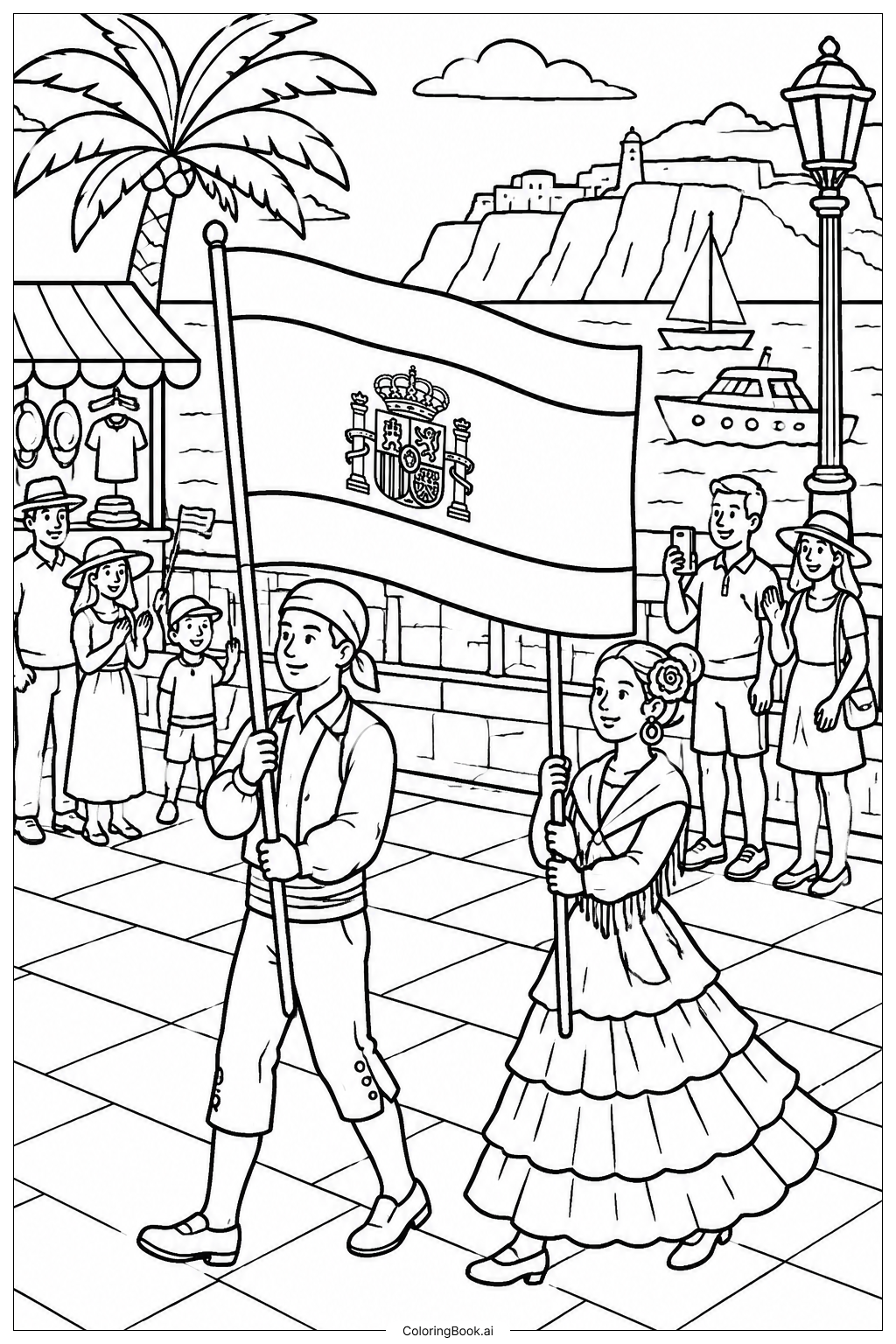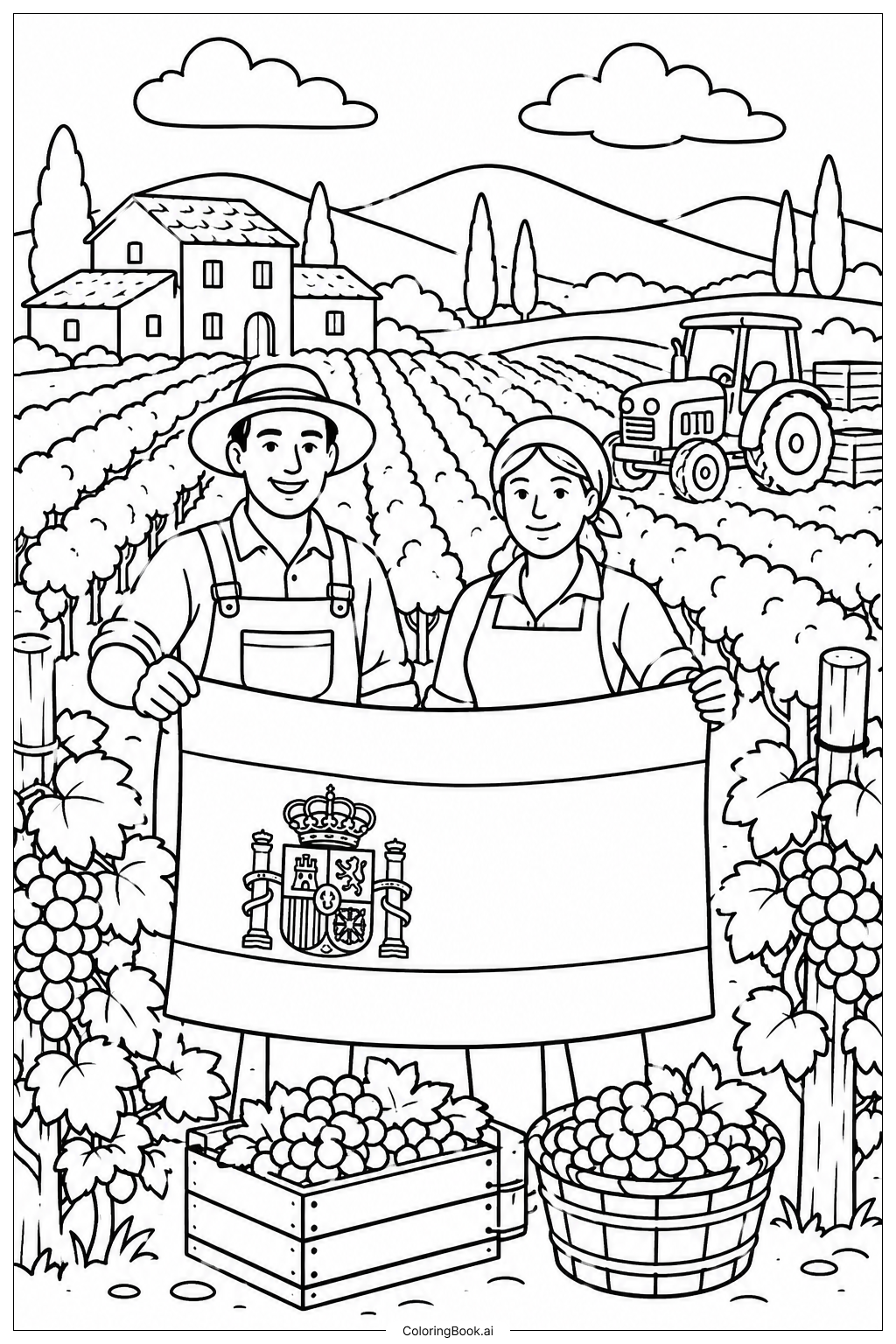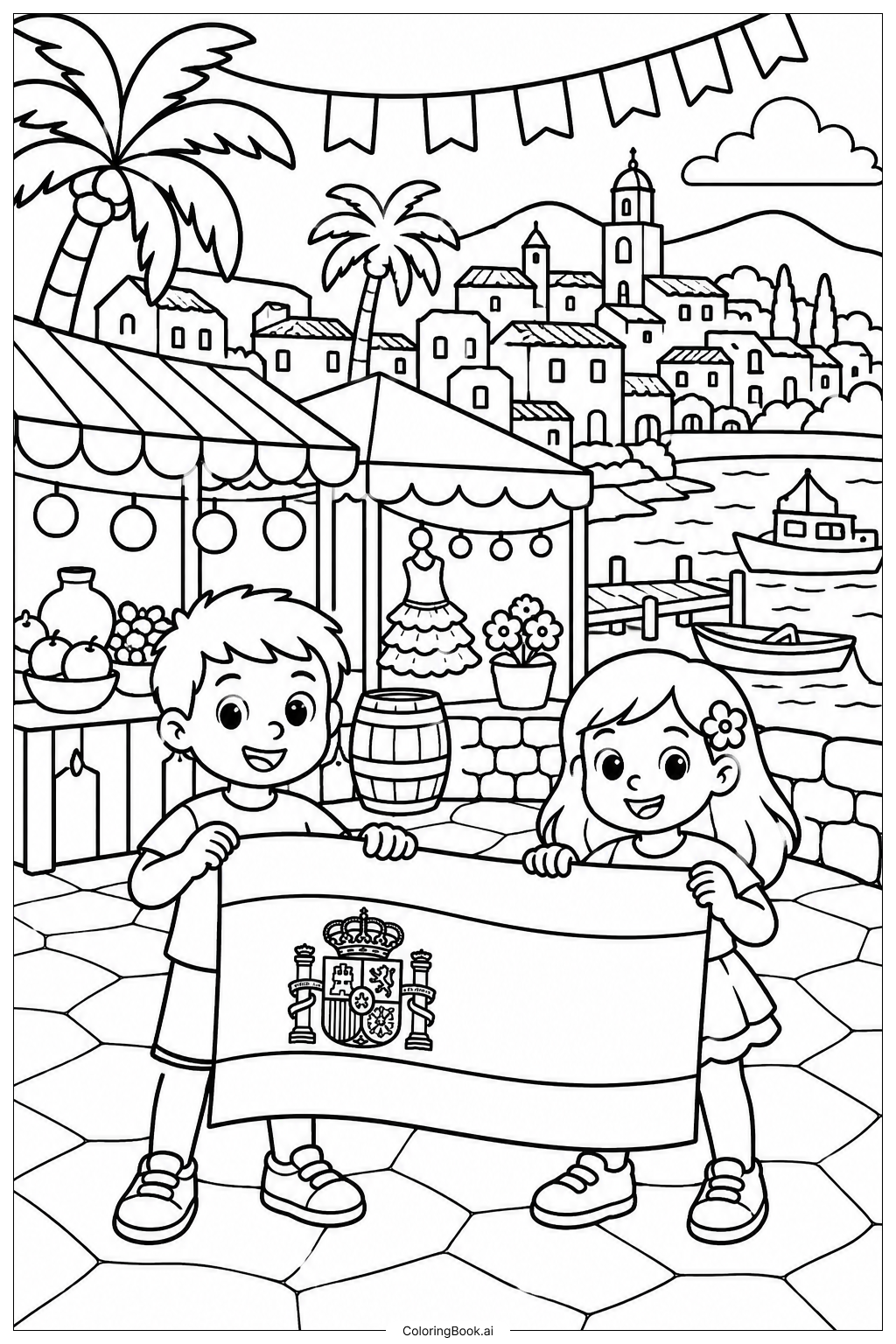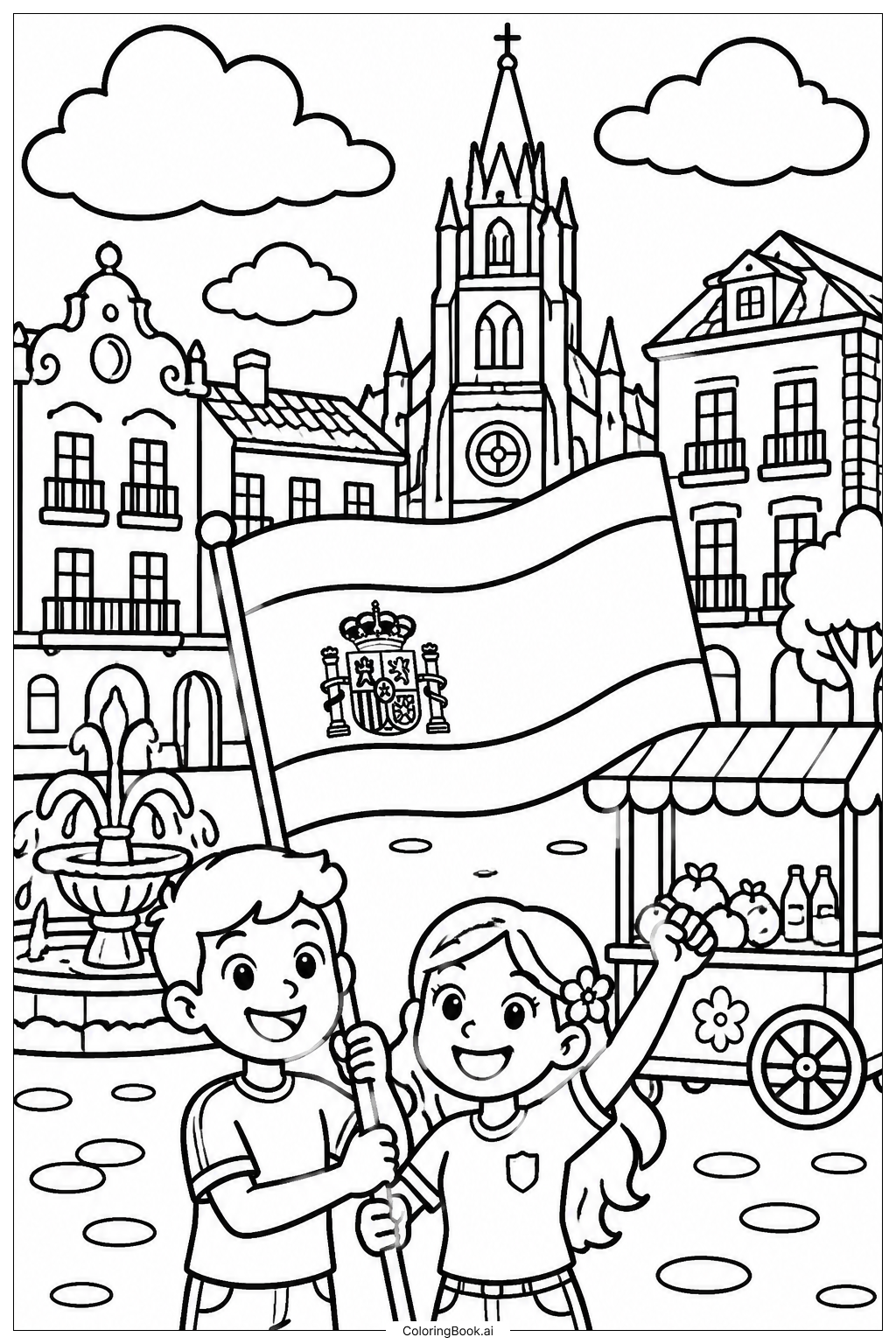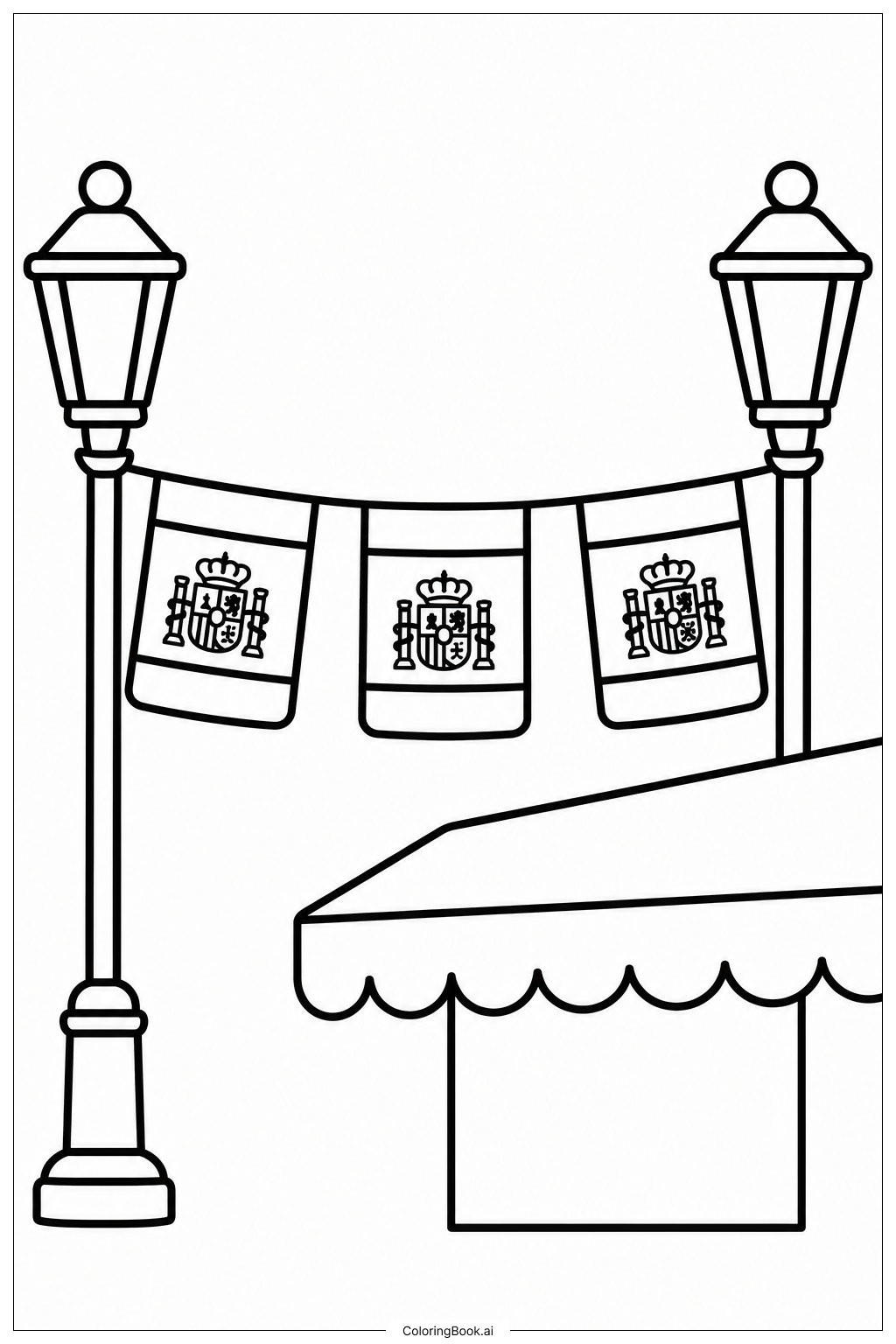
Coloring tips: How to color Spain Flag Bunting On Street coloring page well?
Start by coloring the Spanish flag pennants. Use red for the top and bottom stripes, and yellow or gold for the wide middle stripe. Add the coat of arms in the center of each flag using dark red, gold, and a little green. For the string holding the bunting, use brown or gray. Color the buildings along the street in warm shades like tan, beige, cream, or light orange. Use blue or light gray for the sky in the background. Windows and doors can be colored in brown, dark blue, or green. Keep your strokes neat on the small flags since they have fine details. You can use colored pencils for better control on tiny areas. Feel free to add your own colors to the street and buildings to make the scene feel bright and festive. The goal is to make the whole image feel like a fun Spanish celebration!
Coloring challenges: Which parts are difficult to color and need attention for Spain Flag Bunting On Street coloring page?
• Small Pennant Details: Each triangular flag pennant is very small and contains multiple stripes and a coat of arms. Staying inside the lines on such tiny shapes is tricky, especially for younger children. A fine-tipped colored pencil or a thin marker works best here to keep colors clean and separate.
• Coat of Arms Accuracy: The Spanish coat of arms in the center of each flag includes several small elements like a crown, shields, and pillars. Reproducing these details in color without smudging or overflowing into neighboring sections requires a steady hand and patience. Older children and adults may enjoy the challenge of carefully picking out each tiny element.
• Repetition Across the Bunting: The bunting contains many pennants in a row, and each one needs to be colored consistently. Keeping the same color placement flag after flag can be tiring and demands focus. It helps to work on one flag at a time rather than rushing through all of them at once.
• Color Transitions on Buildings: The buildings in the background have walls, windows, doors, and architectural details close together. Switching colors frequently in a small space can lead to accidental overlap. Taking time to let each section dry before moving to the next will help keep the colors crisp.
• Balancing Foreground and Background: The bright red and yellow of the flags can easily overpower the softer tones of the buildings and street. Choosing background colors that complement rather than compete with the flags is an important visual challenge that helps develop an eye for color harmony.
Benefits of coloring books: Advantages of drawing Spain Flag Bunting On Street coloring page
Coloring this Spain Flag Bunting On Street page offers many fun and meaningful benefits for kids and adults alike. Working on the small flag pennants helps children develop fine motor skills and hand-eye coordination. Carefully staying inside the lines trains focus and attention to detail, which supports learning in school too. Learning about the colors and symbols of the Spanish flag while coloring is a gentle way to explore world cultures and history. It sparks curiosity about Spain, its traditions, and its national celebrations. For older children and adults, the repetition of coloring multiple pennants in a row builds patience and a sense of calm. It can feel meditative and relaxing after a busy day. Choosing which colors to use for the street and buildings encourages creative thinking and personal expression. There are no wrong answers, and every finished page looks unique. Completing the full scene also gives a satisfying sense of achievement. Whether you are coloring solo or with family and friends, this festive street scene brings joy and a little taste of Spanish culture right to your table.