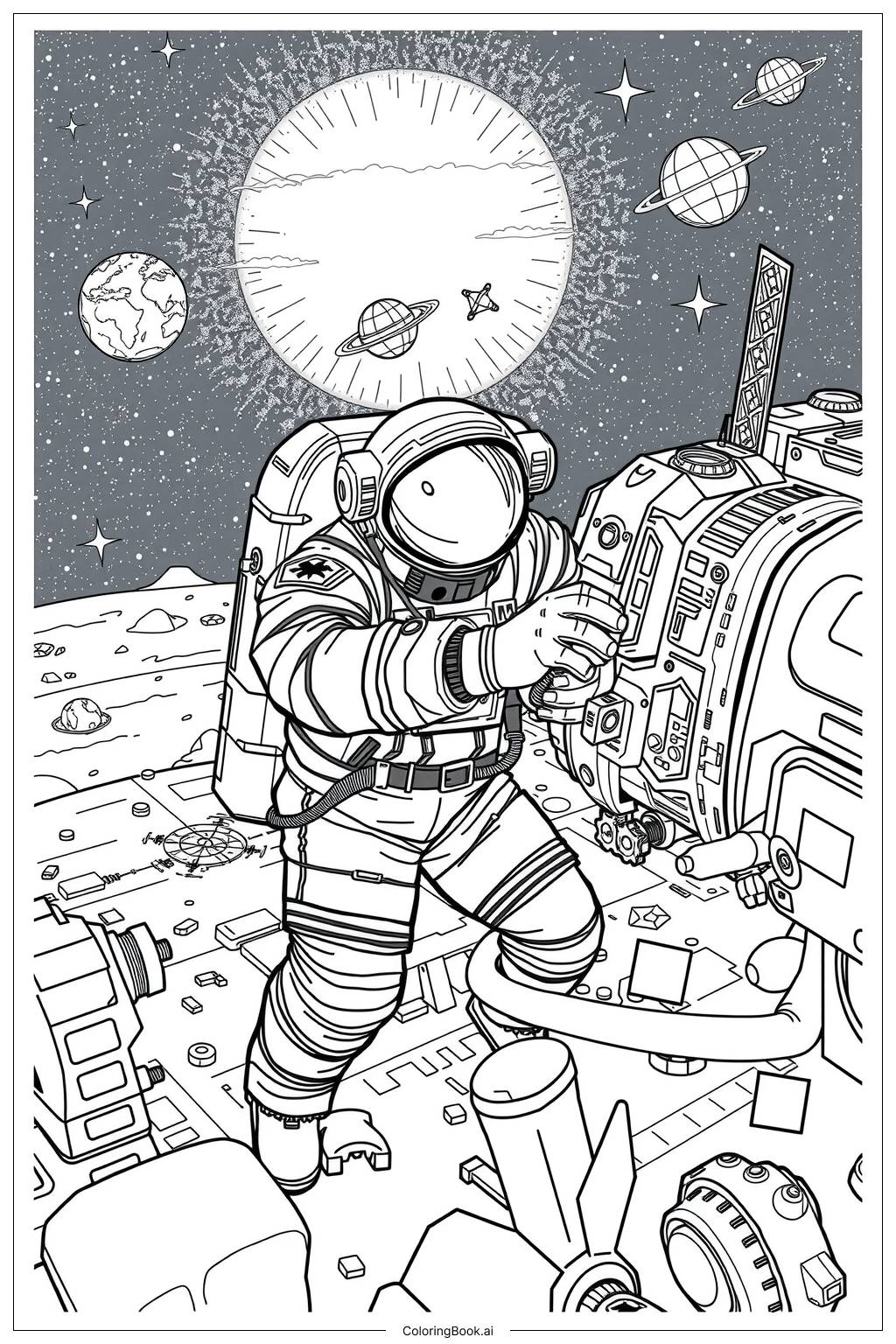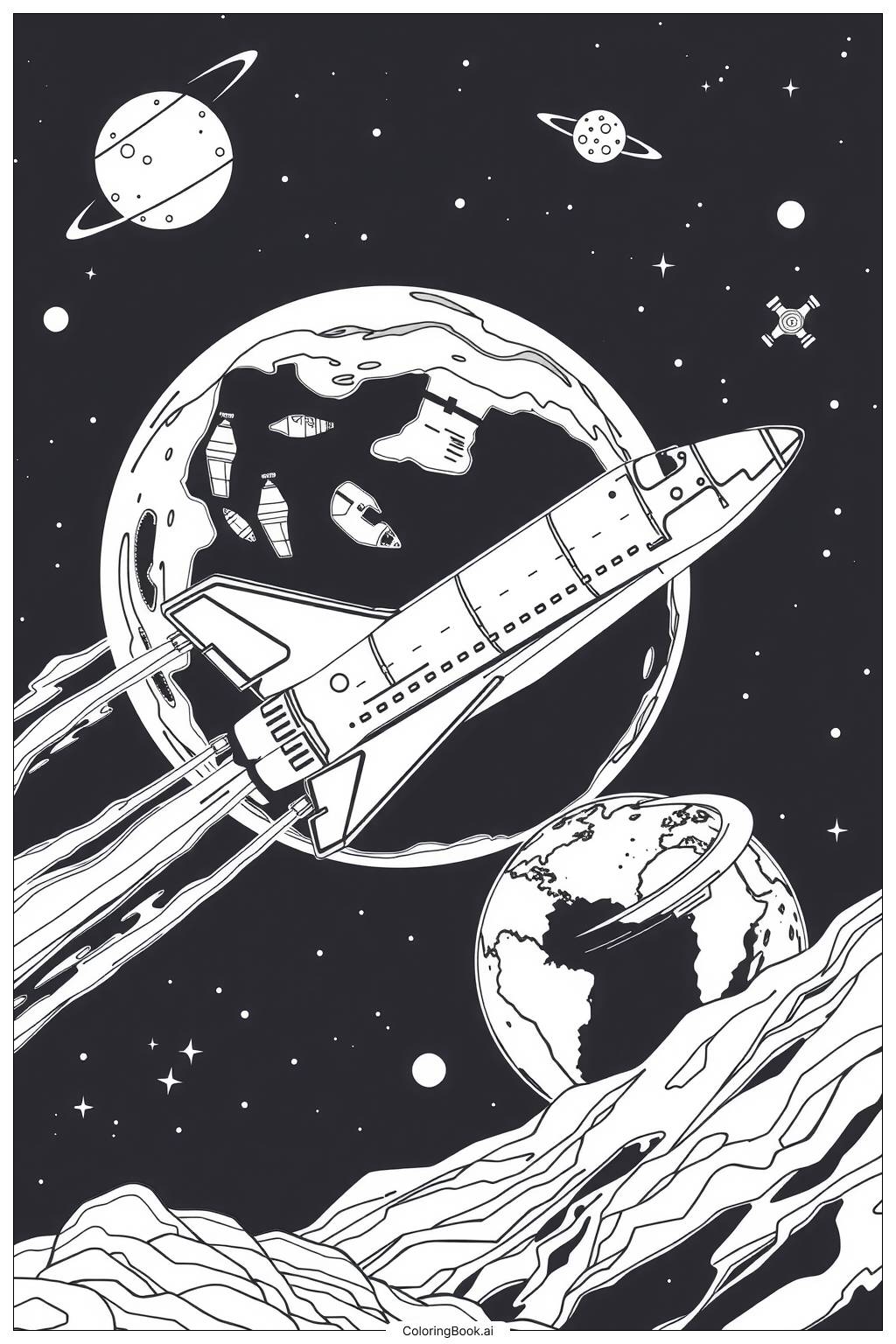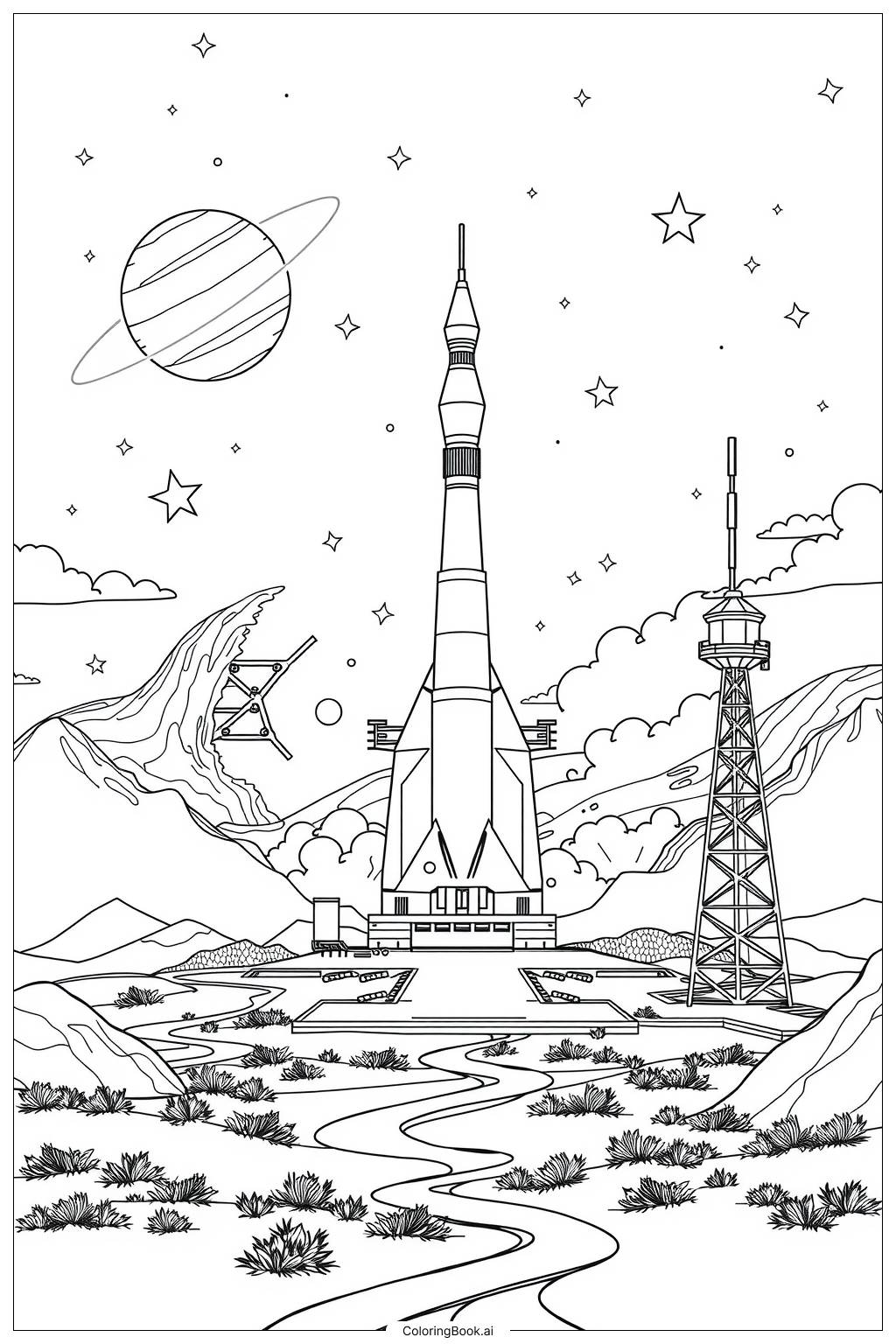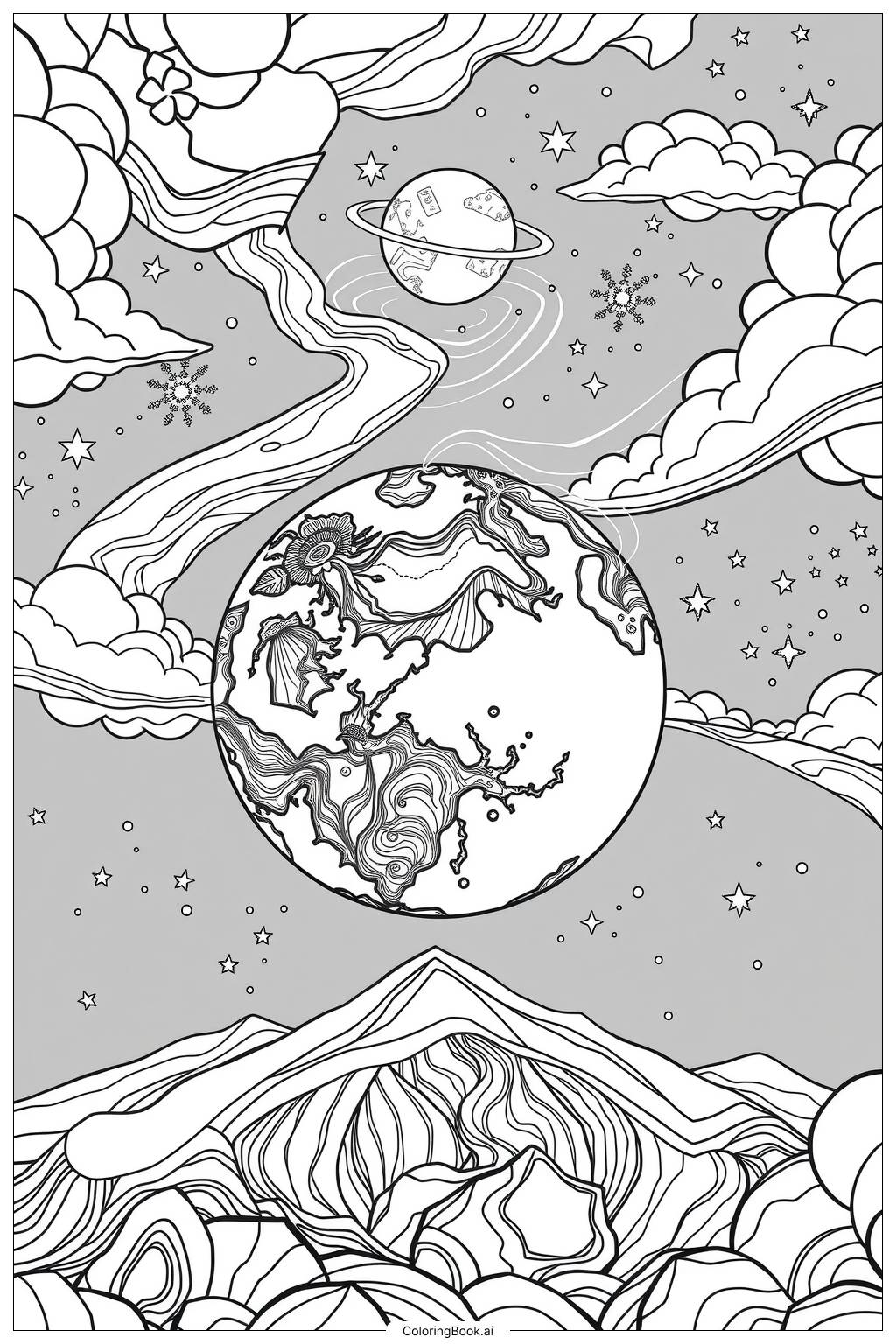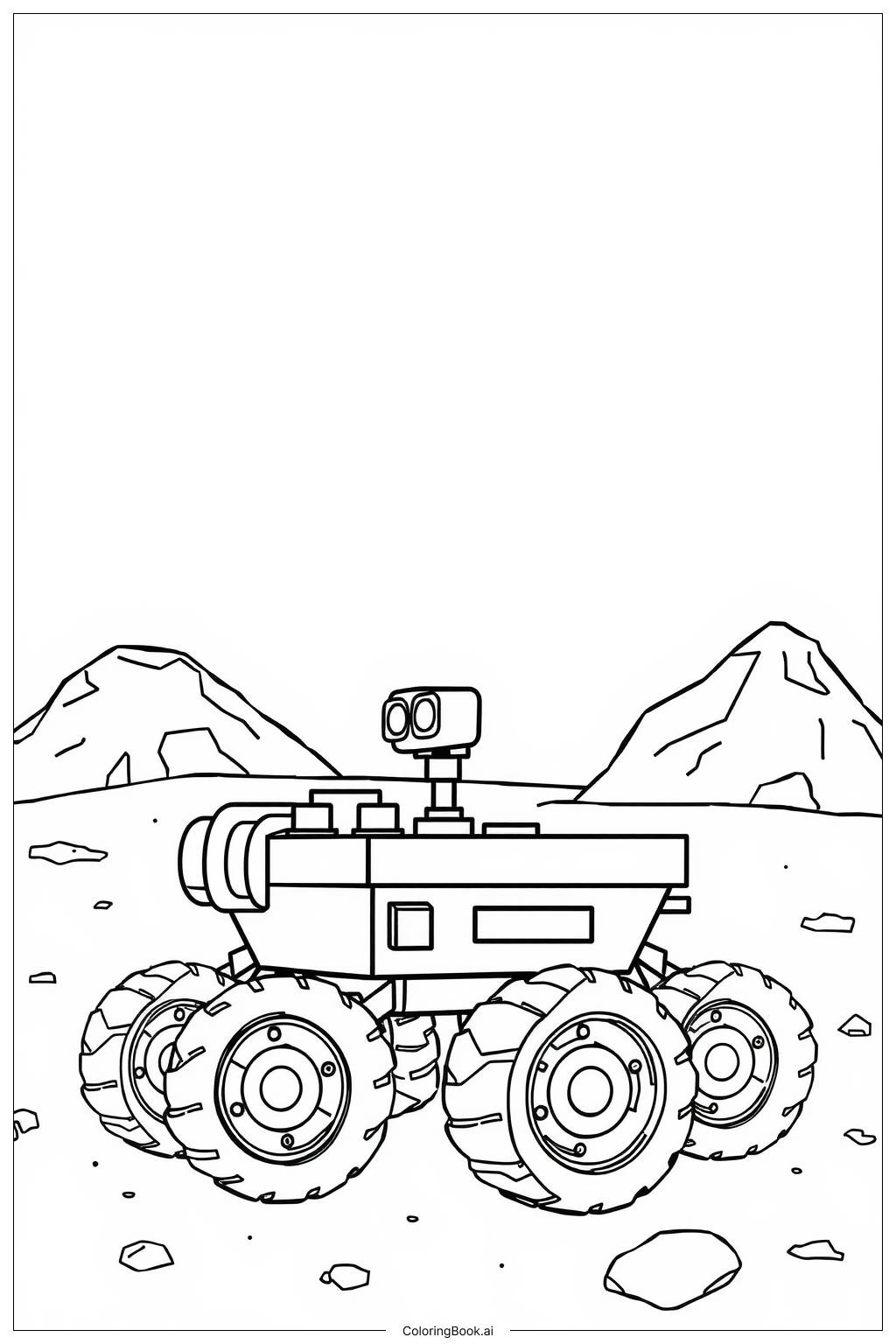
Coloring tips: How to color Space Rover Exploring Mars coloring page well?
Use rusty reds, oranges, and browns for the Martian surface to capture the planet’s unique color. The rover can be colored with shades of gray, white, and silver to represent metal. Bright colors like red or blue can be used for the rover’s antennas and lights to make them stand out. The background sky can be a dark blue or black to show space. You can add tiny white or yellow dots for stars to make the scene lively. Try using different shades to color the rocks and hills for a realistic effect. This will make your Space Rover Exploring Mars picture vibrant and exciting.
Coloring challenges: Which parts are difficult to color and need attention for Space Rover Exploring Mars coloring page?
• Rover Details: The rover has many small parts like antennas, wheels, and cameras that require careful coloring to keep them distinct and clear. Small spaces may need fine coloring tools or patience. • Surface Texture: Mars’ surface is uneven with many rocks and craters, which can make shading and blending colors challenging to show depth and realism. • Space Background: The dark sky with stars requires contrast without overwhelming the rover or surface, which can be tricky for younger colorers. • Color Choices: Choosing natural but striking colors for the different elements such as the metallic rover and the red planet surface may require some planning. Too many bright colors could distract from the scene’s balance. • Maintaining Neatness: Because the image has many details packed together, it can be easy to accidentally color outside lines or mix colors unintentionally, requiring focus and care.
Benefits of coloring books: Advantages of drawing Space Rover Exploring Mars coloring page
Coloring this Space Rover Exploring Mars page helps develop fine motor skills and hand-eye coordination as you color the rover’s detailed parts and small spaces. It encourages focus and patience while selecting colors for the varied Martian terrain and space background. This activity also sparks imagination and curiosity about space exploration and planetary science. By thinking about real objects like rovers and planets, children can learn while having fun. Coloring the combination of technology and nature promotes creativity in making scientific scenes come alive with color. It is a great way to combine art with STEM learning.