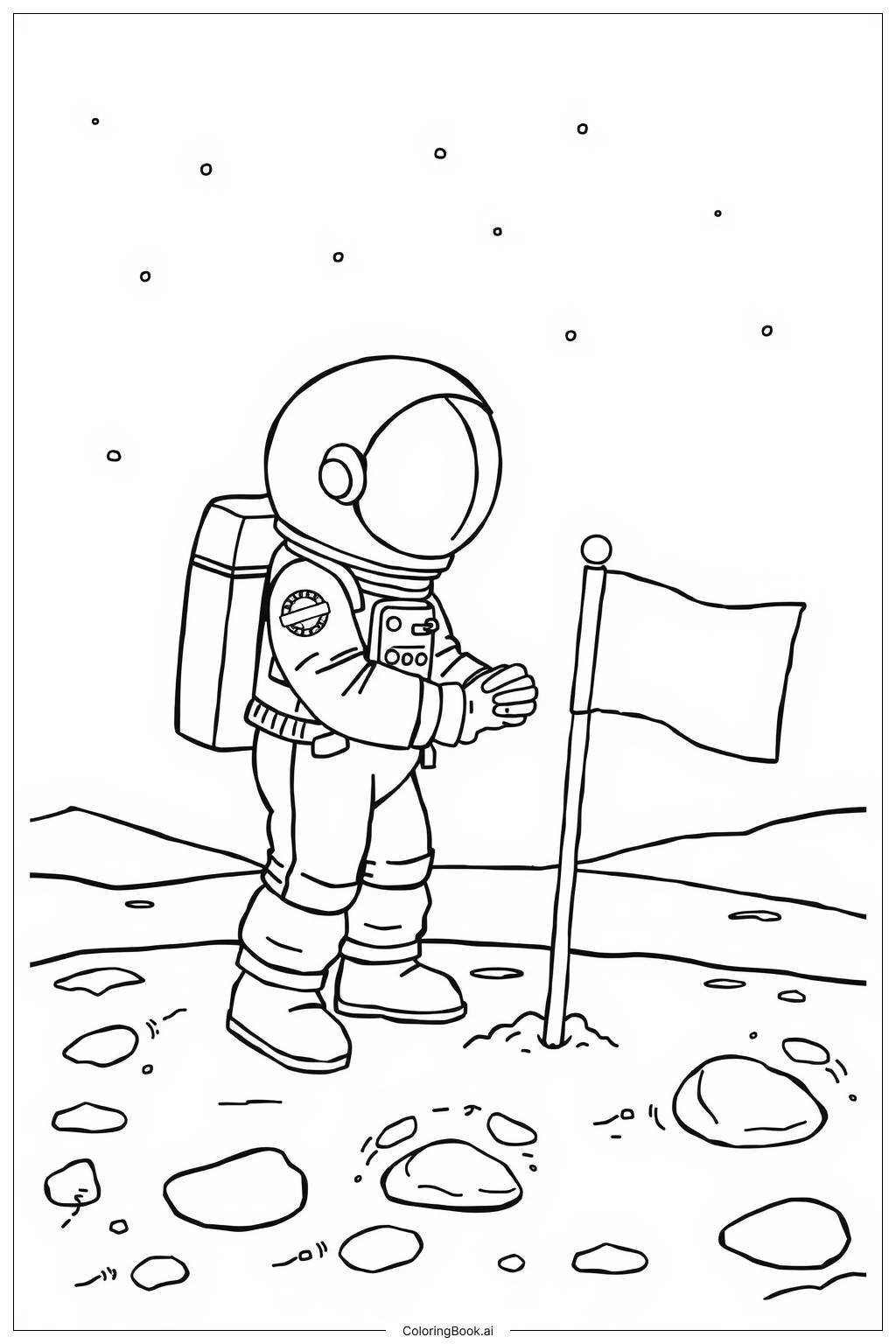
Coloring tips: How to color Astronaut Planting Flag on Moon coloring page well?
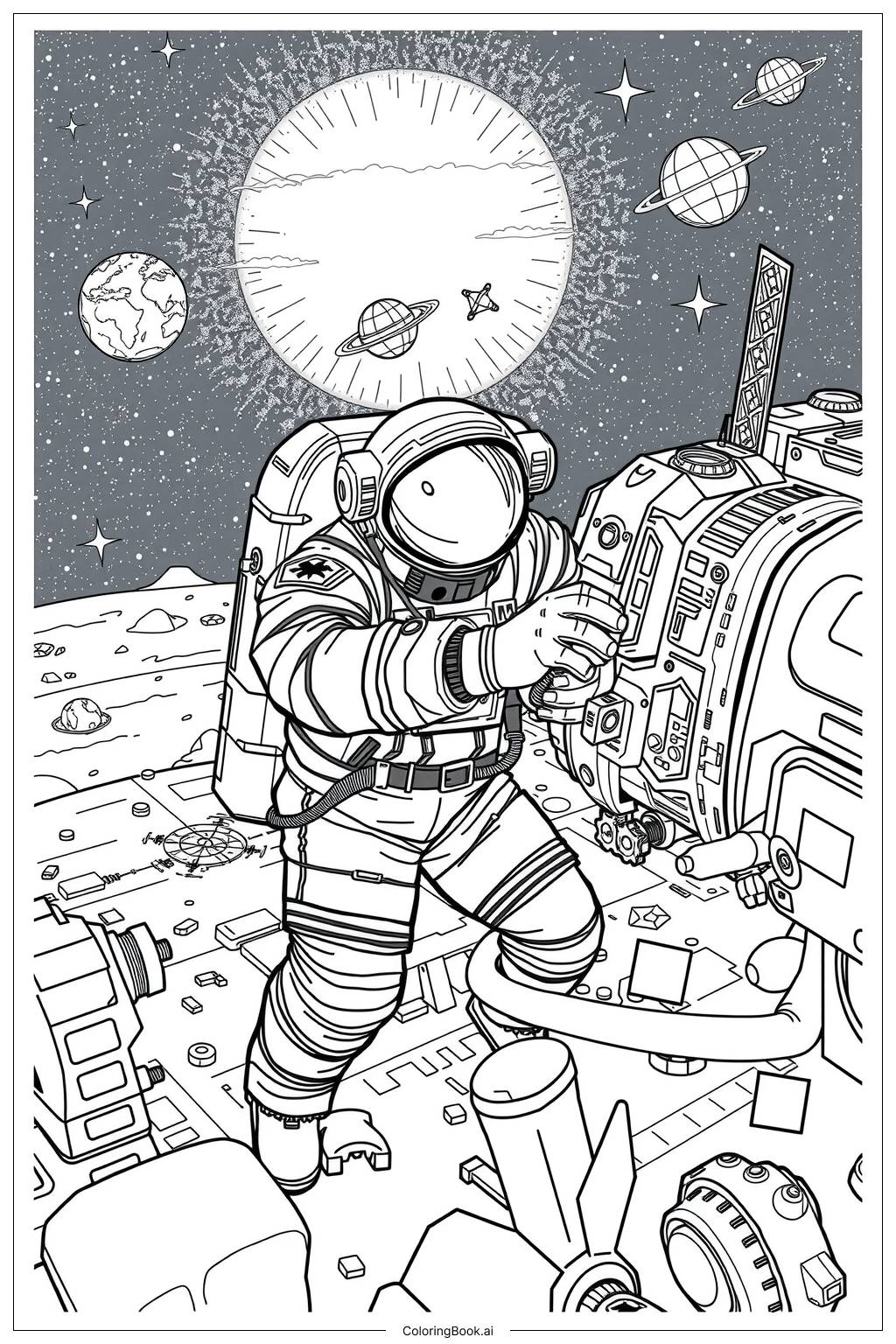
For this coloring page, try using bright white or light gray tones for the astronaut’s suit to show its reflective material. Use bold primary colors like red, blue, or yellow for the flag to make it stand out. The moon’s surface can be colored with shades of gray and brown to highlight its rocky texture. The background space should be a deep black or dark blue to contrast with the Earth’s bright blue and green colors in the distance. Feel free to add some sparkle effects to the stars using silver or white crayons or markers. These color choices will make the scene vibrant and exciting for children.
Coloring challenges: Which parts are difficult to color and need attention for Astronaut Planting Flag on Moon coloring page?
• Fine Details on Spacesuit: The astronaut's suit has many small panels, joints, and accessories that require careful attention and steady coloring to avoid going out of lines.
• Flag Fabric Movement: Coloring the flag’s fabric to show its waving motion can be challenging, as shading must reflect folds and shadows realistically.
• Moon Surface Texture: The cratered and uneven lunar ground demands varied shading techniques to capture depth and roughness.
• Earth in Background: Coloring the distant Earth requires subtle blending of blues, greens, and white to represent oceans, land, and clouds.
• Contrast Management: Balancing bright elements like the astronaut and flag against the dark space can be tricky, requiring thoughtful color choices to maintain visibility and appeal.
Benefits of coloring books: Advantages of drawing Astronaut Planting Flag on Moon coloring page
Coloring this image helps children develop fine motor skills as they work on small, detailed parts like the astronaut’s suit and the flag. It encourages creativity in color choice, especially when deciding how to depict space and the Earth. The picture also introduces young learners to concepts about space exploration, inspiring curiosity and imagination. Working on the moon’s surface texture can improve shading and depth perception skills. Overall, coloring this scene combines learning about science and art in a fun, engaging way for kids of all ages.