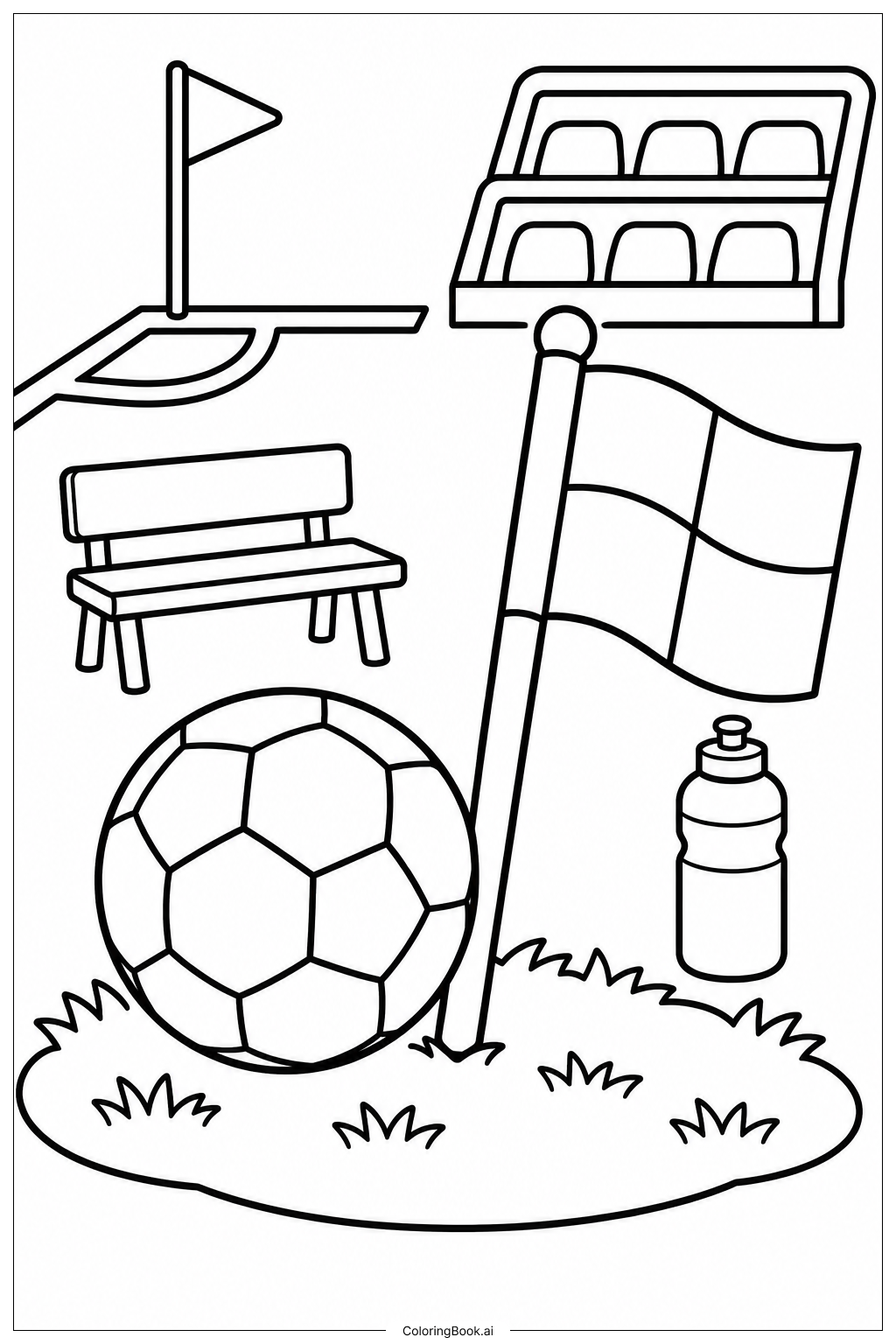
Coloring tips: How to color Soccer Ball With Referee Flag coloring page well?
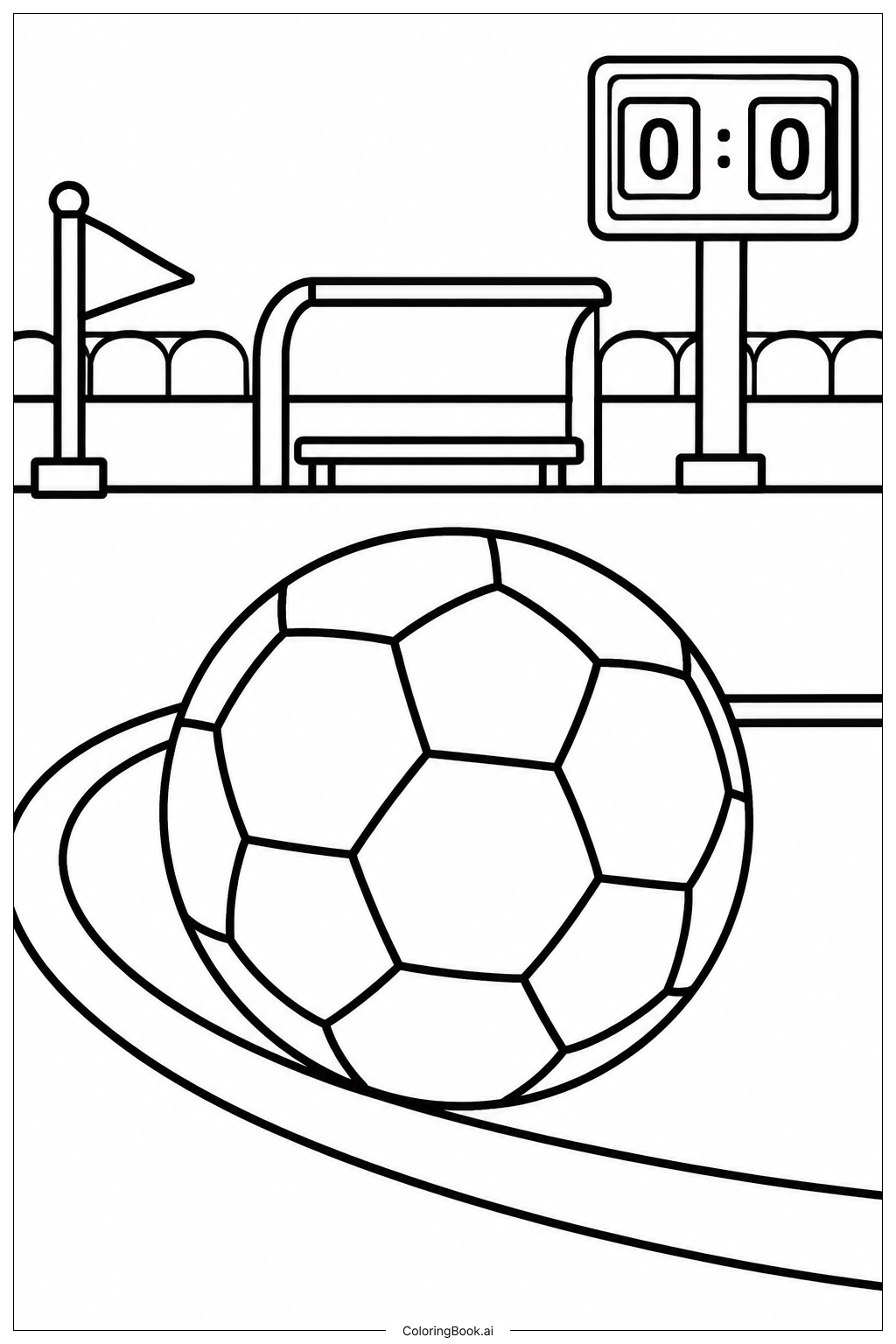
Start with the soccer ball. Use black for the pentagon patches and leave the hexagons white or color them a soft gray or light blue for contrast. This classic look is easy to recognize and satisfying to complete. For the referee flag, use two alternating colors in the stripes — yellow and black or red and white are traditional choices. The flag handle can be colored brown or dark gray to look like wood or plastic. Try using a bright yellow or orange for the background to make the image pop. If you want a more creative look, swap the classic black-and-white ball for bold colors like blue and gold. Kids can also experiment with their favorite team's colors to make it their own. Use crayons or colored pencils for clean, controlled lines around the small sections. Markers work great for bold, solid fills on the flag stripes.
Coloring challenges: Which parts are difficult to color and need attention for Soccer Ball With Referee Flag coloring page?
• Soccer Ball Panel Pattern: The soccer ball is made up of alternating pentagons and hexagons. Staying inside the lines of each small, curved section takes patience and a steady hand. Younger children may find it tricky to color each panel neatly without bleeding into the next one. Using a fine-tipped tool first to outline each section can help a lot.
• Flag Stripe Alignment: The referee flag has multiple stripes that need to be colored in a consistent, alternating pattern. Keeping the colors evenly spaced and not accidentally mixing them at the borders requires careful attention. It helps to lightly mark which stripes get which color before filling them in.
• Consistent Color Pressure: On the soccer ball, applying even color pressure across each curved panel is challenging. Too much pressure in one spot creates darker patches, making the ball look uneven. This is especially noticeable if you are using colored pencils. Practice smooth, circular strokes to keep the shading uniform.
• Small Details on the Flag Handle: The handle of the referee flag has narrow, cylindrical edges. Coloring a thin, rounded shape without going outside its borders is a fine motor skill challenge, particularly for younger kids. A sharpened pencil or a fine marker tip is the best tool for this area.
• Balancing the Overall Composition: Since the image has two distinct objects — the ball and the flag — choosing colors that work well together without clashing is an artistic challenge. Think about contrast and harmony so that neither element overpowers the other visually.
Benefits of coloring books: Advantages of drawing Soccer Ball With Referee Flag coloring page
Coloring this Soccer Ball With Referee Flag image offers a wide range of benefits for children and young learners. Working on the detailed panel pattern of the soccer ball helps develop fine motor skills and hand-eye coordination, as kids practice staying within small, curved lines. This kind of focused coloring builds concentration and patience over time. The image also sparks curiosity about how soccer works — children may ask about the referee's role and what the flag signals mean, turning a creative activity into a learning moment. Choosing colors for the ball and flag encourages creative decision-making and personal expression. Kids can pick their favorite team's colors or invent something entirely new, building confidence in their choices. For children who love sports, this page adds an extra layer of excitement and engagement, making the coloring session feel meaningful and connected to something they care about. Completing the image gives a sense of accomplishment that boosts self-esteem. Whether done alone or with friends, this activity also supports focus and a calm, mindful state — a great wind-down activity after an active day on the field.