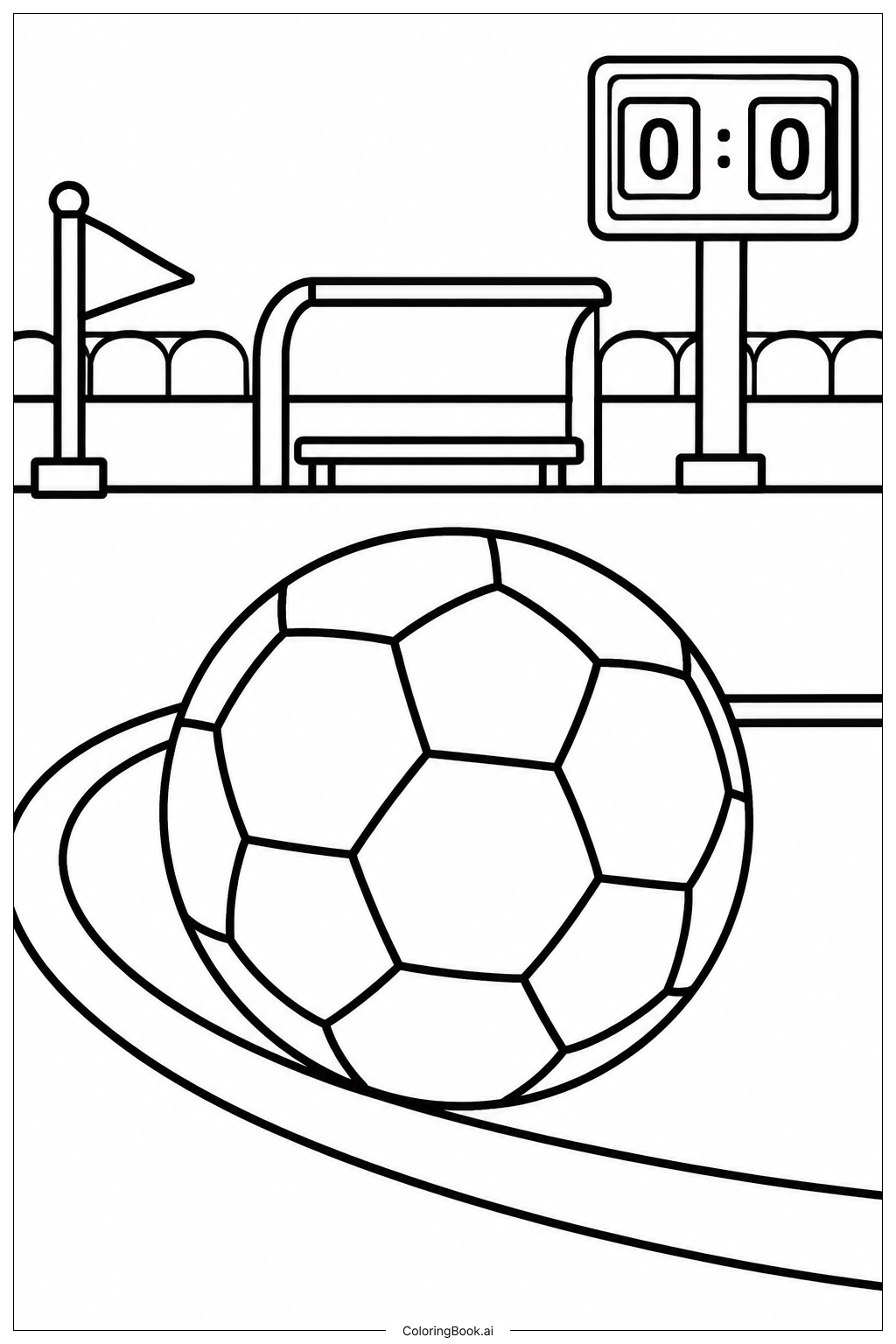
Coloring tips: How to color Soccer Ball With Field Markings coloring page well?
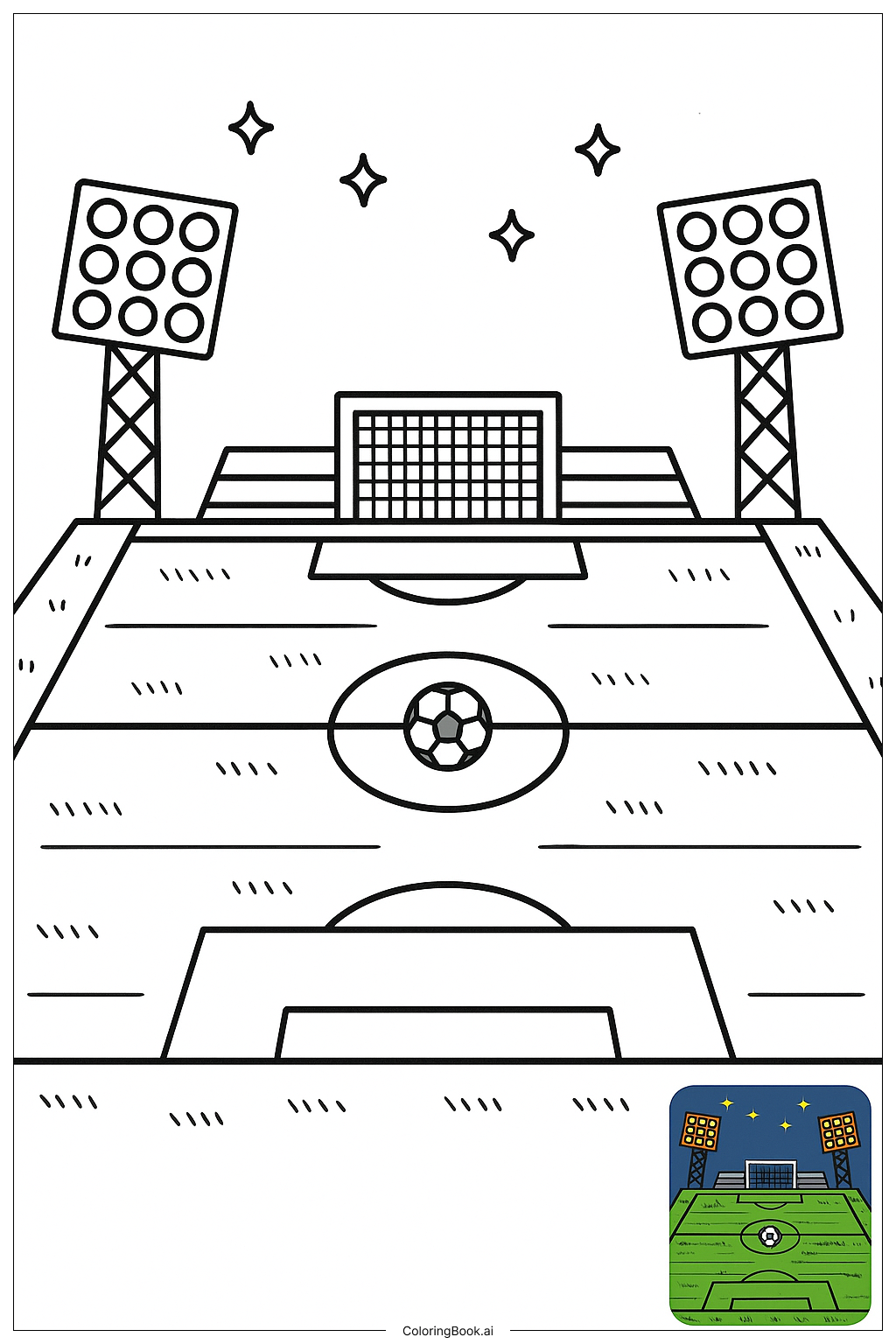
Start with the soccer ball at the center. Color the pentagonal panels black and leave the hexagonal panels white or light gray for a classic look. You can also get creative and use your favorite team's colors instead! For the field markings, use a bright green for the grass and white for all the lines. Try using a slightly darker green for alternating grass stripes to give the field a realistic mowed look. Use a light yellow or tan for the sandy penalty area if you want extra detail. Press lightly first, then build up color gradually for a smoother finish. Colored pencils work great for the fine lines on the field, while crayons or markers are perfect for filling in the large green areas quickly. Have fun and make it your own!
Coloring challenges: Which parts are difficult to color and need attention for Soccer Ball With Field Markings coloring page?
• Soccer Ball Panel Pattern: The alternating pentagons and hexagons on the soccer ball require careful attention. Each panel must be colored consistently without crossing the dividing lines. Staying inside the small, curved boundaries can be tricky, especially for younger colorists. Take your time and use a fine-tipped tool for the edges before filling in the centers.
• Field Line Precision: The soccer field markings include many straight and curved lines, such as the center circle, penalty boxes, and goal areas. Keeping these lines clean and white while coloring the surrounding grass green requires a steady hand. Coloring right up to the line edges without going over them is one of the hardest parts of this image.
• Grass Texture and Shading: Adding realistic-looking grass means working with subtle color variations. Using two or more shades of green to create alternating stripes takes patience and planning. Blending colors smoothly across a large surface area can also be challenging, especially with crayons.
• Curved Ball Surface: The soccer ball has a slightly rounded appearance suggested by its panel layout. Capturing this three-dimensional feel requires shading — making the center panels lighter and the outer panels darker. This kind of gradual shading is an advanced technique that can be difficult for beginners.
• Overall Color Balance: Balancing the bold black and white of the soccer ball against the vivid green of the field without one overpowering the other takes planning. Choosing colors that complement each other while keeping the ball as the visual focal point is a creative challenge worth thinking about before you start.
Benefits of coloring books: Advantages of drawing Soccer Ball With Field Markings coloring page
Coloring this soccer ball and field image offers a wide range of benefits for kids and beginners alike. First, it helps develop fine motor skills. Carefully staying within the small panel lines of the ball trains hand control and precision, which supports everyday tasks like writing. Second, it encourages focus and patience. Working through detailed field markings and the ball's geometric pattern teaches kids to slow down, concentrate, and see a task through to the end. Third, it sparks creativity. Choosing colors for the ball panels, whether classic black and white or a bold custom design, lets colorists express their personal style. Fourth, it builds color awareness. Deciding which shades of green to use for the field, or how to shade the ball to look round, introduces basic concepts of color theory and depth in a playful way. Finally, it connects art with the joy of sports. For soccer fans, this page makes coloring feel exciting and personally meaningful, which can motivate kids to engage more deeply with creative activities. It is a great way to combine a love of the game with artistic expression.