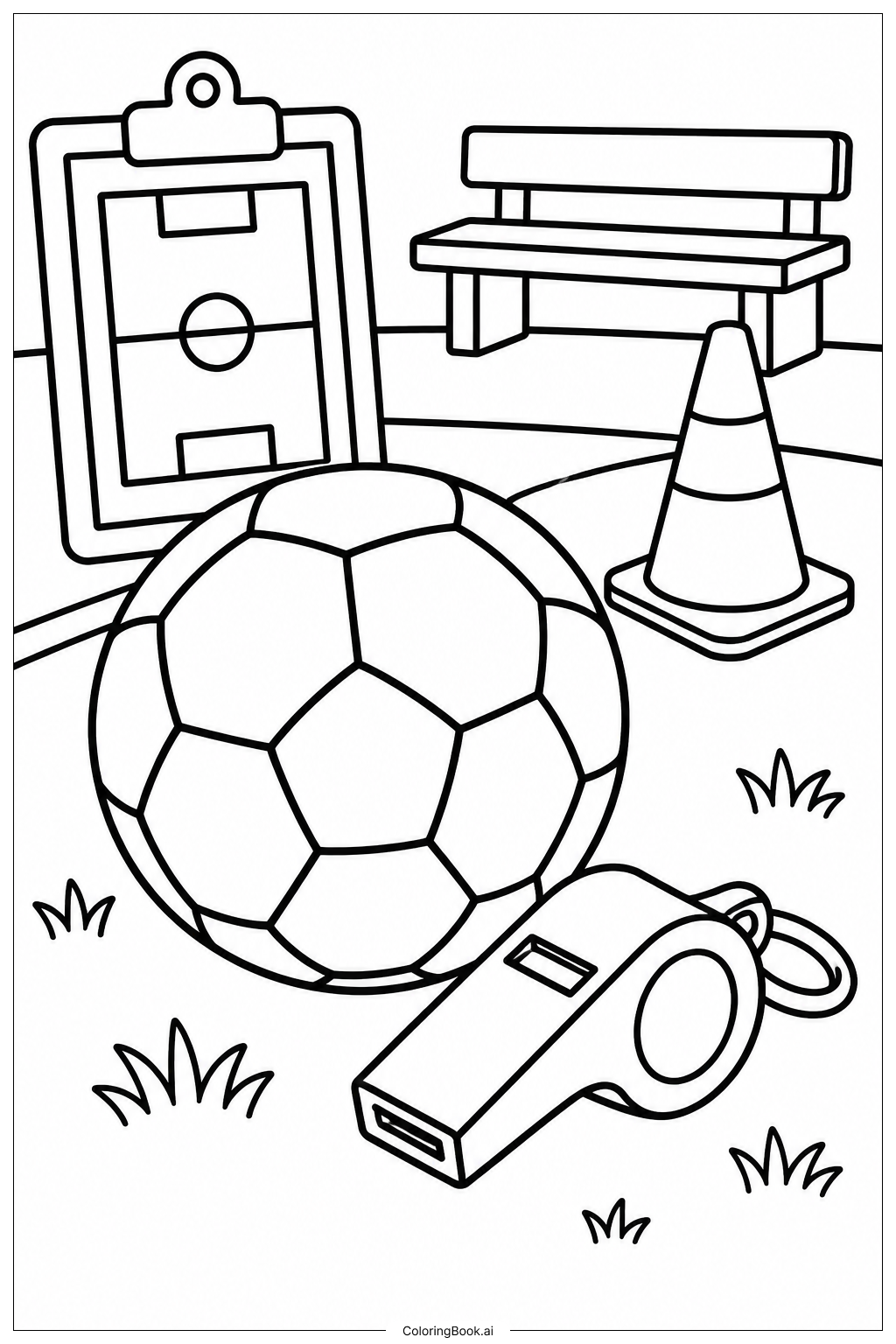
Coloring tips: How to color Soccer Ball With Coach Whistle coloring page well?
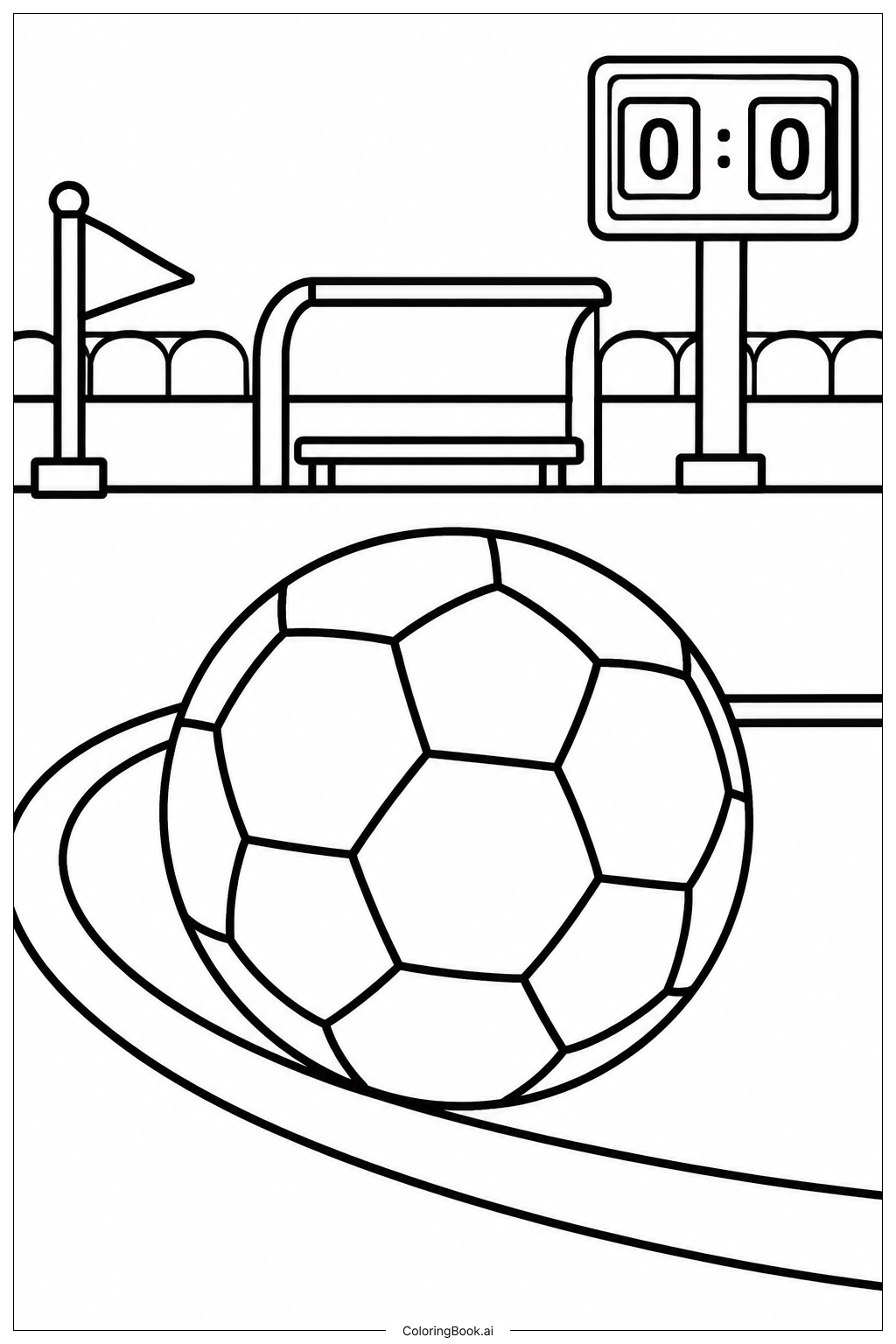
Start with the soccer ball first. Traditional soccer balls are black and white, but feel free to use your favorite colors to make it unique. Try bright colors like yellow, blue, or red for the pentagon patches, and leave the hexagons white or light gray for contrast. For the coach's whistle, gold or silver works great to give it a shiny, metallic look. You can also try a bright brass yellow to make it pop. Color the lanyard cord in your team's colors — red, green, blue, or any shade you love. Add light shading around the edges of the ball to make it look round and three-dimensional. Use darker tones on one side and lighter tones on the other to create a sense of depth. Have fun and make it your own!
Coloring challenges: Which parts are difficult to color and need attention for Soccer Ball With Coach Whistle coloring page?
• Geometric Pentagon and Hexagon Pattern: The soccer ball is covered in a repeating pattern of pentagons and hexagons. Keeping each individual shape neatly colored without going over the lines requires steady hands and careful attention. It is easy to accidentally color outside the borders on smaller sections, so take your time and use a fine-tipped coloring tool for the tight spots.
• Consistent Color Application Across Shapes: Because the ball has many similar-looking patches, keeping a consistent color scheme throughout can be tricky. You need to decide early which shapes get which colors and stick to that plan all the way around the ball, even on the curved edges where shapes may appear smaller or distorted.
• Creating a Round, 3D Effect on the Ball: A flat circle can look more like a real ball if you add shading. Blending lighter and darker tones smoothly across the curved surface is a challenge, especially for younger colorists. Using gradients or layering colors gently from light to dark helps, but requires patience and practice.
• Metallic Look for the Whistle: Making the whistle look shiny and metallic means layering colors carefully. A bright base color combined with white highlights and darker shadows creates a realistic metallic effect. This technique takes a steady hand and an understanding of where light would naturally hit the object.
• Small Details on the Whistle: The whistle has tiny features like the mouthpiece, air hole, and lanyard attachment ring. These small areas are difficult to color without smudging nearby sections, so using a sharp pencil or fine marker is important to stay within the lines.
Benefits of coloring books: Advantages of drawing Soccer Ball With Coach Whistle coloring page
Coloring this Soccer Ball With Coach Whistle page offers many great benefits for kids and soccer fans alike. Working through the geometric patterns on the soccer ball builds fine motor skills and strengthens hand-eye coordination. Carefully following the lines of each pentagon and hexagon trains the brain to focus and pay attention to detail, which helps with schoolwork too.
Choosing colors for the ball and whistle encourages creative thinking and self-expression. Kids can design their dream team's soccer ball using their favorite colors, making the activity personally meaningful and exciting.
The repetitive motion of coloring shapes within the ball pattern is naturally calming and relaxing. It helps children slow down, reduce stress, and find a quiet moment of mindfulness in their busy day.
For young soccer fans, this page also connects art with the sport they love. It sparks conversations about soccer rules, coaching, and teamwork, turning a simple coloring session into a fun learning experience.
Adults and older kids who work on the shading and metallic effects of the whistle develop more advanced artistic skills like blending, layering, and understanding light and shadow. Overall, this page is a wonderful mix of creativity, skill-building, and sporty fun for colorists of all ages.