Coloring tips: How to color Sleeping Beauty With A Friendly Squirrel coloring page well?
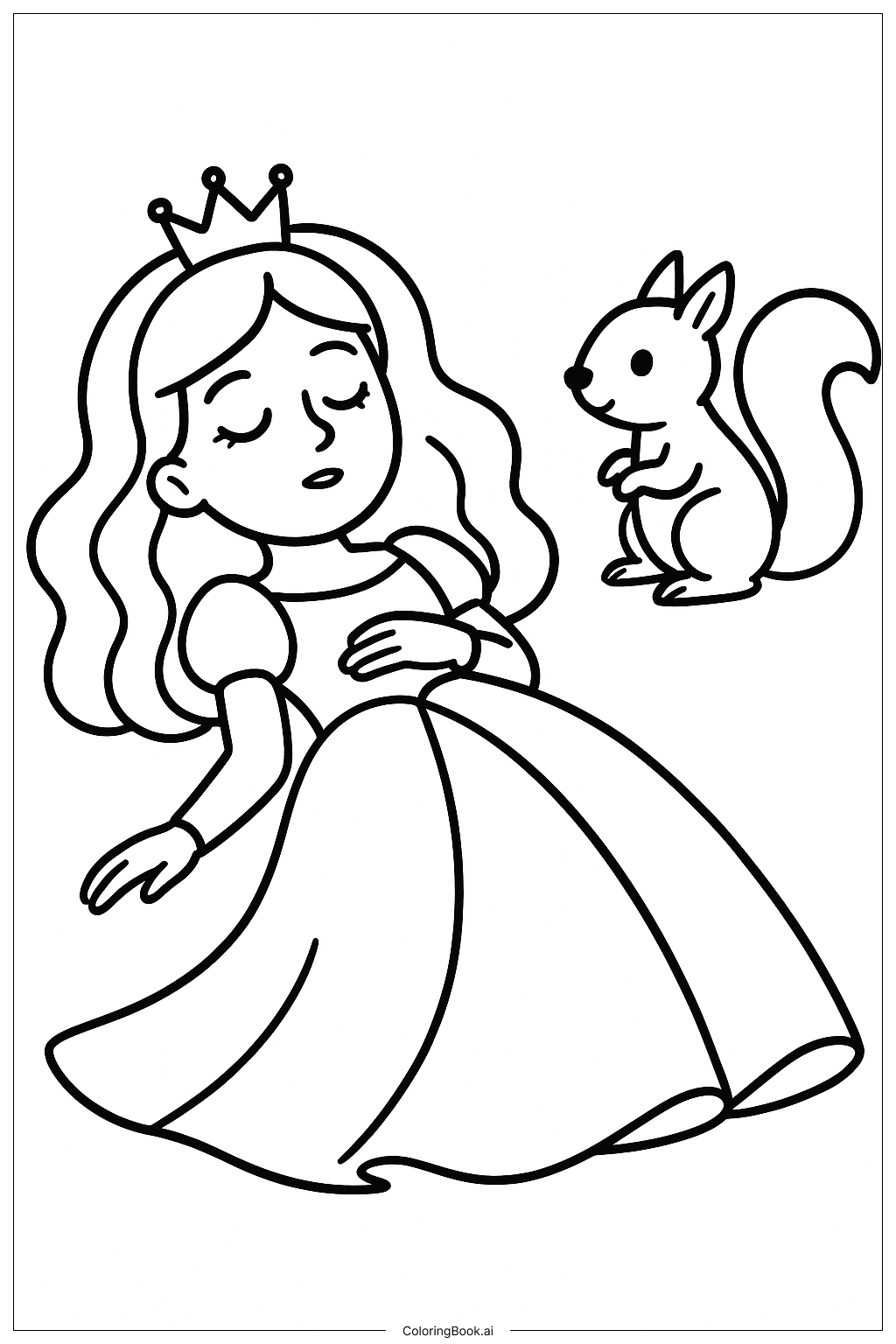
Start with Sleeping Beauty's skin using a soft peach tone to keep her looking warm and gentle. Use golden yellow or light auburn for her hair to match her classic look. Her gown looks lovely in pale pink or soft lavender — add slightly darker shades along the folds to show depth. The squirrel works well in warm shades of brown and tan, with a cream or white belly for contrast. Use a rich orange-brown for its bushy tail. For the forest background, try varying greens for the leaves and trees to add life to the scene. Use light yellow or soft gold for any sunlight filtering through the branches. Keep the overall palette soft and dreamy to match the fairy-tale mood of the image. Children can explore mixing light and dark shades of the same color to practice basic shading.
Coloring challenges: Which parts are difficult to color and need attention for Sleeping Beauty With A Friendly Squirrel coloring page?
• Sleeping Beauty's Gown Details: The princess's dress has many flowing folds and decorative trim lines. Staying inside these fine lines while also adding shading along each fold requires a steady hand. Using a sharp colored pencil or a fine-tip marker will help you follow the curves accurately without coloring outside the edges.
• Hair Texture and Shading: Long, flowing hair like Sleeping Beauty's can be tricky to color well. Simply filling it in with one flat color can make it look dull. Try using two or three shades of the same color — a lighter tone for the top and a darker tone underneath — to give the hair a natural, silky look. Color in long, smooth strokes that follow the direction the hair flows.
• Squirrel's Small Features: The squirrel is a small figure with tiny facial features, little paws, and a fluffy layered tail. These details are close together and easy to accidentally smudge or color over. Use fine-tip tools for the face and paws, and build up the tail texture with short, feathery strokes in two or three shades of brown.
• Forest Background Depth: The trees and leaves in the background need to look natural without overpowering the main figures. Using too many bright greens can flatten the scene. Vary your greens — yellow-green for sunlit leaves, deeper green for shaded areas — and leave some areas lighter to suggest rays of light coming through the canopy.
• Balancing the Overall Color Palette: With a princess, an animal, and a woodland setting all in one image, it can be hard to keep the colors feeling balanced and harmonious. Choosing a soft, consistent palette — pastel tones or muted shades — and repeating one or two accent colors throughout the page will help everything look unified and pleasing.
Benefits of coloring books: Advantages of drawing Sleeping Beauty With A Friendly Squirrel coloring page
Coloring this Sleeping Beauty and squirrel scene offers a range of wonderful benefits for children and young artists. Focusing on the fine details of the princess's gown and the squirrel's fur helps strengthen hand-eye coordination and builds fine motor skills that are useful in everyday tasks like writing. Choosing colors for the forest, the dress, and the little animal encourages creative thinking and helps children develop their own sense of color and artistic style. The process of carefully filling in each section builds patience and concentration, which are valuable skills both in and out of the classroom. Because the scene is set in a calm, magical forest, coloring it can feel relaxing and peaceful, helping children unwind and reduce stress. Bringing a beloved fairy-tale character to life through their own color choices gives children a real sense of pride and accomplishment. Sharing the finished page with family or friends also encourages communication and storytelling, as children love to explain the colors they picked and the story they imagined. Overall, this coloring page is a fun and meaningful activity that supports both artistic growth and emotional well-being.