Coloring tips: How to color Sleeping Beauty Riding With Prince Phillip coloring page well?
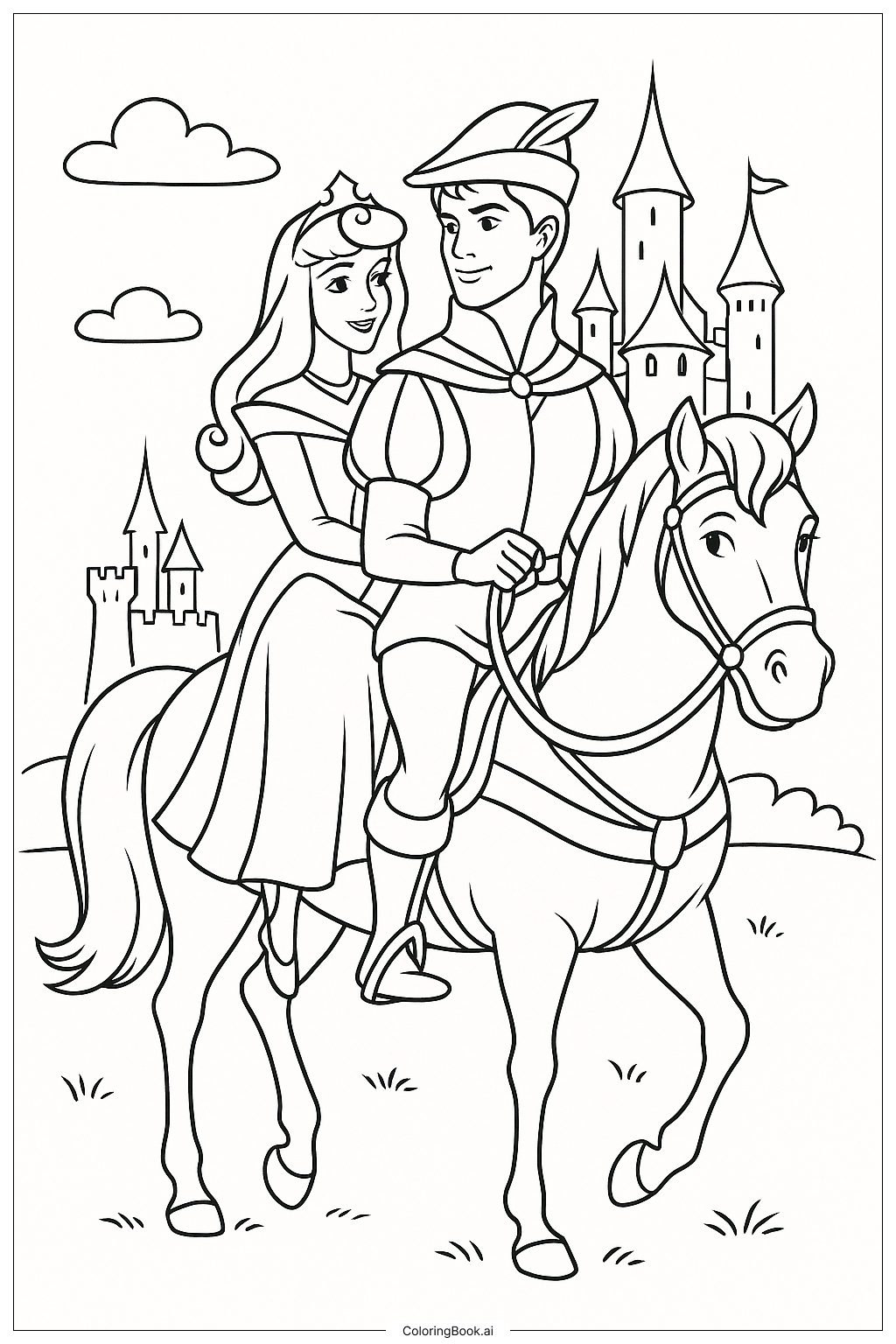
Start with Aurora's iconic pink or blue gown, depending on your favorite version of the tale. Use soft pastels for her skin tone and golden yellow or warm blonde for her flowing hair. Prince Phillip's tunic can be rich burgundy, deep blue, or forest green, with his cape in contrasting crimson or royal purple. The horse deserves special attention—consider classic white, chestnut brown, or dramatic black, with a lighter shade for highlighting muscles and depth. Add metallic gold or silver accents to the saddle, bridle, and royal decorations. For the background, use gentle greens and blues to suggest an enchanted forest, or warm sunset tones for a romantic atmosphere. Don't forget small details like rosy cheeks, the horse's expressive eyes, and shadow areas to create dimension throughout the scene.
Coloring challenges: Which parts are difficult to color and need attention for Sleeping Beauty Riding With Prince Phillip coloring page?
• Flowing Fabric and Gown Details: Aurora's dress presents a significant challenge with its flowing layers, folds, and draping fabric. The bodice may feature intricate patterns or lacework that requires precision and patience. Maintaining consistent color while creating depth through shading in the various folds demands careful attention. Prince Phillip's cape also requires similar treatment to show movement and billowing motion.
• Horse Anatomy and Shading: The horse's muscular structure needs thoughtful shading to appear three-dimensional and realistic. The mane and tail require directional coloring to show individual strands flowing naturally. Creating smooth gradients across the horse's body while maintaining anatomical accuracy can be tricky, especially around the legs, neck, and facial features.
• Overlapping Figures and Spatial Relationships: With two characters seated on a horse, multiple elements overlap—arms, clothing, reins, and the horse itself. Distinguishing these layers while maintaining visual clarity requires planning which areas to color first and how to transition between overlapping sections without muddying the boundaries.
• Fine Details and Accessories: Small elements like facial features, jewelry, the saddle's ornamental details, reins, stirrups, and decorative elements on clothing all require a steady hand and fine-tipped coloring tools. These details bring the image to life but can be frustrating for those still developing fine motor control.
• Background Integration: Creating a background that complements the main figures without overwhelming them requires thoughtful color choices and often lighter, softer applications to suggest depth and atmosphere.
Benefits of coloring books: Advantages of drawing Sleeping Beauty Riding With Prince Phillip coloring page
Coloring this romantic fairy tale scene offers wonderful developmental benefits for young artists. The complex composition with multiple characters and a horse provides excellent practice for fine motor skills and hand-eye coordination. Children learn about spatial relationships and how overlapping objects create depth in a picture. The variety of textures—flowing hair, fabric folds, horse fur, and ornamental details—encourages experimentation with different coloring techniques like layering, blending, and directional strokes. This image also invites creative decision-making about color choices, helping children develop their artistic confidence and personal style. The beloved Sleeping Beauty story connection makes the activity emotionally engaging, promoting sustained focus and patience. Completing such a detailed scene provides a strong sense of accomplishment. Additionally, the romantic and noble themes encourage imagination and storytelling, as children might narrate the scene while coloring, enhancing both creative and language skills.