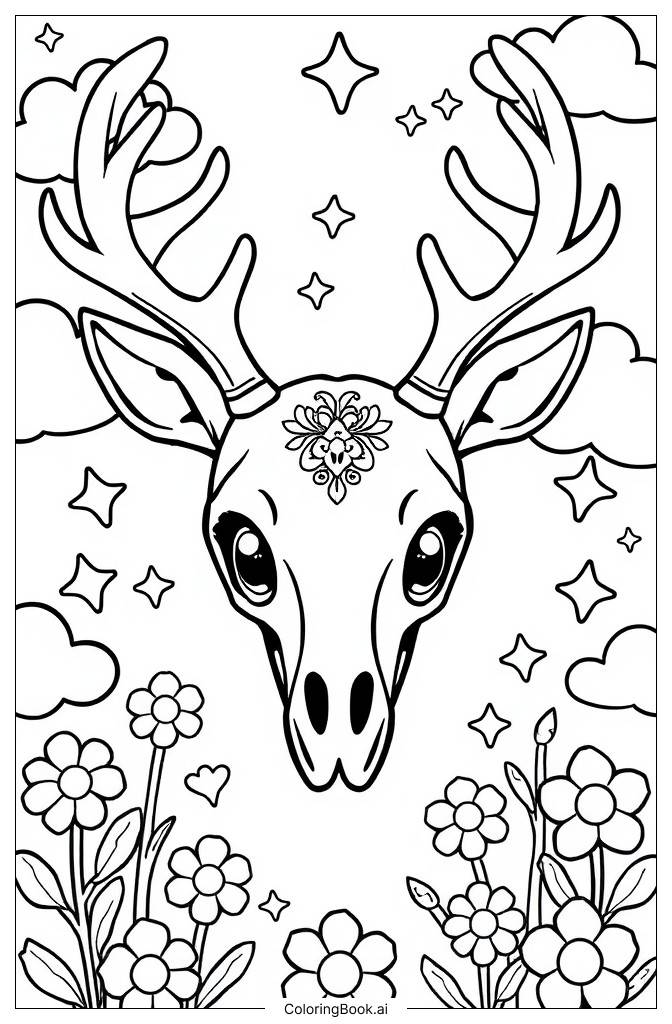
Coloring tips: How to color Small Deer Skull coloring page well?
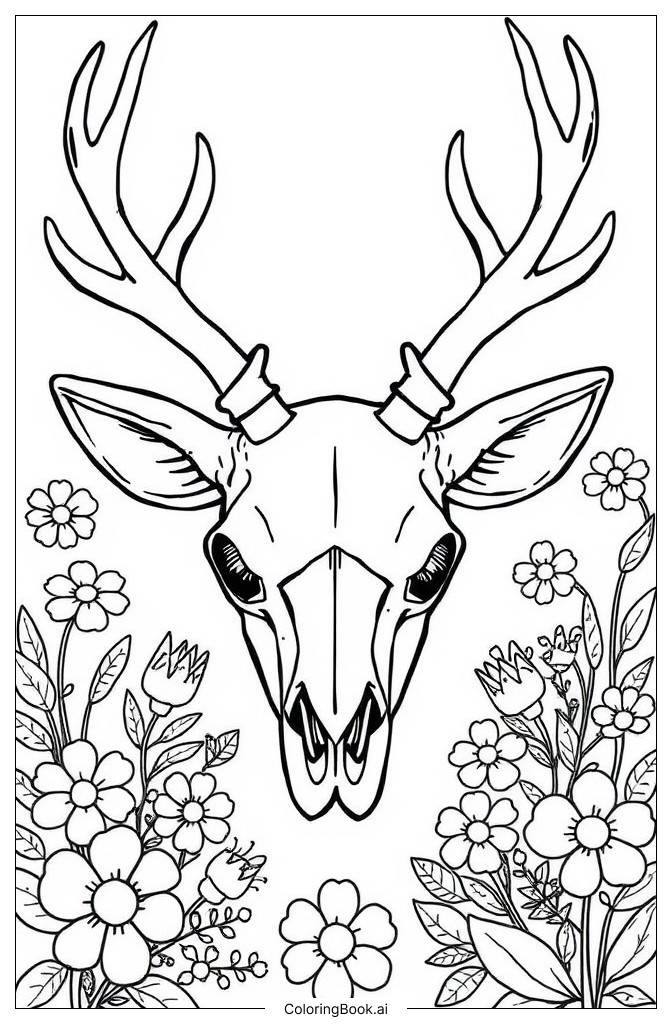
Start with the skull's base color. Use light tan, cream, or ivory for the bone. This gives a natural, realistic look. You can also try white or pale yellow for a cleaner style. For the eye sockets and nasal cavity, use darker shades like gray or brown to show depth. The antler nubs can be a slightly darker tan than the rest of the skull. Use light shading around the cheekbones and jaw to give the skull shape and dimension. Add darker tones in the cracks and suture lines between the bones. If you want a creative twist, try painting the skull with flowers, stars, or colorful patterns inspired by Day of the Dead art. Use thin lines for fine details and a steady hand around the small teeth. Keep the background simple or leave it blank to make the skull stand out.
Coloring challenges: Which parts are difficult to color and need attention for Small Deer Skull coloring page?
• Eye Socket Depth: The large hollow eye sockets require careful shading to look three-dimensional. You need to blend darker colors at the inner edges and lighter tones toward the outer rim. Without proper shading, the sockets can look flat and lose their depth. Children and beginners may find it tricky to blend colors smoothly inside these curved, hollow areas.
• Suture Line Details: The fine lines that run between the skull bones are narrow and closely spaced. Coloring along these lines without going over them takes a steady hand and a sharp pencil or thin marker. If the lines get filled in, the skull loses its detailed, anatomical look. This is one of the harder parts for younger colorists.
• Small Teeth Accuracy: The jaw area includes small individual teeth that are tightly spaced. Coloring each tooth separately while keeping clean lines between them is a real challenge. Using a very fine-tipped tool helps, but it still requires patience and careful control to avoid smudging neighboring teeth.
• Antler Nub Shading: The small antler nubs at the top of the skull are compact and rounded. Getting a smooth gradient from the lighter tips to the darker base where they meet the cranium is difficult in such a small space. Too much dark color can make them look heavy, while too little shading makes them appear flat.
• Overall Tonal Balance: Keeping a consistent, realistic bone color across the whole skull while still using enough contrast to show shape and structure is challenging. The cranium, cheekbones, jaw, and antlers must feel like one unified object, requiring careful planning of light and shadow across the entire piece.
Benefits of coloring books: Advantages of drawing Small Deer Skull coloring page
Coloring this small deer skull page offers many great benefits for kids and teens. First, it builds fine motor skills. The detailed lines and small areas require careful hand control, which strengthens the muscles used for writing and drawing. Second, it teaches kids about nature and animal anatomy in a fun, hands-on way. They learn what a deer skull looks like and how bones fit together. Third, it encourages focus and patience. Finishing a detailed image takes time, and completing it builds a sense of pride and achievement. Fourth, coloring helps reduce stress and anxiety. The quiet, repetitive motion of coloring is calming and can help kids relax after a busy day. Fifth, this page sparks creativity. Kids can choose realistic bone tones or go wild with bright colors and patterns, making each finished piece totally unique. Finally, it opens the door to conversations about wildlife, the life cycle of animals, and respect for nature. It is a simple but powerful way to connect art with learning.