Coloring tips: How to color Small Deer Skull coloring page well?
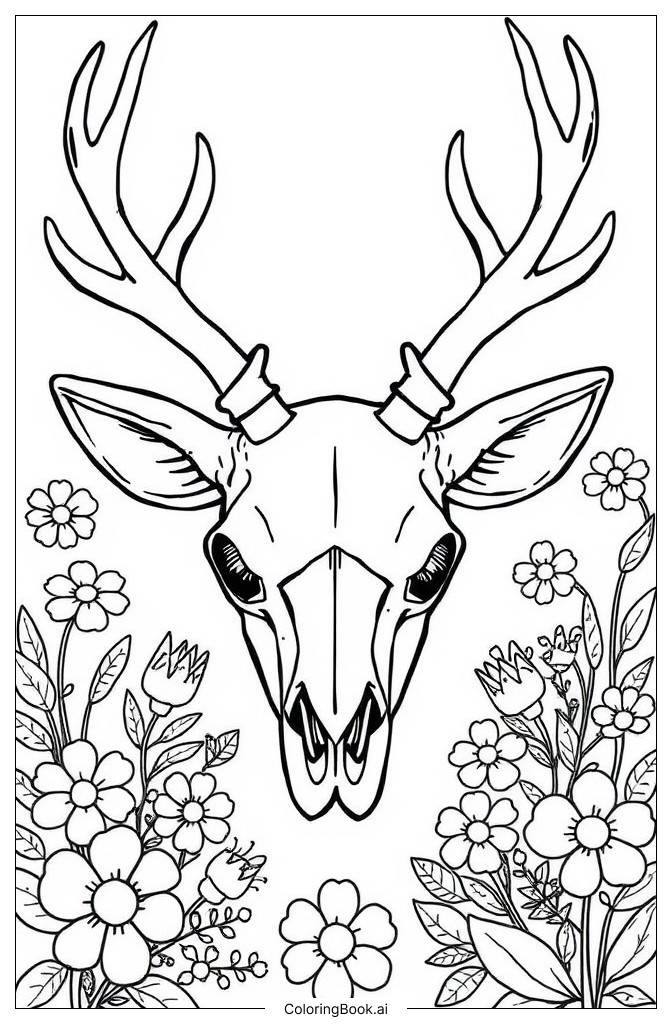
Start with the skull itself. Use soft, warm tones like ivory, cream, or light tan to give the bone a natural look. You can add a little gray or brown in the deeper areas, like the eye sockets and nasal cavity, to create shadows and depth. For the antler stubs, try a slightly darker brown to set them apart from the rest of the skull. The small cracks and texture lines can be colored in a medium brown or gray to make them stand out. For the leaves and flowers around the skull, use greens, yellows, and soft pinks. Keep the background light so the skull remains the main focus. Have fun mixing shades to make your coloring page feel alive and unique.
Coloring challenges: Which parts are difficult to color and need attention for Small Deer Skull coloring page?
• Eye Socket Depth: The large hollow eye sockets require careful shading to look three-dimensional. You need to layer darker tones inside and gradually lighten toward the edges. This blending can be tricky, especially for younger colorists who are still learning how shadows work.
• Bone Texture Details: The skull surface has many fine lines, small cracks, and subtle textures. Staying within these tiny lines takes a steady hand and patience. Using a sharp colored pencil or a fine-tip marker will help, but it still demands focus and good motor control.
• Antler Shading: The antler stubs are small and narrow, which makes them hard to color neatly. Applying smooth gradients from light to dark in such a tight space is a real challenge. Pressing too hard can fill in the details too quickly and lose the shape.
• Balancing the Decorative Elements: The leaves and flowers around the skull need colors that complement the skull tones without overpowering them. Choosing the right color balance so the skull stays the center of attention requires some color planning and creative thinking.
• Nasal Cavity and Cheekbone Areas: The nasal cavity and the thin lines of the cheekbones are delicate areas. Coloring them neatly without smudging or going outside the lines can be difficult, especially when working with markers or paint rather than colored pencils.
Benefits of coloring books: Advantages of drawing Small Deer Skull coloring page
Coloring this small deer skull page offers a wide range of benefits for kids and young learners. First, it helps improve fine motor skills. The small details, like the cracks in the bone and the narrow antler stubs, encourage careful and precise movements with coloring tools. This builds hand strength and control over time. Second, it supports creativity. Choosing colors for the skull, the eye sockets, and the surrounding leaves lets kids experiment with shading and color combinations in a low-pressure way. Third, it sparks curiosity about nature and animals. A deer skull is a real part of the natural world, and coloring one can lead to questions about deer, bones, and how living things grow and change. Fourth, focusing on the details of this image helps build concentration and patience, which are skills that carry over into reading, writing, and other school activities. Finally, finishing a coloring page gives kids a sense of pride and accomplishment. It is a simple but meaningful creative activity that kids of all skill levels can enjoy.