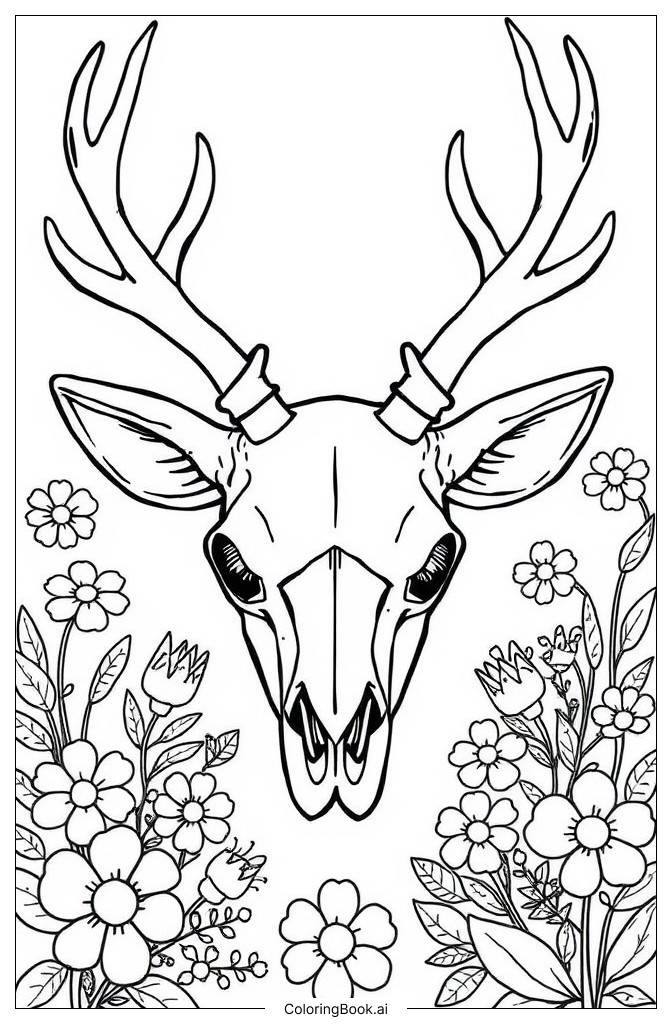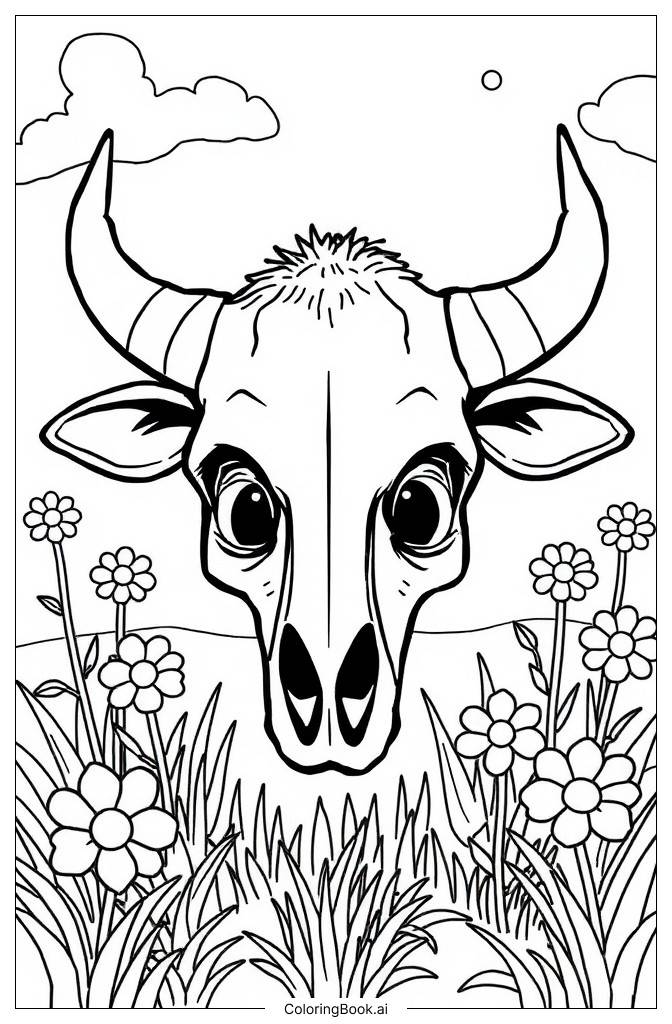
Coloring tips: How to color Single Cow Skull coloring page well?
Start with the skull itself. Use light bone tones like cream, ivory, or pale yellow to fill the main surface. Add soft gray or tan shading in the eye sockets, nasal area, and along the cracks to create depth. For the horns, try a warm brown that gradually fades to a lighter tip. You can add subtle shadows under the cheekbones and along the jaw to make the skull look three-dimensional. For the flowers and leaves around the skull, choose bright, cheerful colors like pink, orange, yellow, and green. This contrast between the soft skull tones and vivid floral colors makes the whole image pop. Feel free to add your own patterns or designs inside the skull for a fun, creative touch.
Coloring challenges: Which parts are difficult to color and need attention for Single Cow Skull coloring page?
• Skull Surface Texture: The skull has many fine cracks, ridges, and uneven bone surfaces. Coloring these details carefully takes patience. You need to use light pressure and thin strokes to follow each line without going outside the edges. Blending light and shadow across bumpy bone texture can be tricky, especially for younger colorists.
• Eye Socket Depth: The large, hollow eye sockets need careful shading to look deep and realistic. Simply filling them with one color will make them look flat. To show depth, you need to layer darker shades around the inner edges and keep the outer rim lighter. This gradual transition requires some blending skill.
• Horn Shading and Gradients: The curved horns call for a smooth color gradient from dark at the base to light at the tip. Achieving a smooth, even transition without streaks or harsh lines can be challenging. Using colored pencils in slow, circular motions or watercolors in thin washes works best here.
• Floral Details Around the Skull: The small flowers and leaves have many tiny petals and stems packed close together. Staying within each small shape without smudging into neighboring areas requires a sharp pencil or fine-tipped marker. Choosing colors that stand out against the skull tones adds another layer of decision-making.
• Balancing the Overall Color Composition: Bringing together the muted skull tones and the bright floral colors into a balanced, pleasing image is a real creative challenge. Too much of one color family can make the image look dull or chaotic. Planning your color palette before you start will help keep the final result looking harmonious.
Benefits of coloring books: Advantages of drawing Single Cow Skull coloring page
Coloring this cow skull image offers a wide range of benefits for kids and adults alike. For younger colorists, it builds fine motor skills and hand-eye coordination as they carefully fill in the detailed textures and small floral shapes. Choosing colors and planning a palette encourages creative thinking and decision-making from an early age.
For older kids and teens, working with shading, gradients, and depth in the skull teaches foundational art techniques in a low-pressure, enjoyable way. It builds confidence and a sense of accomplishment when the finished piece comes together.
For adults, this image provides a calming, meditative activity. Focusing on the intricate details of the bone texture and surrounding flowers helps quiet the mind and reduce everyday stress. It is a great way to practice mindfulness without screens or distractions.
The Western and nature-inspired theme also sparks curiosity about the natural world, animal anatomy, and art history. Overall, this coloring page is a fun, educational, and therapeutic activity that anyone can enjoy at their own pace.