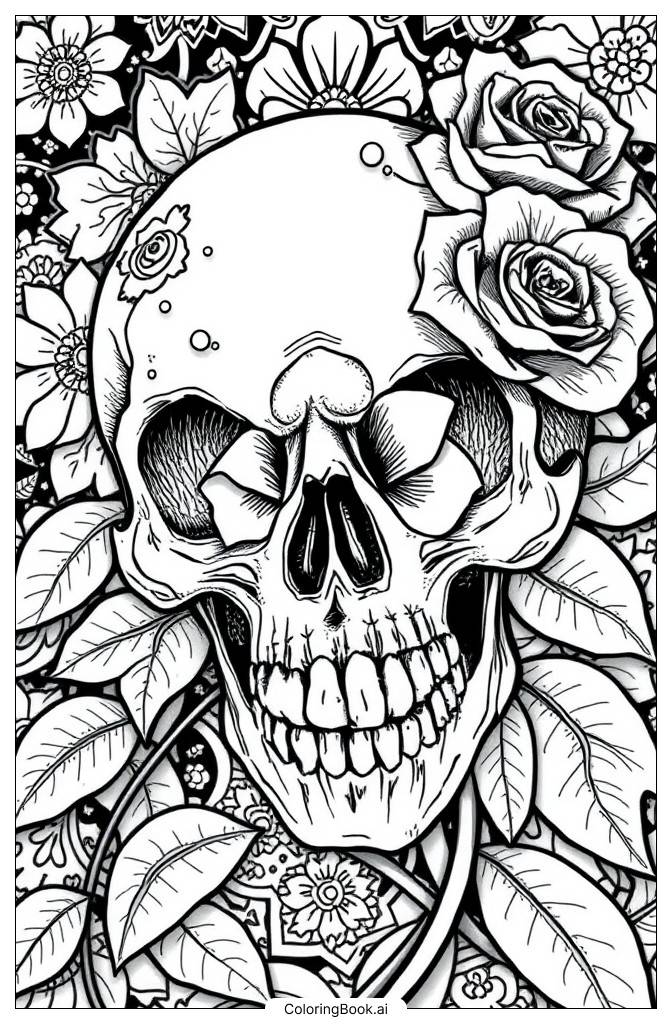
Coloring tips: How to color Basic Skull and Rose coloring page well?
Start with the skull. Use white or very light gray for the bone areas. Add soft shadows inside the eye sockets and along the jaw using a medium gray or light blue. This gives the skull a three-dimensional look. For the rose, try a classic red or a bold pink. Color the outer petals darker and the inner petals lighter to show depth. You can also try purple or orange for a more creative look. Use different shades of green for the leaves — dark green on one side and light green on the other to show light and shadow. For the background, black or dark navy makes the skull and rose pop. You can also leave it white for a clean, simple look. Take your time with the small details like the teeth and the petal edges. Use a thin marker or colored pencil for those tiny spaces.
Coloring challenges: Which parts are difficult to color and need attention for Basic Skull and Rose coloring page?
• Skull Eye Sockets: The hollow eye sockets are tricky to color well. They need a smooth blend from dark in the center to lighter at the edges. If you fill them with solid black, they may look flat. Try using dark gray or dark purple and blend outward to create a sense of depth and shadow.
• Rose Petal Layering: The rose has many overlapping petals, and each one curves in a different direction. Keeping track of which petal is on top can be confusing. You need to use slightly different shades of your chosen color for each petal so they stand out from each other. This takes patience and careful attention.
• Small Teeth Details: The skull's teeth are small and close together. Coloring each tooth individually without going outside the lines requires a fine-tipped tool. Leaving the teeth white while shading the gaps between them with gray or dark brown adds realism and keeps the details clean.
• Leaf and Stem Textures: The leaves and stems have thin lines showing veins and thorns. These tiny details are easy to accidentally cover with too much color. Use light pressure and a sharp pencil to stay inside the lines and bring out the natural texture of the plant.
• Balancing the Overall Contrast: The skull and rose are very different in feel — one is dark and edgy, the other is soft and romantic. Choosing colors that work well together without one overpowering the other is a real challenge. Planning your full color scheme before you start will help keep the final image balanced and beautiful.
Benefits of coloring books: Advantages of drawing Basic Skull and Rose coloring page
Coloring this skull and rose image is a great activity for kids and teens who enjoy creative art. It helps build fine motor skills as you work inside the lines and handle small details like the teeth and petal edges. Focusing on a detailed image like this also trains concentration and patience, skills that are useful in school and everyday life. Choosing colors for the skull and rose encourages creative thinking. There is no single right answer, so you get to make your own artistic choices and feel proud of the result. Working with contrasting elements — the hard skull and the soft rose — helps you understand balance and visual harmony in art. Blending colors on the petals and adding shadow to the skull teaches basic shading techniques in a fun, low-pressure way. This is a great introduction to more advanced drawing and painting skills. Coloring is also a calming activity. It helps reduce stress and gives your mind a chance to slow down and focus on something enjoyable. Whether you are coloring alone or with friends, this image offers a satisfying creative challenge with a striking finished result.