Coloring tips: How to color Sea Creatures Pelagic Fish School coloring page well?
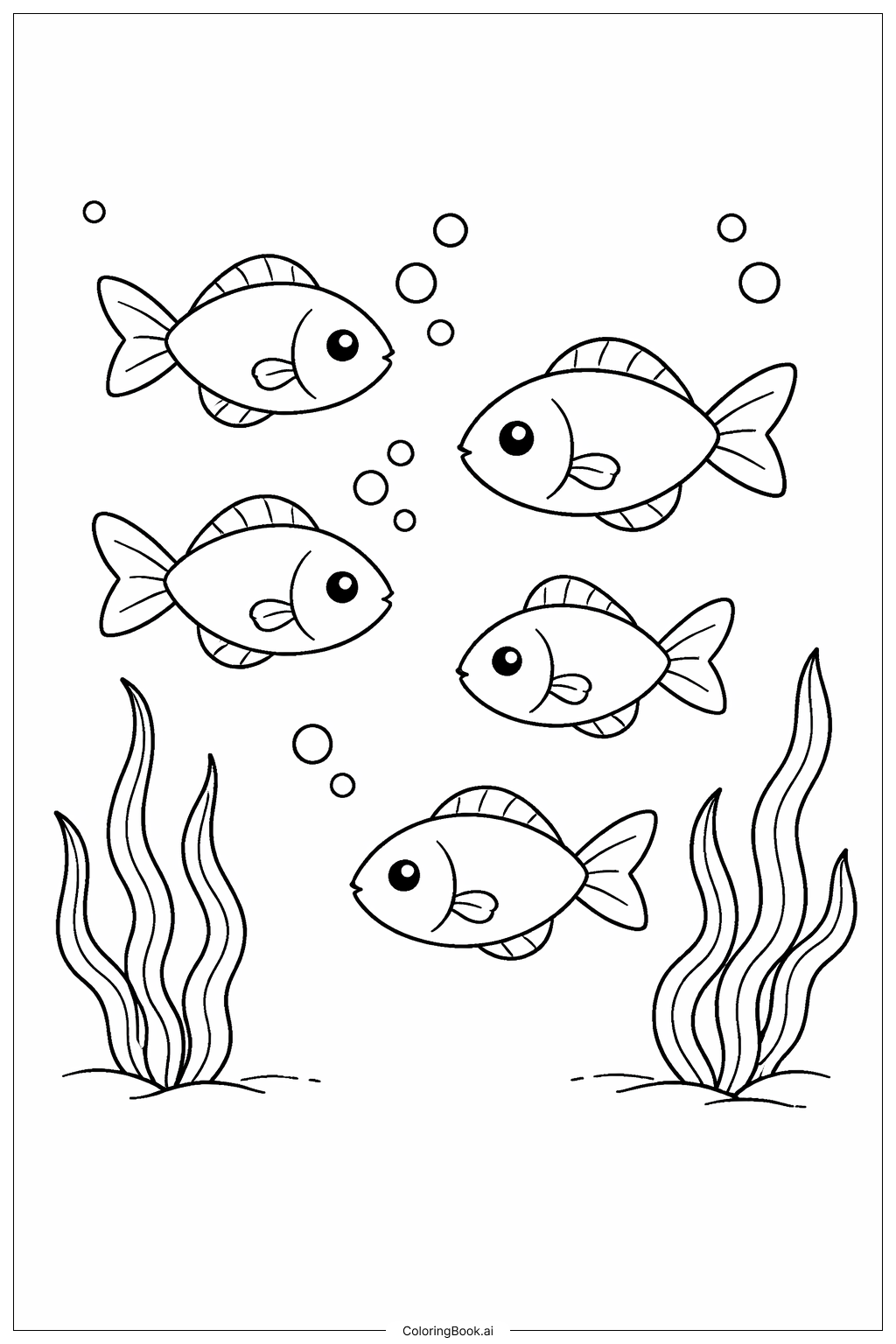
Use bright and vibrant colors for the fish to make them stand out. You can color each fish differently to show variety, for example, using shades of blue, orange, yellow, and green. The bubbles can be left light blue or white to look like real bubbles. For the seaweed, try using different shades of green to make it look natural. You can add small details by blending colors to give the fish a shiny look and the seaweed a more textured feel. Don’t forget to color the background lightly in a soft blue to show water without overpowering the fish.
Coloring challenges: Which parts are difficult to color and need attention for Sea Creatures Pelagic Fish School coloring page?
1. Coloring each fish with different shades can be tricky to keep them looking distinct yet unified as a school. 2. Adding color gradients or shading on the fish body to create a shiny effect might be difficult for younger children. 3. Coloring the bubbles in a way that keeps them looking light and airy without making them too dark or heavy. 4. Ensuring the seaweed looks natural by blending greens smoothly on its curvy shapes can be a challenge. 5. Balancing the background color so it feels like water but does not overwhelm the main subjects requires some color control.
Benefits of coloring books: Advantages of drawing Sea Creatures Pelagic Fish School coloring page
Coloring this underwater scene helps children improve their fine motor skills by carefully coloring inside the shapes of the fish and seaweed. It encourages creativity as they choose colors for the fish and decide how to color the bubbles and background. Focusing on small details like the fish fins and bubble shapes develops concentration and patience. This activity also introduces children to marine life, increasing their knowledge and interest in sea creatures. Overall, it’s fun and educational, promoting both artistic skills and learning about nature.