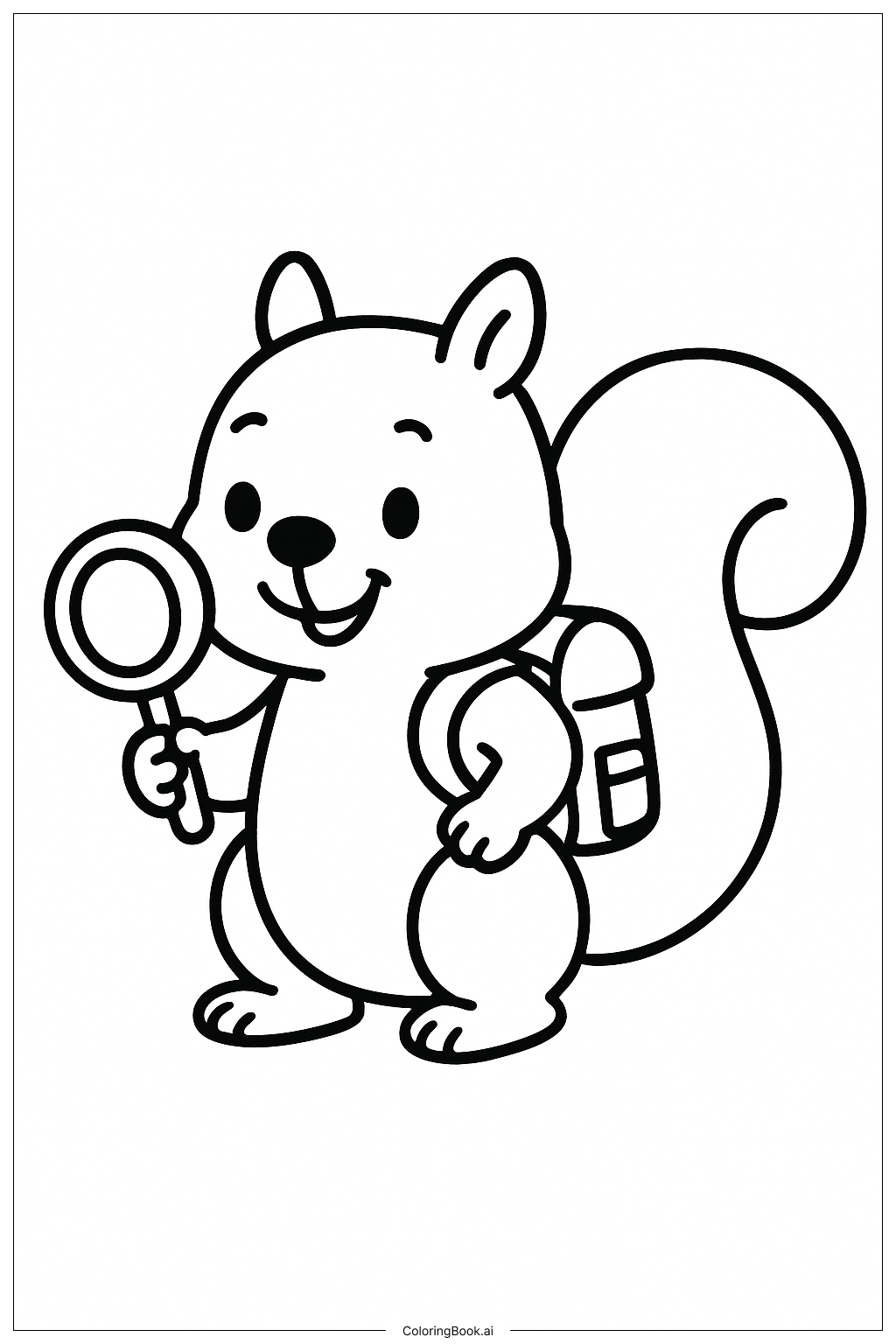
Coloring tips: How to color Science Squirrel Explorer coloring page well?
Use bright and cheerful colors to bring Science Squirrel Explorer to life. Give the squirrel warm browns for its fur with a soft white belly to highlight its features. Color the lab coat crisp white, and the explorer hat in a fun shade like green or blue. Use lively colors for the science tools: glass test tubes can be light blue or green with colorful liquids inside. Make the books vibrant with reds, yellows, and oranges to add energy. The background elements such as stars and particles can be colored with yellows, purples, or light blues to create a magical, scientific atmosphere. Try blending colors gently on the squirrel’s fur and coat to add texture and detail.
Coloring challenges: Which parts are difficult to color and need attention for Science Squirrel Explorer coloring page?
• Fine Details: The small scientific symbols, bubbles, and DNA strands around the squirrel require careful coloring to stay inside the lines and keep their delicate shapes. This challenges fine motor skills and patience. • Texture and Fur: Coloring the squirrel’s fur realistically can be tricky because it needs soft shading and smooth transitions between different brown tones to appear natural and fluffy. • Overlapping Objects: Several objects, like the magnifying glass held over the test tube, overlap. Coloring these layers while keeping each element distinct and clear can be challenging. • Small Objects: The microscope, books, and chemical equipment contain tiny parts that need precision and steady control. Missing details can make the image look incomplete. • Background Balance: The stars and particles in the background must be colored lightly so they do not distract from the main figure. Balancing brightness here requires attention to contrast and shading.
Benefits of coloring books: Advantages of drawing Science Squirrel Explorer coloring page
Coloring Science Squirrel Explorer encourages children to focus on scientific curiosity and exploration in a fun way. It helps improve hand-eye coordination while working on fine motor skills through detailed parts like chemical symbols and lab tools. Coloring the squirrel and background enhances creativity by choosing different color schemes, mixing natural and imaginative elements. This activity also supports concentration and patience as kids carefully fill in small shapes and overlap areas. Finally, it introduces basic science concepts visually, making STEM subjects approachable and exciting. Completing this image can boost confidence and inspire a love for discovery and learning.