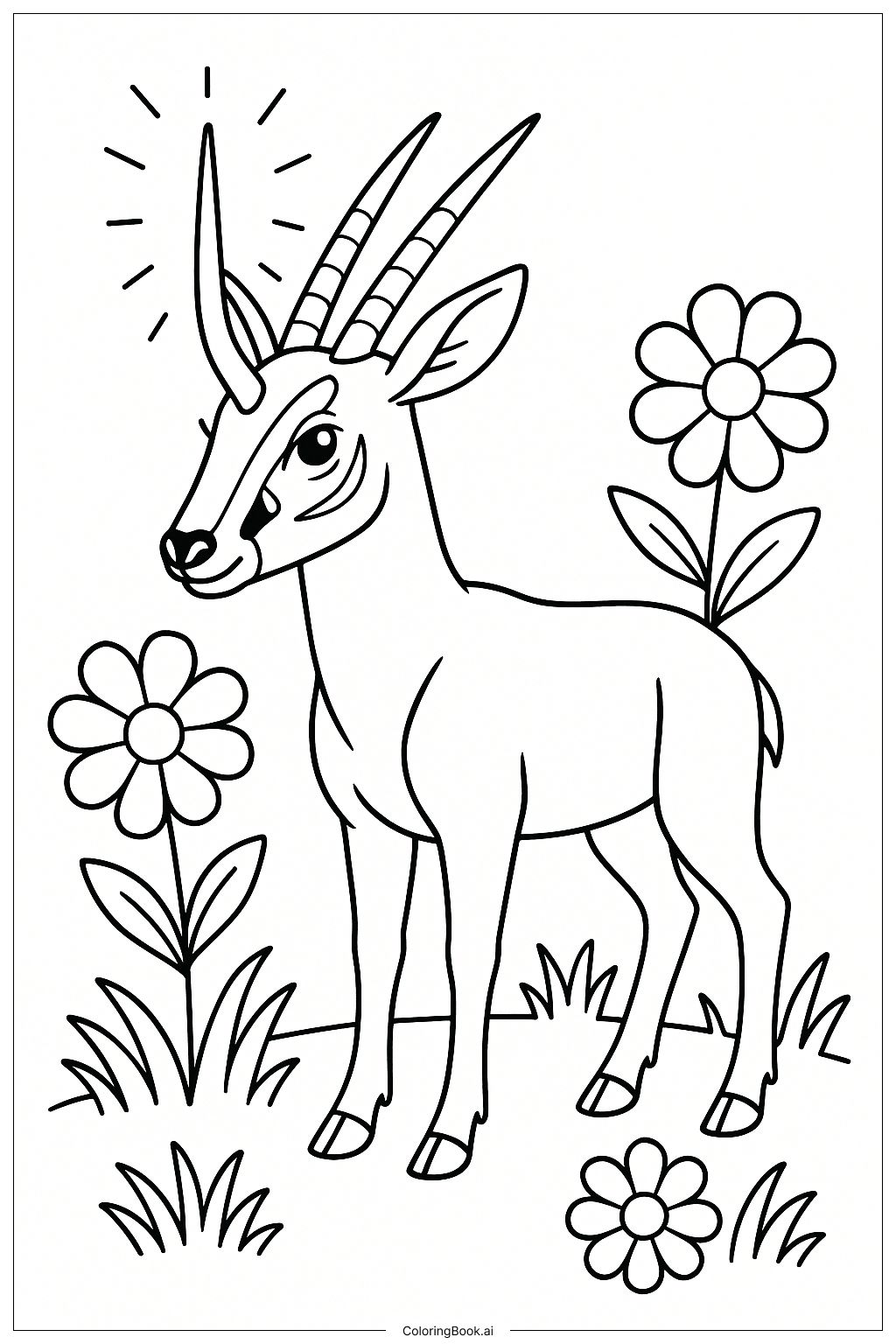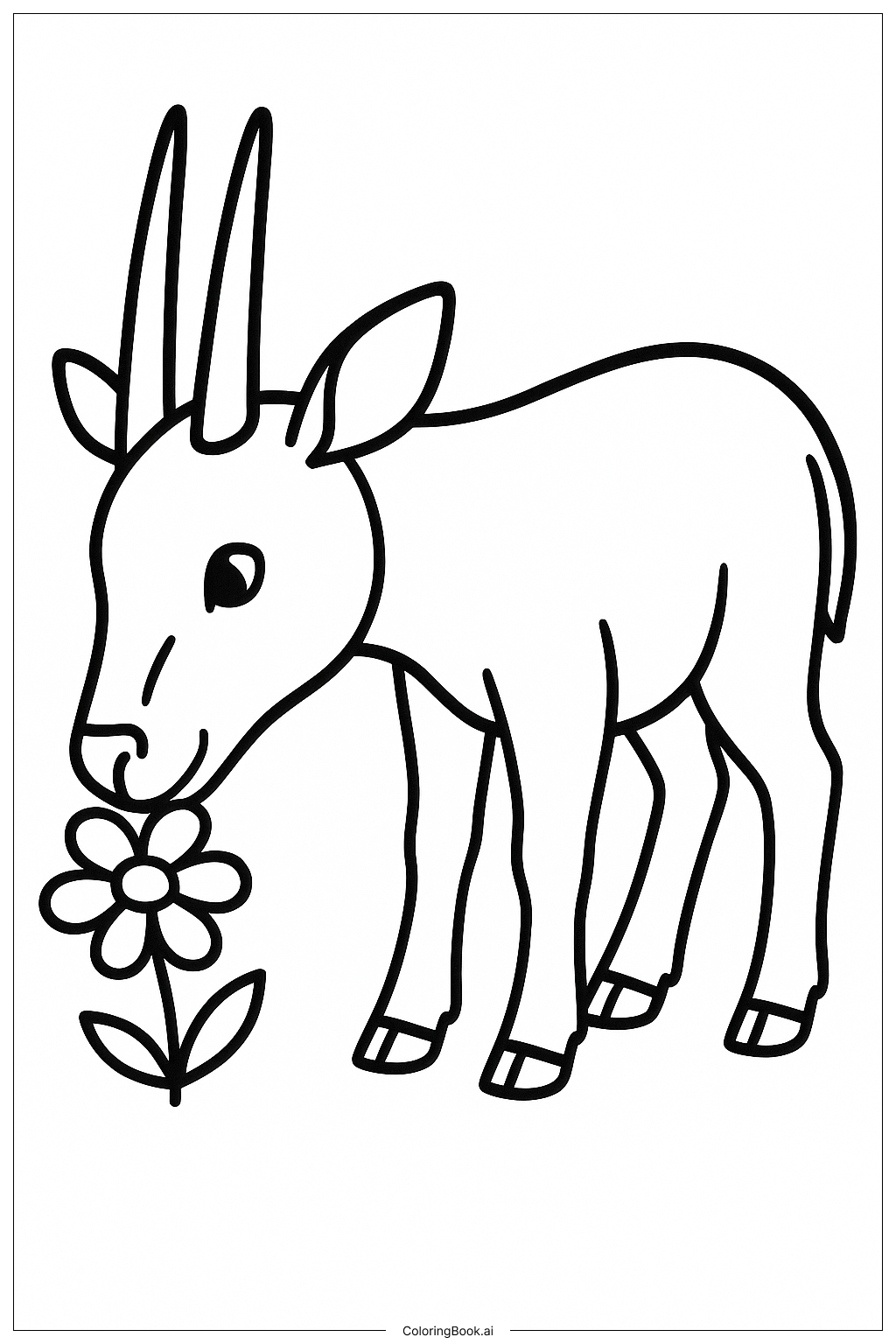
Coloring tips: How to color A Curious Saola Sniffing A Flower coloring page well?
Use soft browns and tans for the Saola’s fur to capture its gentle look. The horns can be colored with light gray or muted beige shades to reflect their natural texture. For the flower, bright colors like yellow, pink, or light purple can make it stand out beautifully. The grass and leaves around the Saola can be shaded with different tones of green to add depth and variety. You may also add light touches of blue or gray in the background to suggest a cool, calm environment. Remember to apply gentle shading to show the Saola’s delicate features without overwhelming the image.
Coloring challenges: Which parts are difficult to color and need attention for A Curious Saola Sniffing A Flower coloring page?
• Fine Horn Details: The Saola’s horns have slender shapes that require careful coloring to stay inside the lines and keep their natural look.
• Fur Texture: Capturing the soft texture of the Saola’s fur with smooth, light strokes can be challenging, especially around its face and body curves.
• Flower Coloring: The flower petals need bright and even color without blotches, which calls for steady hand movements and attention to small spaces.
• Grass and Leaves: Multiple shades of green are needed to give life and depth, but blending too much color can make the image look messy.
• Facial Expression: Maintaining the Saola’s gentle and curious expression while coloring requires precision around the eyes and mouth area to keep the character’s personality intact.
Benefits of coloring books: Advantages of drawing A Curious Saola Sniffing A Flower coloring page
Coloring this image can help children and adults improve their focus and patience as they work carefully on small details like the Saola’s horns and flower petals. It encourages observation skills by highlighting the importance of natural colors and textures in animals and plants. The peaceful scene also promotes calmness and creativity, as users can experiment with different shades of green and soft earth tones. Additionally, coloring this rare animal raises awareness about wildlife and nature, nurturing respect and curiosity for the environment around us.