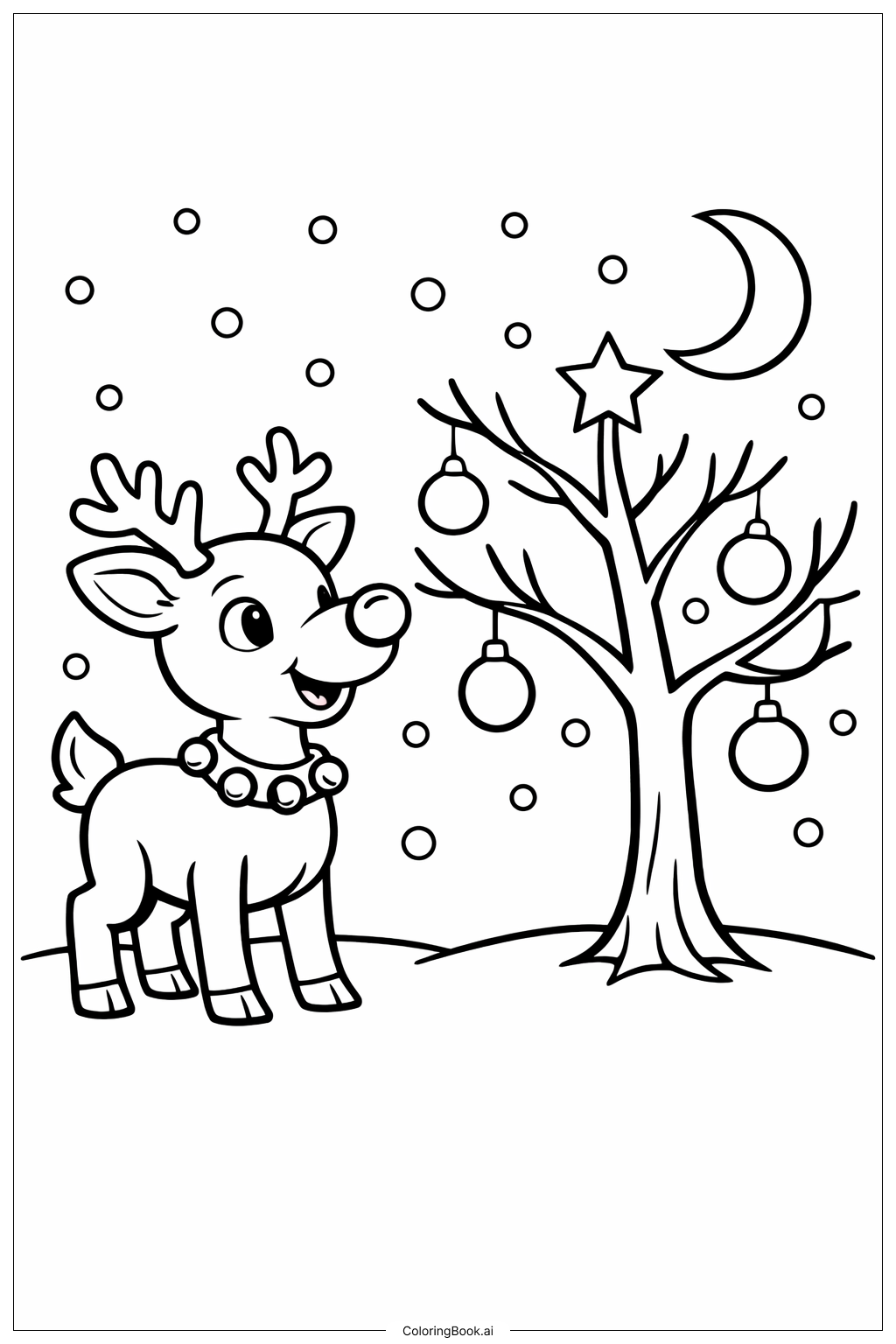
Coloring tips: How to color Rudolph By Moonlit Tree coloring page well?
Start with Rudolph's body using warm shades of tan, light brown, or caramel to bring his fur to life. Use a slightly darker brown for shading along his legs, belly, and under his chin to add depth. His famous nose should be filled with a bright, bold red — try adding a small white dot in the center to make it look shiny and glowing. For his antlers, use medium or dark brown tones. Color the tree trunk in rich gray-brown tones, and add cool blues, lavender, or soft white to the snowy branches. The night sky works beautifully in deep navy blue or purple, and the moon can be a warm golden yellow or creamy white. Scatter silver or pale blue tones for the falling snowflakes to complete the magical winter atmosphere. Use lighter colors for background elements and bolder colors on Rudolph to keep him as the focal point.
Coloring challenges: Which parts are difficult to color and need attention for Rudolph By Moonlit Tree coloring page?
• Rudolph's Fur Texture: Rudolph's body has subtle fur texture lines that require careful attention. Using short, directional strokes when coloring will help mimic the look of real fur. Staying within these fine lines without smudging or overshooting takes a steady hand, especially for younger colorists.\n\n• The Glowing Nose Effect: Capturing the warm, glowing quality of Rudolph's red nose is one of the trickiest parts of this image. Blending from a deep red at the outer edges to a brighter, lighter red or orange-pink at the center creates the illusion of light. This gradient technique can be challenging for beginners.\n\n• Snow-Covered Tree Branches: The tree branches layered with snow involve fine, overlapping details. Coloring the bark while keeping the snowy parts clean and bright white requires precision. Leaving the snow areas blank or using very light blue tones around them adds contrast without muddying the design.\n\n• Nighttime Sky Depth: Filling the background sky to look like a real moonlit night takes blending skill. Transitioning from deep navy near the edges to lighter tones around the moon helps recreate the soft glow. Keeping color strokes smooth and even in large open areas can be difficult without the right tools.\n\n• Antler Detail Work: Rudolph's antlers have multiple branching points and narrow sections. Applying color evenly in these thin areas without going outside the lines requires a fine-tipped pencil or marker. Adding subtle shading along one side of each branch gives the antlers a natural, rounded appearance.
Benefits of coloring books: Advantages of drawing Rudolph By Moonlit Tree coloring page
Coloring this Rudolph By Moonlit Tree page offers a wonderful mix of creative and developmental benefits for children and families. Working through the detailed fur, glowing nose, and snowy tree helps kids sharpen their fine motor skills and improve hand-eye coordination with every careful stroke. Choosing colors for a magical nighttime winter scene encourages creative thinking and artistic decision-making, helping children develop confidence in their own choices. The festive subject matter sparks imagination and storytelling, inviting kids to dream up adventures for Rudolph under the moonlit sky. Focusing on staying within the lines and blending colors also builds patience and concentration, skills that carry over into school and everyday tasks. For older children, experimenting with shading and light effects around the glowing nose and moon adds a fun challenge that nurtures more advanced artistic techniques. Coloring together as a family or in a classroom creates a shared, screen-free activity that encourages conversation, bonding, and relaxation. The calming, repetitive motion of coloring is also a great stress reliever, making this page a peaceful and rewarding experience for children of all ages.