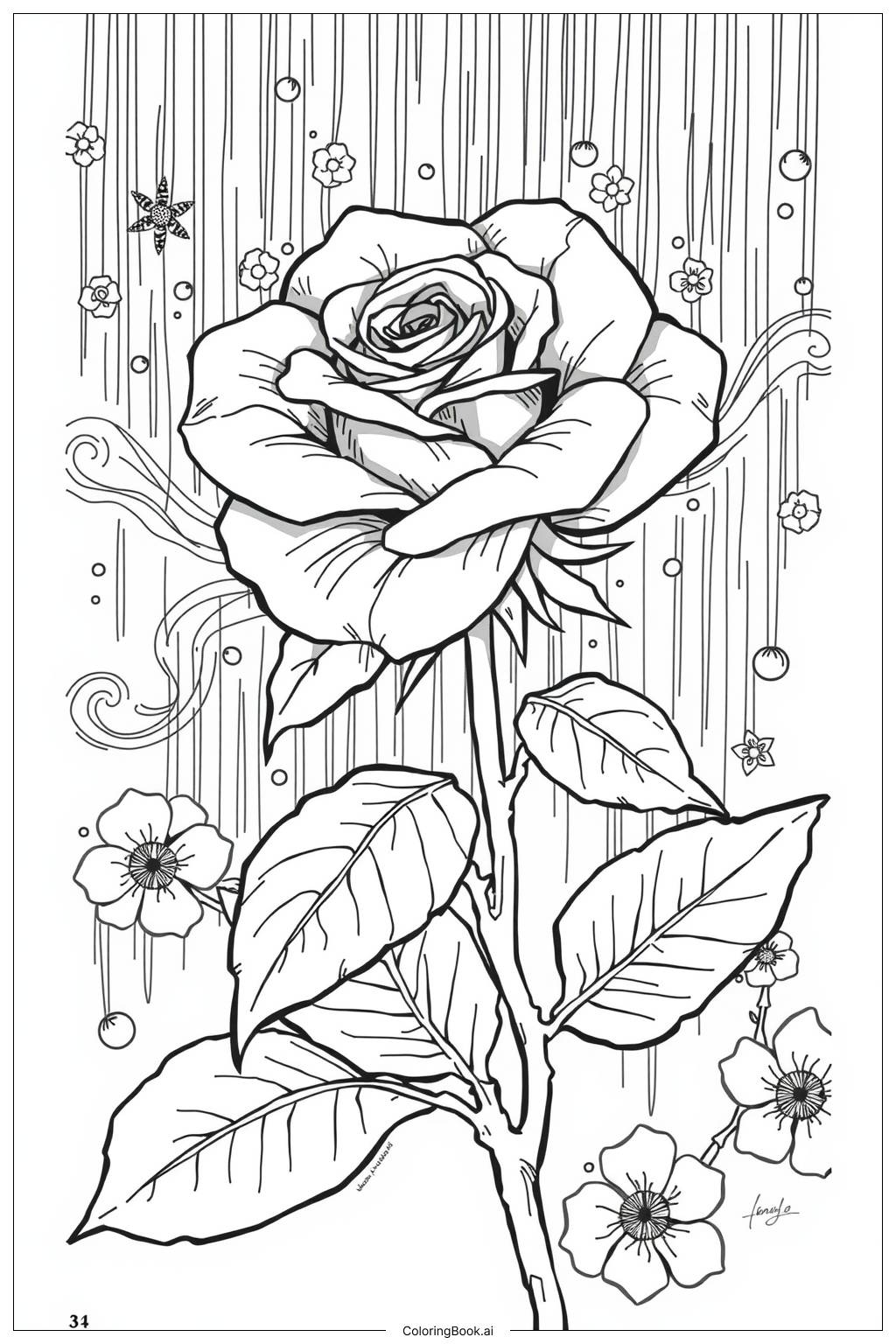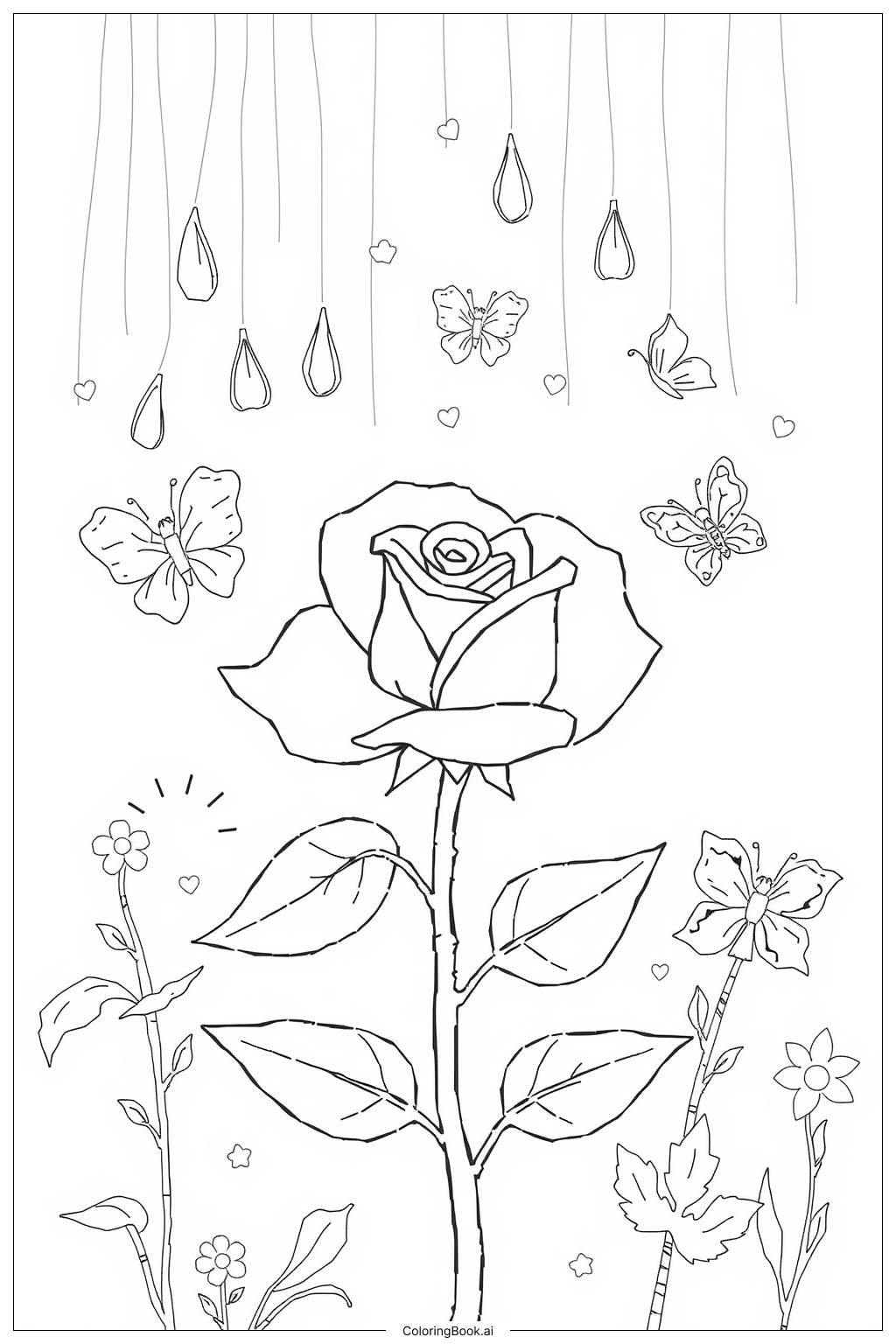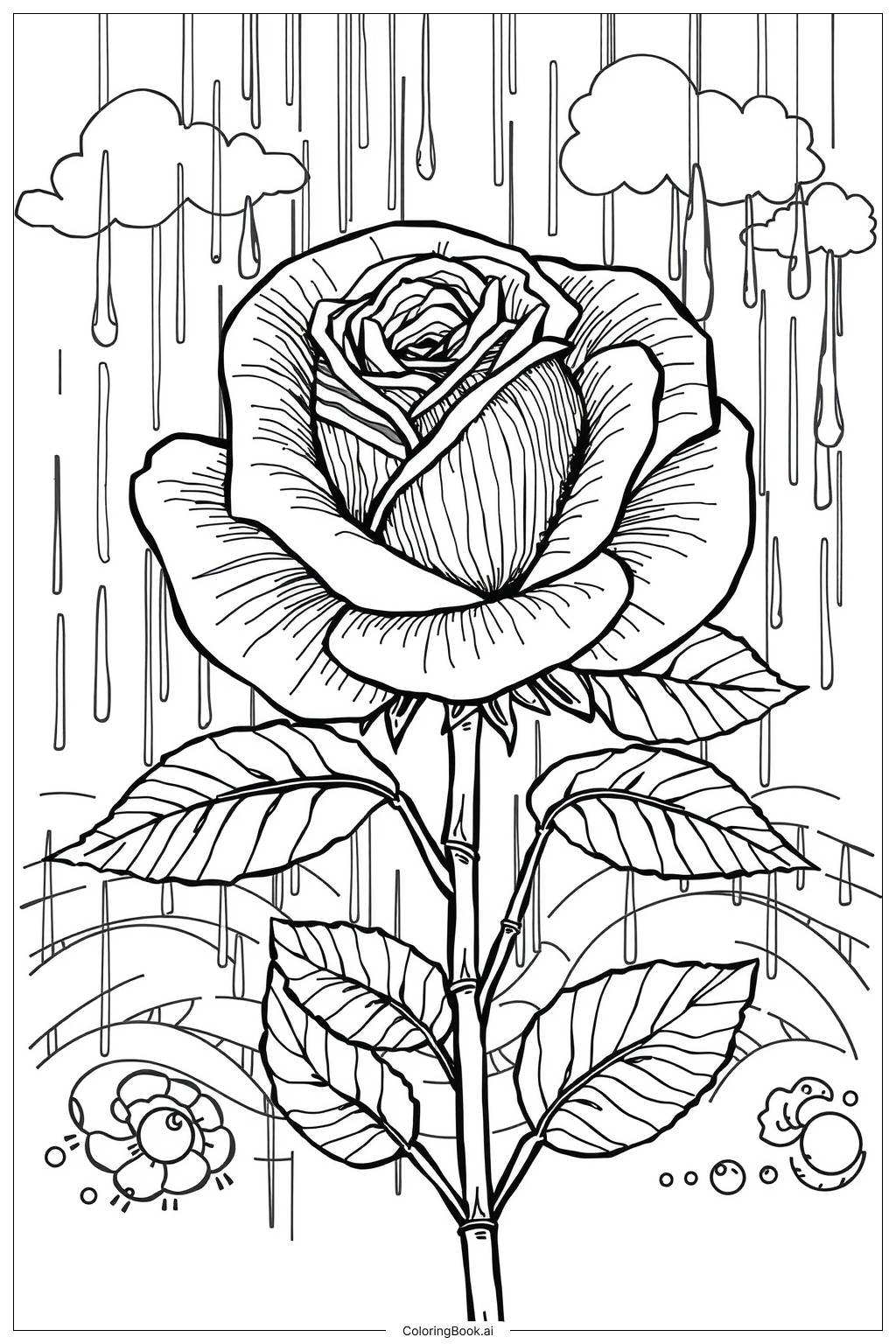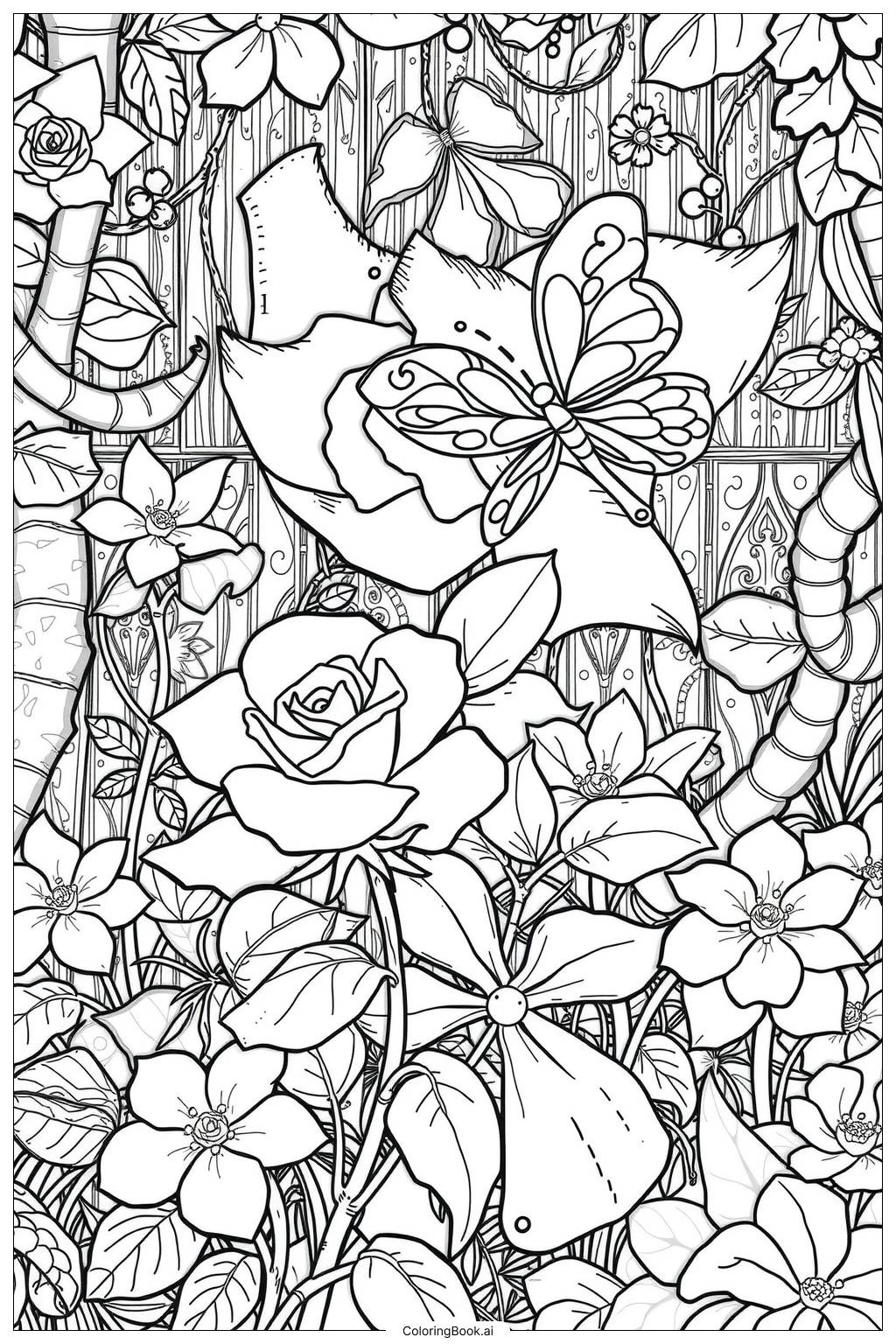
Coloring tips: How to color Rose Butterfly Garden coloring page well?
Start with the roses. Use classic red or deep pink for the petals, adding a lighter shade toward the center to create a natural glow. You can also try yellow, white, or purple roses for a creative twist. For the butterfly wings, use bright, bold colors like orange, blue, or violet. Add small dots or stripes to make the wings look realistic and lively. Use different shades of green for the leaves and stems — dark green for shadowed areas and light green for areas that catch the light. Color the tiny buds in pale pink or soft yellow to show they are just opening. Take your time with each section. Working from the center of each flower outward helps keep things neat. Light pencil strokes work best for blending colors smoothly on the petals.
Coloring challenges: Which parts are difficult to color and need attention for Rose Butterfly Garden coloring page?
• Rose Petal Layering: Roses have many overlapping petals that curve and fold in different directions. Keeping track of which petal sits on top of another can be tricky. You need to shade carefully so each layer looks separate and three-dimensional, rather than flat and blended together.
• Butterfly Wing Patterns: The butterflies feature small, detailed patterns inside their wings, including spots, veins, and edge markings. Staying within these tiny shapes requires a steady hand and a sharpened pencil or fine-tipped marker. Rushing through these details can make the wings look messy.
• Balancing Colors Across the Scene: With so many roses and butterflies filling the page, it is easy for certain colors to feel too heavy or too light in one area. Spreading your color choices evenly across the whole image takes planning. Try sketching out a rough color map before you begin to keep the composition balanced.
• Foliage and Stem Variation: The leaves and stems in the background overlap in complex ways. Using only one shade of green can make these areas look flat. Mixing two or three greens and adding darker tones where leaves overlap will give the garden a rich, layered feel.
• Small Bud Details: The tiny flower buds tucked between the larger blooms are small and easy to overlook. Giving them their own gentle color treatment, rather than rushing over them, adds life and completeness to the finished page.
Benefits of coloring books: Advantages of drawing Rose Butterfly Garden coloring page
Coloring this Rose Butterfly Garden page offers a wonderful mix of fun and learning for kids and adults alike. For younger children, tracing the outlines of petals and wings builds fine motor skills and helps develop hand-eye coordination. Choosing colors and deciding where to place them encourages creative thinking and self-expression.
Spending time on a detailed page like this also supports focus and patience. Working through each rose, each butterfly wing, and each leaf teaches children to slow down and pay attention to small details, a skill that helps in school and everyday life.
For older kids and adults, the process of blending colors and shading petals introduces basic art concepts like light, shadow, and depth. It is a relaxed way to explore artistic techniques without any pressure.
Coloring is also known to reduce stress and bring a sense of calm. The gentle, repetitive motion of filling in shapes can quiet a busy mind, making this page a great activity after a long day. Finishing the page brings a real sense of pride and accomplishment, boosting confidence for colorists of all ages.